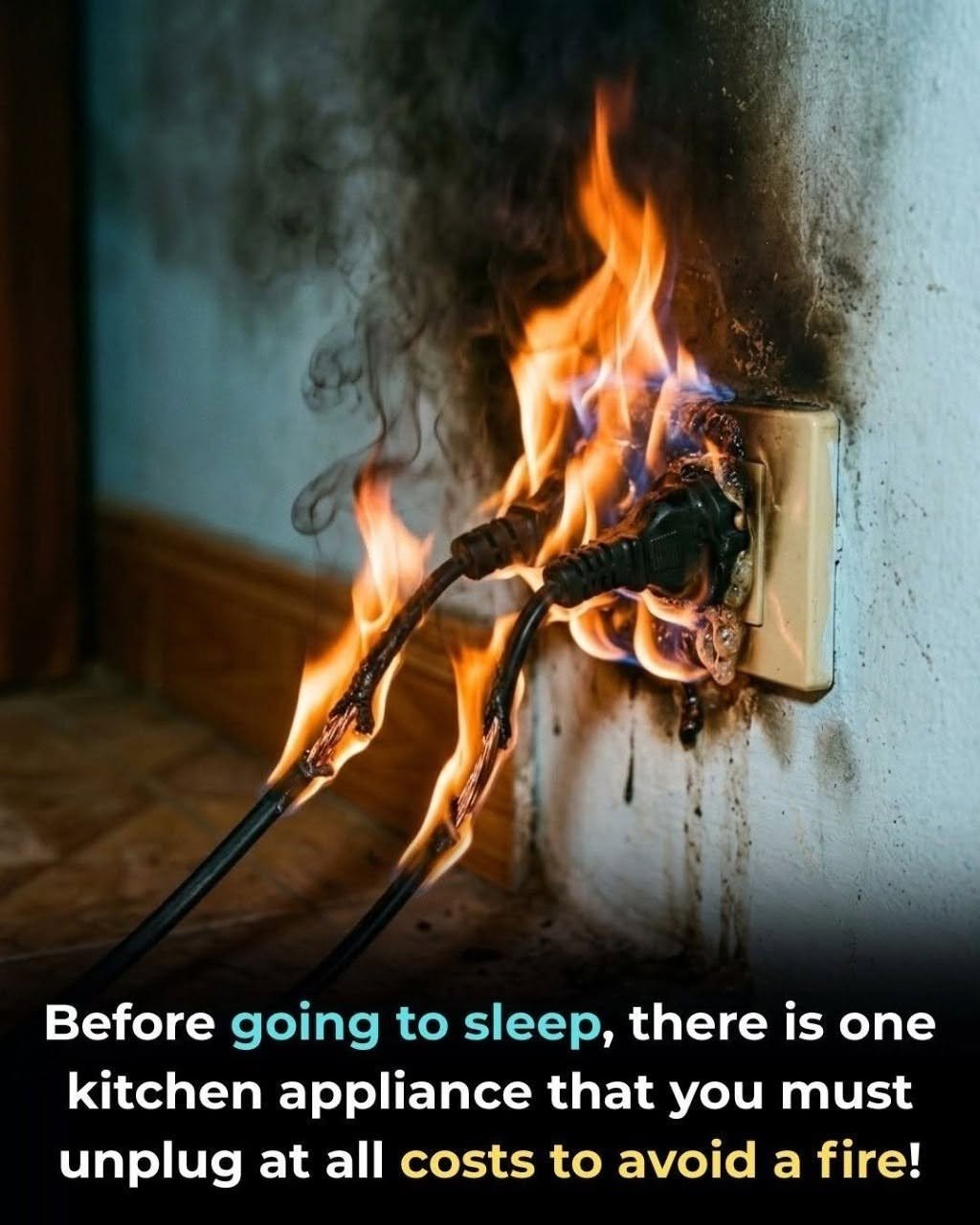
While viral social media posts often claim there is a single, specific kitchen appliance you must unplug every night to prevent a catastrophic fire, fire safety experts clarify that no single appliance poses an absolute, universal threat if it is modern, undamaged, and properly manufactured.
However, appliances with exposed heating elements—such as toasters, toaster ovens, and portable electric grills—are frequently singled out by safety advocates for a very specific reason: human error.
Why Heating Appliances Deserve Caution
-
The “Accidental Activation” Risk: Unlike a refrigerator or a microwave, a standard toaster relies on a mechanical lever that locks into place to complete a circuit and heat up. If a piece of paper, a plastic wrapper, or a dish towel is accidentally left resting on or leaning against a toaster, and the lever is bumped or malfunctions, it can easily spark a fire.
-
Intentionally High Heat: Toasters and toaster ovens are designed to generate intense, exposed heat capable of charring food. If a short circuit occurs in a device with compromised internal wiring, it has a higher immediate potential to ignite nearby crumbs or grease.
What Fire Safety Authorities Actually Recommend
Major fire and rescue services (such as the UK and Scottish Fire Services) generally advise a broader, common-sense approach rather than focusing on just one appliance:
-
Unplug Small, Unattended Heating Appliances: If you use small counter appliances with heating elements (like a toaster, air fryer, or coffee maker), unplugging them or switching them off at the wall outlet when not in use is a low-effort way to eliminate risk, especially in homes with older wiring or curious pets.
-
Never Run Major Heavy Appliances Overnight: Dishwashers, washing machines, and dryers feature heavy motors and heating cycles. Fire authorities strongly advise against running these while you sleep or leave the house, as you wouldn’t be awake to catch a burning smell or a malfunctioning motor early.
-
Inspect Cords and Plugs: The vast majority of electrical fires don’t stem from a normal appliance sitting plugged in; they stem from frayed cords, overloaded power strips, cheap uncertified adapters, or worn-out wall outlets.
The Bottom Line: You don’t need to panic-unplug your entire kitchen every night. If your small appliances are modern, UL-certified (or equivalent local safety standard), clean of old grease and crumbs, and plugged into a sound outlet, the risk is exceptionally low. Unplugging your toaster is simply an extra layer of prevention against accidental bumps or mechanical glitches.
