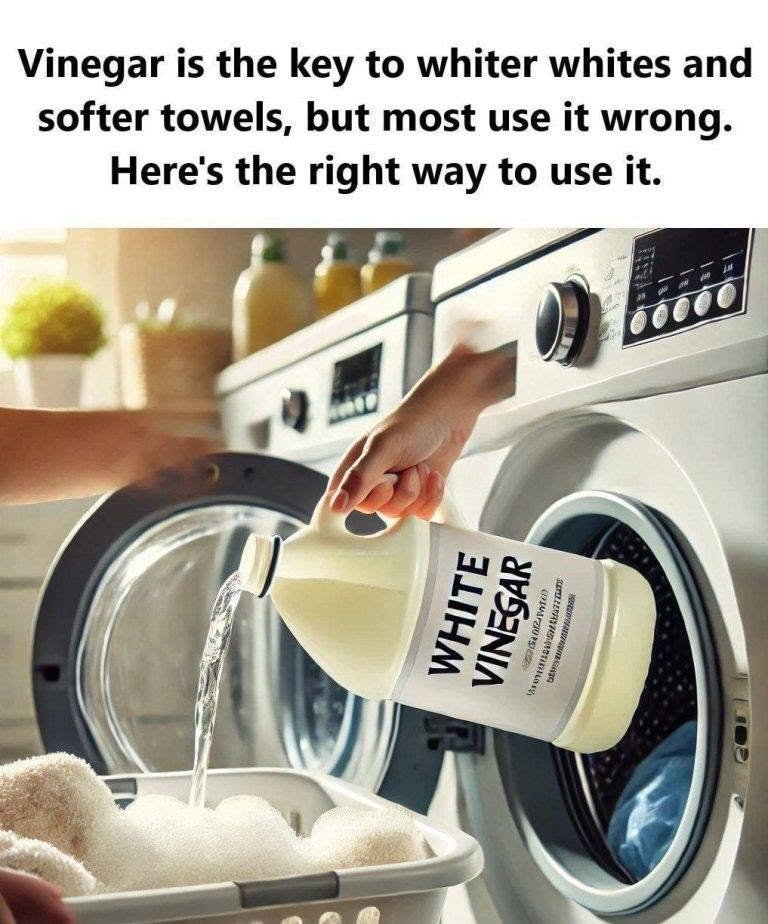
White vinegar is often touted as a natural laundry miracle worker—capable of stripping away detergent buildup, softening stiff fabrics, and brightening dingy whites without harsh chemical bleach. However, social media hacks often get the application completely wrong, leading to damaged washing machine parts or ruined loads.
Here is the science behind laundry vinegar, how most people misuse it, and the right way to harness its power:
Why Vinegar Works in Laundry
-
Fabric Softening: Commercial softeners leave a waxy, waterproof coating on fibers to make them feel slick, which actually reduces towel absorbency over time. Vinegar dissolves residual soap scum and detergent buildup, allowing natural fibers to fluff up and absorb water effectively again.
-
Odor Neutralization: Vinegar is a mild acid that neutralizes alkaline odors (like sweat, mustiness, and mildew) at a chemical level rather than just masking them with synthetic perfumes.
-
Natural Brightening: It helps strip mineral deposits and yellowing detergent residue from white fabrics.
The 2 Big Mistakes People Make
-
Mixing Vinegar Directly with Bleach: Never mix vinegar and chlorine bleach. Combining an acid (vinegar) with bleach releases toxic, potentially lethal chlorine gas.
-
Pouring Vinegar Directly Onto Dry Clothes: Because vinegar is acidic, pouring it straight onto a dry garment can weaken or bleach the fabric fibers if it sits too long before the wash cycle dilutes it.
The Right Way to Use It
-
Where to Put It: Pour 1/2 cup to 1 cup of white distilled vinegar directly into your washing machine’s fabric softener dispenser (or add it during the rinse cycle). This ensures it only meets your clothes after the main detergent wash cycle has finished draining away.
-
For Extra-Dingy Whites: Pre-soak your whites in a basin of warm water mixed with 1 cup of vinegar for 30 minutes before tossing them into the regular wash cycle.
