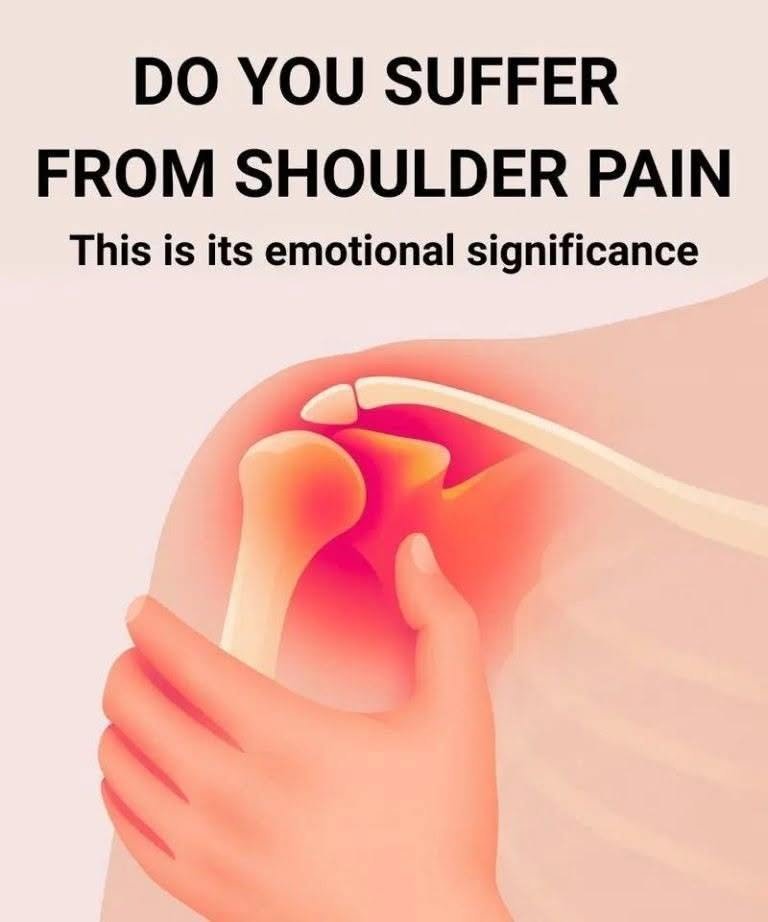
When wellness trends or somatic healing articles claim that shoulder pain has a direct, guaranteed “emotional meaning”—such as arguing that carrying the “weight of the world” or suppressing grief invariably locks up your rotator cuff—they are blending psychological metaphor with physical anatomy.
The underlying medical reality is that the shoulder is one of the most mechanically complex and mobile joints in the human body. Because it relies entirely on a delicate network of tendons, ligaments, and muscles rather than deep bony stability, it is uniquely vulnerable to structural wear, inflammation, and injury.
However, exploring the intersection of stress and physical pain reveals a genuine, science-backed connection between mental health and how your body holds tension.
The Real Mind-Body Connection: How Stress Manifests in the Shoulders
While a physical injury (like a tear, tendonitis, or arthritis) is the root cause of true shoulder pain, psychological stress and suppressed emotions can significantly amplify how you experience that pain through three primary physiological mechanisms:
-
Involuntary Muscle Guarding and Postural Tension:
-
When you experience chronic stress, anxiety, or emotional overwhelm, your autonomic nervous system triggers a low-grade “fight-or-flight” response. This causes your skeletal muscles—particularly the trapezius and levator scapulae muscles that support your neck and shoulders—to unconsciously clench and tighten for hours on end.
-
-
Amplified Pain Perception:
-
Chronic psychological distress, emotional exhaustion, or depression alters how your central nervous system processes pain signals. When you are mentally worn down, your pain thresholds drop, making minor joint inflammation feel sharp, heavy, and debilitating.
-
-
The “Burden” Metaphor vs. Physical Overload:
-
While feeling overwhelmed metaphorically feels like “carrying a heavy weight on your shoulders,” physical overload (like slouching over a desk, poor ergonomics, or repetitive lifting) is almost always what actually strains the joint capsule. Stress simply makes those physical burdens harder for your body to tolerate.
-
Sorting Out the Physical Causes of Shoulder Pain
Before looking inward at emotional states, it is crucial to recognize what your shoulder joint itself might be trying to tell you structurally:
-
Rotator Cuff Tendonitis or Bursitis: A dull ache deep in the shoulder, often aggravated by reaching overhead or sleeping on that side, caused by pinched tendons or inflamed bursal sacs.
-
Frozen Shoulder (Adhesive Capsulitis): Gradual stiffness and severe loss of range of motion where the joint capsule thickens and tightens.
-
Cervical Spine Referred Pain: Often, pain that feels like it originates in the shoulder is actually a pinched nerve or disc issue in your neck.
The Takeaway
Your shoulders aren’t storing unexpressed emotional trauma in a vacuum; rather, high stress creates physical tension, poor posture, and increased muscle guarding that exacerbates joint wear and tear. If you are experiencing persistent shoulder pain, addressing both your physical ergonomics (stretching, posture, medical evaluation) and your mental well-being (stress management, rest) offers the most effective path to relief.
