When clickbait health articles or late-night video warnings declare that “if you sleep on your RIGHT SIDE, you must have…”—dramatically framing a common sleeping posture as a hidden health hazard—they are usually exaggerating minor physiological quirks to manufacture anxiety.
The underlying medical reality is much simpler: most people shift positions dozens of times a night, and sleeping on your right side is generally safe and normal. However, like sleeping on your back or your left side, your physical anatomy means that right-side sleeping does interact with certain digestive and circulatory conditions in specific, measurable ways.
An evidence-based look at how right-side sleeping affects your body separates the online alarmism from actual physiological facts.
What Actually Happens When You Sleep on Your Right Side?
1. Increased Acid Reflux for GERD Sufferers (The Main Culprit)
-
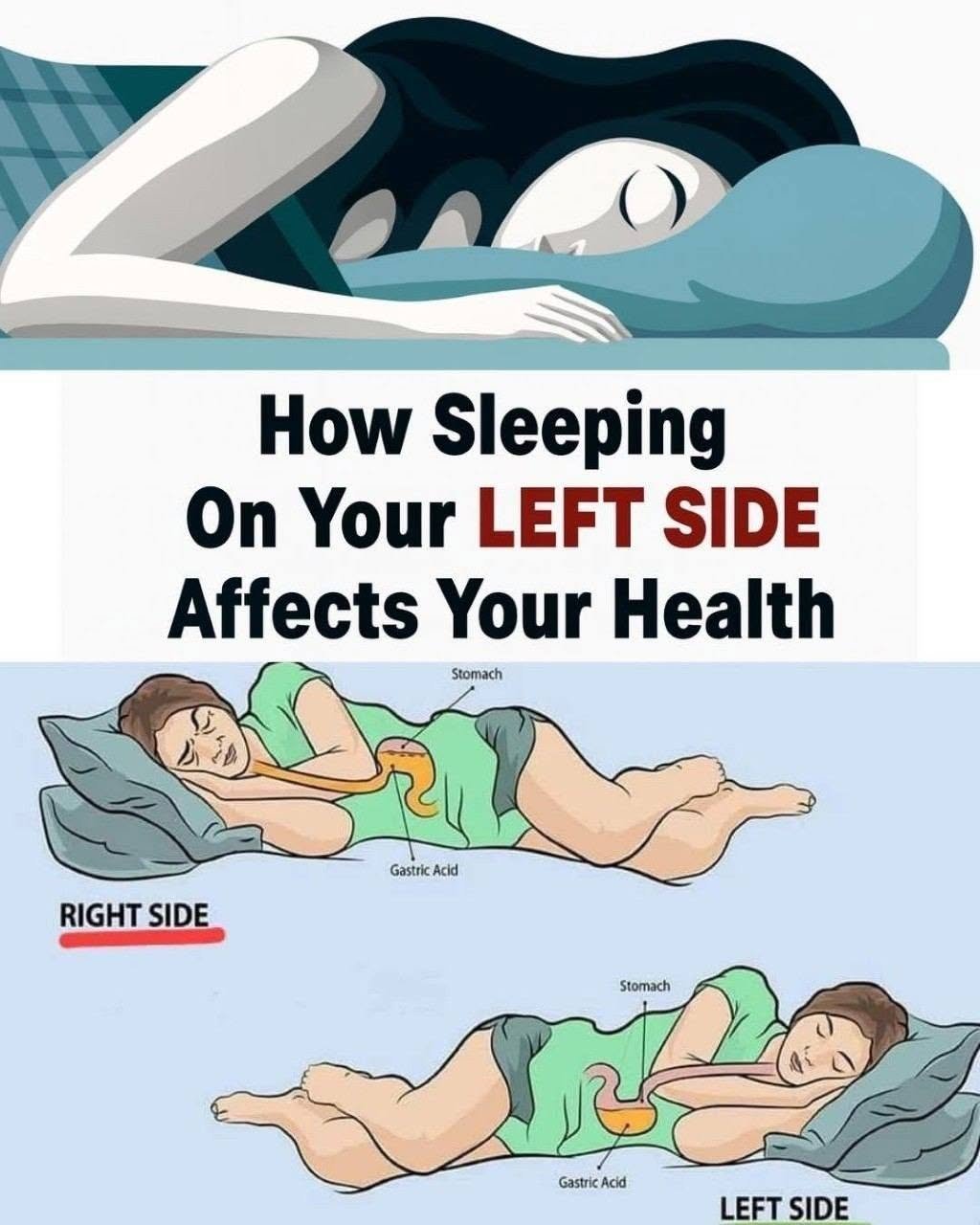
The Anatomy: Your stomach sits on the left side of your upper abdomen, and the junction where your esophagus meets your stomach sits just above the level of gastric acid when you lie on your left side.
-
The Reality: When you roll onto your right side, gravity shifts stomach contents in a way that aligns stomach acid directly against the lower esophageal sphincter. For individuals with chronic acid reflux or GERD, this position significantly relaxes that valve, leading to a higher frequency of heartburn episodes overnight.
-
The Fix: If you suffer from frequent nighttime heartburn, sleeping on your left side or elevating the head of your bed by 6 inches uses gravity to keep stomach acid safely below the esophagus. If you don’t suffer from reflux, your body naturally manages this without issue.
2. Pregnancy and Inferior Vena Cava Compression (The Safety Exception)
-
The Context: Health articles frequently warn pregnant women against sleeping flat on their backs because the heavy uterus can compress the inferior vena cava (the large vein returning blood to the heart), reducing circulation.
-
The Reality: While doctors universally recommend sleeping on your left side during pregnancy because it optimizes blood flow to the fetus and kidneys, sleeping on your right side is still considered a safe alternative if you need to switch positions—far better than sleeping flat on your back.
3. Zero Negative Impact for Healthy Individuals
-
The Reality: If you do not have chronic acid reflux, a hiatal hernia, or late-stage pregnancy, sleeping on your right side has no proven long-term negative effects on your heart, spine, or metabolism. Your body naturally adjusts to whatever position allows you to fall and stay asleep comfortably.
The Verdict
You do not need to panic or tie tennis balls to your pajamas to prevent yourself from rolling onto your right side. Unless you have persistent GERD—in which case shifting to your left side provides immediate mechanical relief—your preferred sleeping position is entirely a matter of personal comfort.
