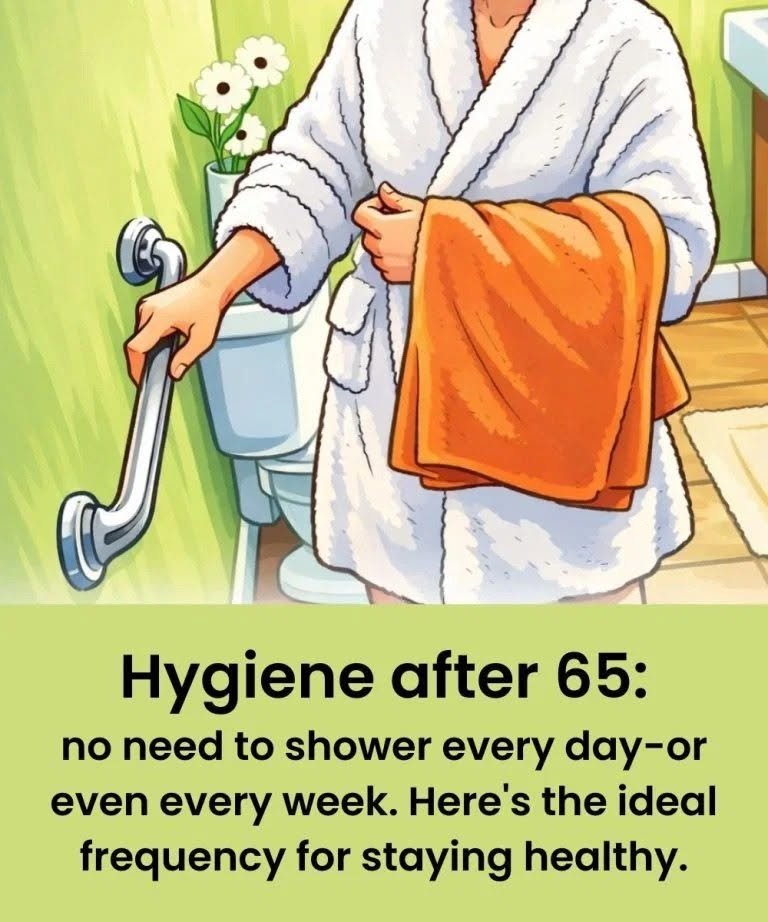
When viral health articles or lifestyle blogs claim that taking daily showers after 65 “does more harm than good,” they rely on clickbait hyperbole to frame a basic biological reality: aging skin changes its chemistry, moisture retention, and oil production.
The underlying medical fact is not that showers are inherently dangerous, but that daily, hot, soap-heavy bathing strips away the aging skin barrier, leading to chronic dryness, itching, and micro-cracks that can invite infections. Understanding how skin changes in later decades helps you balance personal hygiene with dermatological health.
Why Aging Skin Reacts Differently to Daily Washing
As you move past 65, your skin undergoes several distinct physiological shifts:
-
Thinning Epidermis and Decreased Sebum: Sebaceous glands produce fewer natural oils (sebum), and the outermost layer of skin becomes thinner. These oils form a natural lipid barrier that locks in moisture and keeps irritants out.
-
Reduced Natural Moisturizing Factors (NMFs): Aging skin cells produce fewer amino acids and proteins that naturally retain hydration.
-
Slower Cellular Turnover: Dead skin cells shed more slowly, meaning harsh scrubbing or heavy detergents can easily damage the delicate, newly exposed layers underneath.
When you take a hot, soapy shower every single day, you strip away the remaining microscopic oil film. Without that protection, skin becomes dry, flaky, and intensely itchy (a condition dermatologists call senile pruritus or winter itch). In severe cases, chronic dryness causes tiny fissures in the skin barrier, creating an entry point for bacteria.
Evidence-Based Shower Habits for Healthy Skin After 65
You don’t need to abandon daily hygiene to keep your skin healthy; you just need to adjust how you wash:
-
Lower the Temperature: Hot water feels luxurious, but it acts as a solvent that rapidly dissolves your skin’s natural oils. Switch to warm (not hot) water.
-
Cut Down the Time: Keep showers brief—around 5 to 10 minutes. Prolonged water immersion actually draws moisture out of your skin as it evaporates.
-
Choose Gentle, Soap-Free Cleansers: Ditch harsh, heavily fragranced deodorant soaps or harsh detergents. Use gentle, hydrating, fragrance-free cleansers (like CeraVe, Cetaphil, or Dove sensitive skin bars), and apply them primarily to areas prone to odor (underarms, groin, feet) rather than scrubbing your entire body with soap every day.
-
Pat, Don’t Rub: When you step out of the shower, gently pat your skin dry with a towel instead of vigorous rubbing.
-
Moisturize Within 3 Minutes: This is the golden rule of dermatological care. Apply a thick, fragrance-free cream or ointment (like plain petroleum jelly, ceramide-based creams, or mineral oil) while your skin is still slightly damp. This traps the water molecules directly into the skin barrier before they evaporate.
The Takeaway
You do not need to stop showering after 65, but treating your skin with a bit more gentleness makes all the difference. Swapping scalding daily scrubs for warm, brief rinses and aggressive moisturizing preserves your skin barrier, keeps irritation at bay, and ensures your hygiene routine supports your long-term health.
