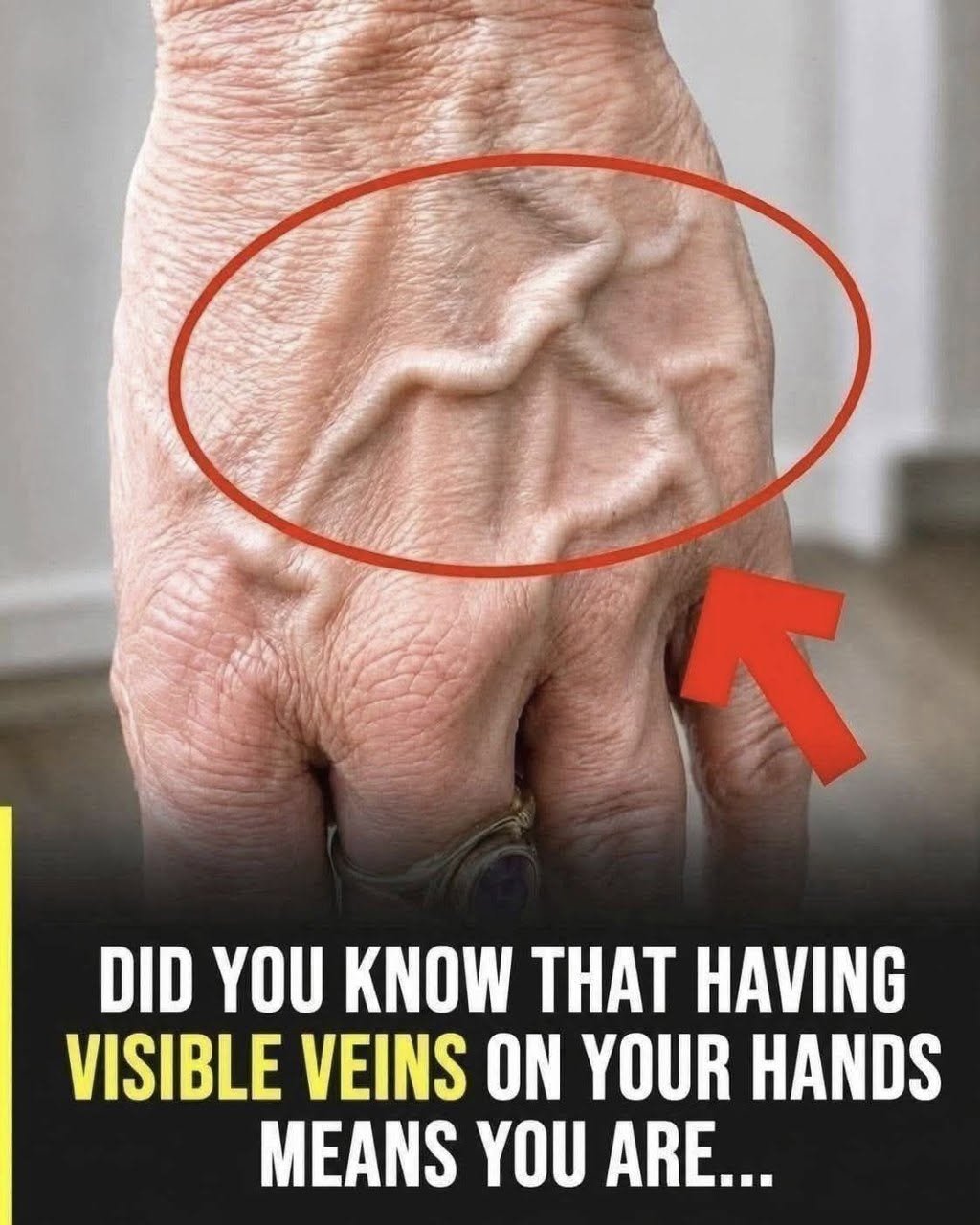
When wellness articles and viral social media posts tease that “having visible veins means you are…” they are usually setting you up for a dramatic and completely unfounded claim—ranging from extreme athletic superiority to hidden toxicity or dangerous vascular collapse.
The underlying dermatological and physiological reality is far more mundane: having visible veins is primarily determined by biological anatomy, skin thickness, and subcutaneous fat distribution—not as a simple diagnostic scorecard for your health. While prominent veins can sometimes indicate specific medical issues (like varicose veins), for most people, seeing their veins is just a normal variation of how they are built.
An evidence-based look at why veins show through the skin helps separate sensational internet myths from actual vascular biology.
1. The Anatomy of Visible Veins: Why Some People Have Them
How noticeable your veins are depends on a combination of physical factors that have nothing to do with being “unhealthy” or possessing “super-fitness”:
-
Skin Thickness and Pigmentation: Naturally thinner or fairer skin allows underlying blood vessels to show through much more easily. As people age and skin loses collagen and elasticity, veins naturally become more visible.
-
Subcutaneous Fat Levels: Fat acts as natural insulation and padding beneath the skin. Individuals with lower body fat percentages (whether due to genetics, high metabolisms, or athletic conditioning) have less tissue masking their superficial veins, making them stand out prominently on the arms, hands, or chest.
-
Genetics and Anatomy: Just like eye color or height, some people simply inherit superficial venous patterns where veins sit closer to the surface of the skin.
2. When Visible Veins Actually Matter (And When They Don’t)
While casual vascular visibility is usually harmless, clinicians look for specific changes rather than just seeing a vein:
-
Varicose Veins: If veins in the legs become twisted, enlarged, bulging, and painful, it indicates chronic venous insufficiency—a condition where the one-way valves inside the veins weaken, causing blood to pool rather than flow efficiently back to the heart. This does warrant medical evaluation.
-
Spider Veins: These small, damaged blood vessels close to the skin’s surface are usually cosmetic, often driven by genetics, hormonal shifts, or prolonged standing.
-
Temporary Prominence: Working out, lifting heavy weights, or being in a hot environment naturally causes blood vessels to dilate (vasodilatation) and push closer to the skin’s surface to help release body heat, making veins temporarily pop.
The Takeaway
Ignore the clickbait headlines trying to diagnose your entire physiological state based on whether your veins are visible. For the vast majority of people, prominent veins are simply a normal reflection of genetics, thin skin, low body fat, or athletic activity. If you experience aching, swelling, or painful bulging veins in your legs, consult a physician—otherwise, visible veins are just a normal part of human anatomy.
