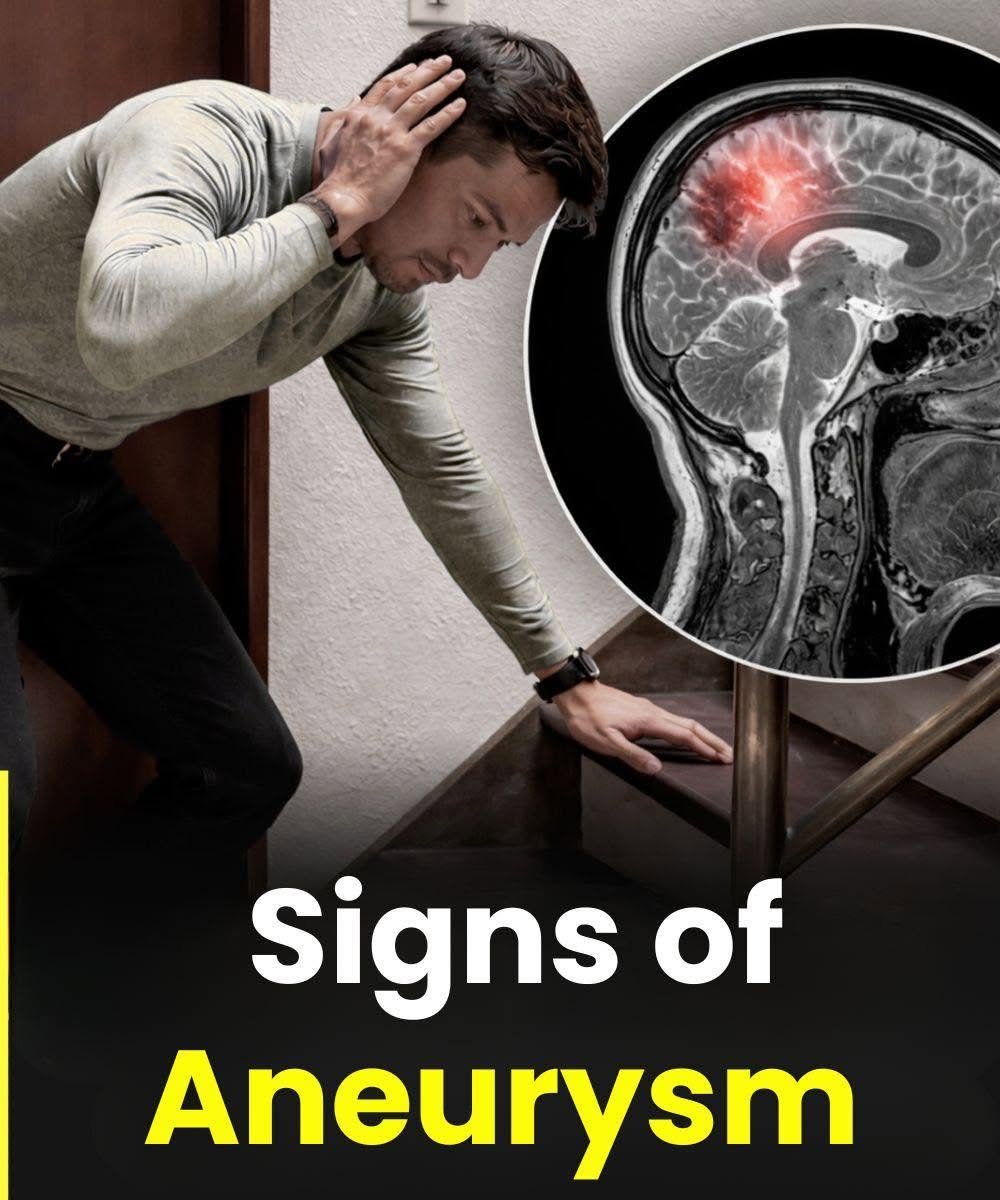
Sensationalist warnings about symptoms you “should never ignore” often rely on fear, but understanding the genuine signs of a vascular emergency like an aneurysm is genuinely important.
An aneurysm is a ballooning or weakening in the wall of an artery. While many aneurysms develop silently and cause no symptoms until they rupture, certain types present distinct, unmistakable warning signs when they expand rapidly or leak.
The symptoms vary significantly depending on where the aneurysm is located in the body.
1. Abdominal Aortic Aneurysm (AAA)
The aorta is the main blood vessel supplying blood to the body. When it weakens in the abdomen, it forms an AAA.
-
The Warning Signs:
-
Deep, Throbbing Pain: A persistent, deep ache or throbbing sensation in the abdomen, lower back, or flank that doesn’t change with movement or position.
-
A Pulsating Sensation: Feeling a physical pulse or heartbeat in your stomach, similar to a ticking clock or a heavy thump, especially when lying flat.
-
-
When it ruptures (Medical Emergency): Sudden, excruciating, tearing pain in the abdomen or lower back, accompanied by a sudden drop in blood pressure, dizziness, and fainting.
2. Brain (Cerebral) Aneurysm
A brain aneurysm occurs in an artery within the brain. While unruptured aneurysms may cause no symptoms, a leaking or expanding aneurysm (often called a “sentinel leak”) can give subtle warnings before a full rupture.
-
The Warning Signs of an Expanding/Leaking Aneurysm:
-
Sudden, Severe Headaches: A localized, unusual headache unlike any normal tension headache or migraine.
-
Vision Changes: Double vision, sudden blurred vision, or drooping eyelids (ptosis).
-
Localized Pain: Pain behind or above one eye, or numbness/weakness on one side of the face.
-
-
When it ruptures (Medical Emergency): A “thunderclap headache”—often described as the worst headache of your life, hitting with blinding intensity in seconds—frequently accompanied by nausea, vomiting, a stiff neck, sensitivity to light, and sudden confusion or loss of consciousness.
3. Thoracic Aortic Aneurysm
This occurs when an aneurysm forms in the section of the aorta passing through the chest.
-
The Warning Signs:
-
Chest or Upper Back Pain: A persistent dull ache or pressure in the chest, jaw, neck, or upper back.
-
Respiratory and Voice Changes: Unexplained hoarseness or difficulty speaking (caused by pressure on the vocal cord nerve) or a chronic, persistent cough.
-
Trouble Swallowing: Pressure on the esophagus can make swallowing uncomfortable.
-
Key Risk Factors
Aneurysms can affect anyone, but certain factors significantly increase the risk—particularly for men, who develop abdominal aortic aneurysms at a higher rate than women:
-
Smoking: Tobacco use weakens arterial walls and is one of the strongest modifiable risk factors for aneurysms.
-
High Blood Pressure (Hypertension): Chronic high blood pressure places constant strain on already weakened arterial walls.
-
Family History: A genetic predisposition or family history of aneurysms raises individual risk.
-
Age: Risk increases notably for men over the age of 65.
When to Seek Emergency Help
If you or someone nearby experiences a sudden, tearing pain in the chest or abdomen, or a blinding “thunderclap” headache accompanied by neurological symptoms (such as slurred speech, confusion, or weakness), call emergency services immediately.
For individuals with risk factors like a heavy smoking history or a family history of aneurysms, routine screening (such as a simple, non-invasive abdominal ultrasound recommended for men aged 65 to 75 who have ever smoked) can catch and monitor aneurysms long before they become dangerous.
