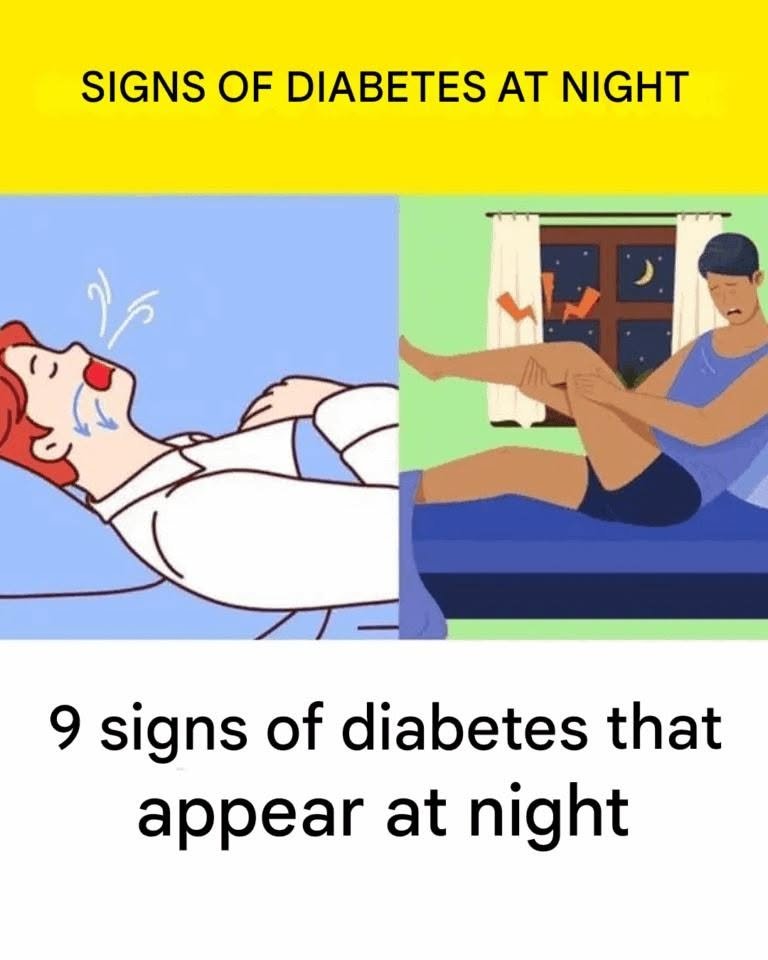
Chronically elevated blood sugar levels disrupt nighttime physiology long before daytime symptoms become obvious. Recognizing these nocturnal signals can prompt early testing and intervention.
9 Signs of Diabetes That Appear at Night
-
Nocturia (Frequent Nighttime Urination): Waking up two or more times per night to empty your bladder occurs because excess glucose pulls water into the urine.
-
Nocturnal Polydipsia (Intense Thirst): Waking up with a bone-dry mouth and an urgent need to drink water compensates for the fluid lost through frequent urination.
-
Nocturnal Leg Cramps: Sharp, painful contractions in the calves or feet happen due to electrolyte imbalances caused by excessive fluid loss and poor mineral retention.
-
Nerve Tingling and Burning (“Pins and Needles”): Burning, prickling, or numbness in the feet and toes often intensifies in bed as sensory nerve fibers experience reduced nighttime circulation.
-
Night Sweats & Fluctuation Flushes: Fluctuating glucose levels and autonomic neuropathy can impair the body’s natural temperature regulation, triggering sudden sweating during sleep.
-
Unexplained Insomnia & Restless Sleep: High nocturnal blood sugar or frequent bathroom trips prevent the brain from sustaining deep, restorative sleep cycles.
-
Nocturnal Hypoglycemia Symptoms (Shakiness/Sweating): In individuals managing diabetes, nighttime drops in blood sugar trigger adrenaline releases, causing sudden cold sweats, rapid heartbeats, and nightmares.
-
Fungal Irritations & Itching: High glucose levels in sweat and skin folds create an ideal environment for yeast growth, leading to persistent itching around the groin or feet at night.
-
Pounding Heartbeat (Palpitations): Waking up with a racing or forceful heartbeat can reflect autonomic nerve dysfunction or nocturnal spikes in stress hormones triggered by unstable glucose.
Key Action Steps
-
Monitor Patterns: Keep a sleep log tracking how many times you wake up thirsty or needing the bathroom over a two-week period.
-
Request an HbA1c Test: Ask your doctor for a standard HbA1c blood test, which measures your average blood sugar levels over the past three months.
-
Evaluate Evening Habits: Avoid heavy carbohydrate snacks or sugary drinks close to bedtime to minimize overnight glucose spikes.
