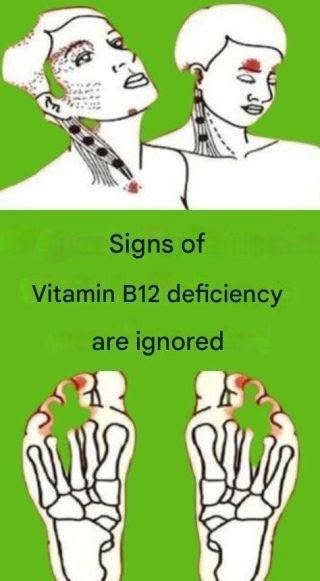
Vitamin B12 is essential for red blood cell production, DNA synthesis, and neurological function. Because the liver stores several years’ worth of B12, a deficiency develops slowly, causing symptoms that are easily mistaken for normal aging, stress, or general fatigue.
Ignoring early warning signs can lead to irreversible nerve damage and severe hematological complications.
Frequently Ignored Signs of B12 Deficiency
1. Neurological & Sensory Warning Signs
-
Paresthesia (Pins and Needles): A subtle tingling, numbness, or “pricking” sensation in the hands, feet, or toes. B12 is crucial for producing myelin, the protective sheath around your nerves; without it, nerve fibers undergo demyelination.
-
Balance Problems & Unsteadiness: Difficulty walking, frequent tripping, or loss of coordination (ataxia) caused by damage to peripheral nerves and spinal cord pathways.
-
Brain Fog & Cognitive Decline: Memory lapses, difficulty concentrating, or feeling mentally slow—often misattributed to stress, sleep deprivation, or early dementia.
2. Oral & Dermatological Indicators
-
Atrophic Glossitis (Smooth, Red Tongue): The tongue becomes inflamed, swollen, red, and loses its tiny bumps (papillae), making it appear shiny and smooth. It is often accompanied by a burning sensation or mouth sores.
-
Pale or Jaundice-Toned Skin: Skin may look unnaturally pale or take on a slight yellow/jaundice tint. This occurs because fragile, abnormally large red blood cells breakdown easily, releasing excess bilirubin into the bloodstream.
3. Systemic & Physical Fatigue
-
Persistent Exhaustion & Weakness: Unexplained fatigue that doesn’t improve with rest. Lacking B12 impairs megaloblastic erythropoiesis, meaning your body produces abnormally large, immature red blood cells that cannot efficiently transport oxygen to tissues.
-
Shortness of Breath & Dizziness: Lightheadedness or feeling winded after minor physical exertion due to underlying anemia.
4. Mood & Psychological Shifts
-
Unexplained Mood Swings or Depression: Low levels of B12 disrupt the synthesis of neurotransmitters like serotonin and dopamine, contributing to increased irritability, anxiety, or depressive episodes.
High-Risk Groups
| Group | Primary Risk Factor |
| Vegetarians & Vegans | Natural B12 is found almost exclusively in animal-derived foods (meat, fish, eggs, dairy). |
| Adults Over 50 | Age reduces stomach acid production, impairing the release of B12 bound to food proteins. |
| Metformin & PPI Users | Long-term use of acid reflux medications (PPIs/H2 blockers) or diabetes drugs (Metformin) blocks B12 absorption. |
| GI Disorders (Celiac/Crohn’s) | Inflammation in the small intestine impairs the absorption of the B12-intrinsic factor complex. |
Diagnostic Evaluation & Standard Ranges
A standard serum blood test measures circulating B12 levels:
-
Normal: Above $300\text{ pg/mL}$
-
Borderline: $200\text{–}300\text{ pg/mL}$ (neurological symptoms can still occur in this range)
-
Deficient: Below $200\text{ pg/mL}$
Clinical Note: If serum B12 is borderline, doctors often order a Methylmalonic Acid (MMA) or Homocysteine test. Elevated levels of these markers confirm functional cell-level B12 deficiency even when serum numbers appear marginally normal.
Safety Warning: If you experience ongoing tingling in your extremities, difficulty balancing, or persistent memory changes, consult a healthcare provider for a blood panel. Neurological damage from prolonged B12 deficiency can become permanent if left untreated.
