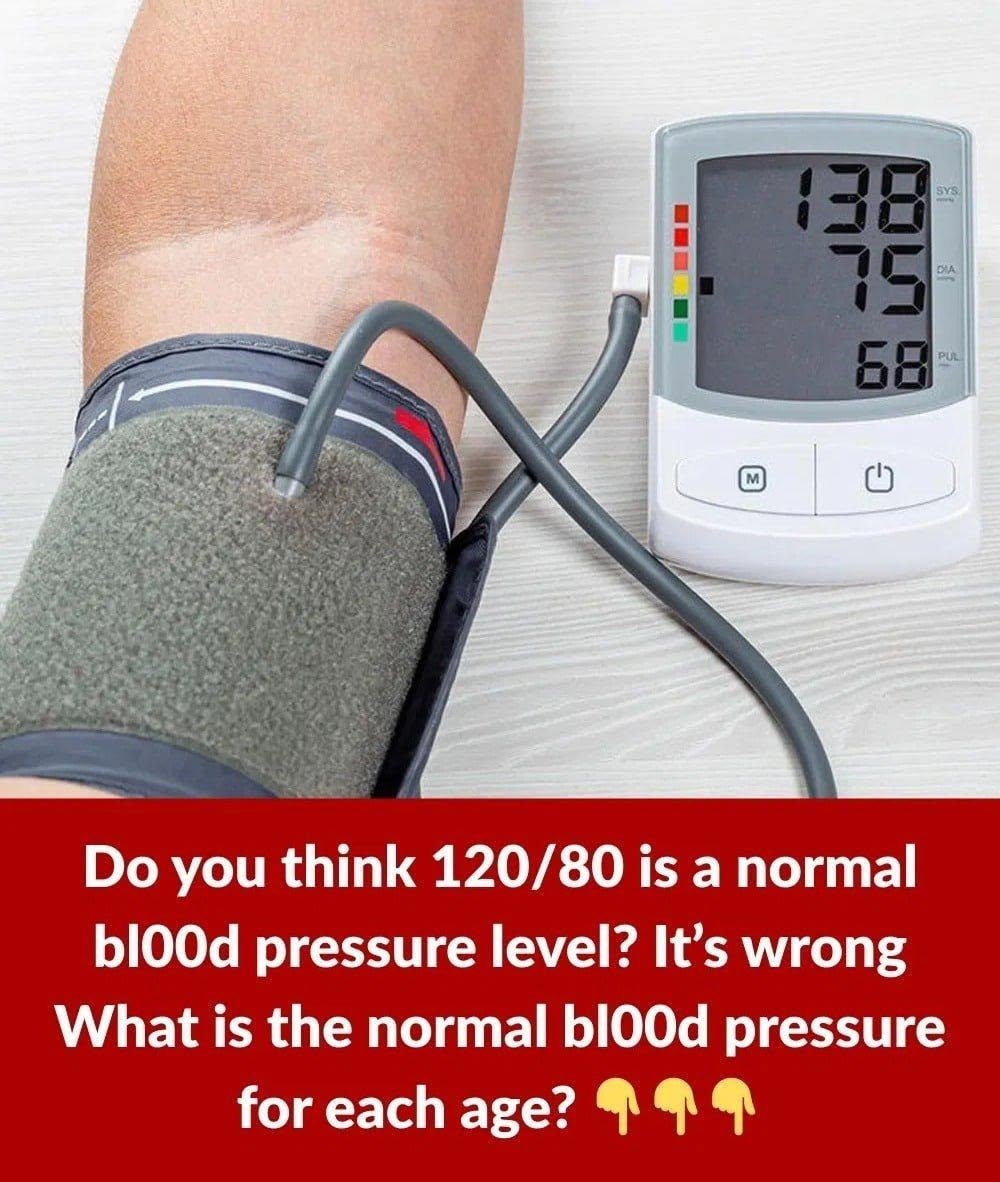
Blood pressure tends to rise naturally with age as blood vessels gradually lose elasticity. Clinical guidelines set target ranges by age category to maintain healthy vascular function and reduce long-term cardiovascular risk.
Average Healthy Blood Pressure by Age Group
For adults, ideal blood pressure across all age brackets remains under 120/80 mmHg. Higher readings in older adults reflect typical vascular stiffness, but levels consistently above 130/80 mmHg indicate hypertension regardless of age.
| Age Bracket | Typical Average Systolic (Top) | Typical Average Diastolic (Bottom) | Target Ideal Range |
| Children (1–5 yrs) | 80–110 mmHg | 55–70 mmHg | Measured using age/height percentiles |
| Children (6–12 yrs) | 90–115 mmHg | 60–75 mmHg | Measured using age/height percentiles |
| Teens (13–18 yrs) | 110–120 mmHg | 65–80 mmHg | $<120 / <80\text{ mmHg}$ |
| Adults (19–40 yrs) | 110–120 mmHg | 70–80 mmHg | $<120 / <80\text{ mmHg}$ |
| Adults (41–60 yrs) | 115–125 mmHg | 75–85 mmHg | $<120 / <80\text{ mmHg}$ |
| Seniors (61–80 yrs) | 120–135 mmHg | 75–85 mmHg | $<130 / <80\text{ mmHg}$ |
| Older Adults (80+ yrs) | 130–140 mmHg | 70–85 mmHg | $<135–140 / <80\text{ mmHg}$ |
Adult Blood Pressure Categories (AHA Guidelines)
Regardless of age, modern medical guidelines classify adult blood pressure into five distinct stages:
-
Normal: Less than $120/80\text{ mmHg}$
-
Elevated: Systolic between $120\text{–}129\text{ mmHg}$ and diastolic less than $80\text{ mmHg}$
-
Stage 1 Hypertension: Systolic $130\text{–}139\text{ mmHg}$ or diastolic $80\text{–}89\text{ mmHg}$
-
Stage 2 Hypertension: Systolic $140\text{ mmHg}$ or higher or diastolic $90\text{ mmHg}$ or higher
-
Hypertensive Crisis: Systolic over $180\text{ mmHg}$ and/or diastolic over $120\text{ mmHg}$ (Requires immediate medical attention)
Key Age-Related Factors
-
Systolic vs. Diastolic Drift: Diastolic pressure typically peaks around age 50 to 60 and may drop slightly in later decades, while systolic pressure continues rising due to arterial stiffness.
-
Flexible Targets for Seniors: Doctors often tolerate slightly higher systolic pressures ($130\text{–}135\text{ mmHg}$) in frail adults over 80 to prevent dangerous lightheadedness, dizziness, and falls caused by overtreatment.
-
Pediatric Percentiles: In children under 13, normal blood pressure is evaluated using standardized percentiles based on sex, age, and height rather than fixed numerical thresholds.
