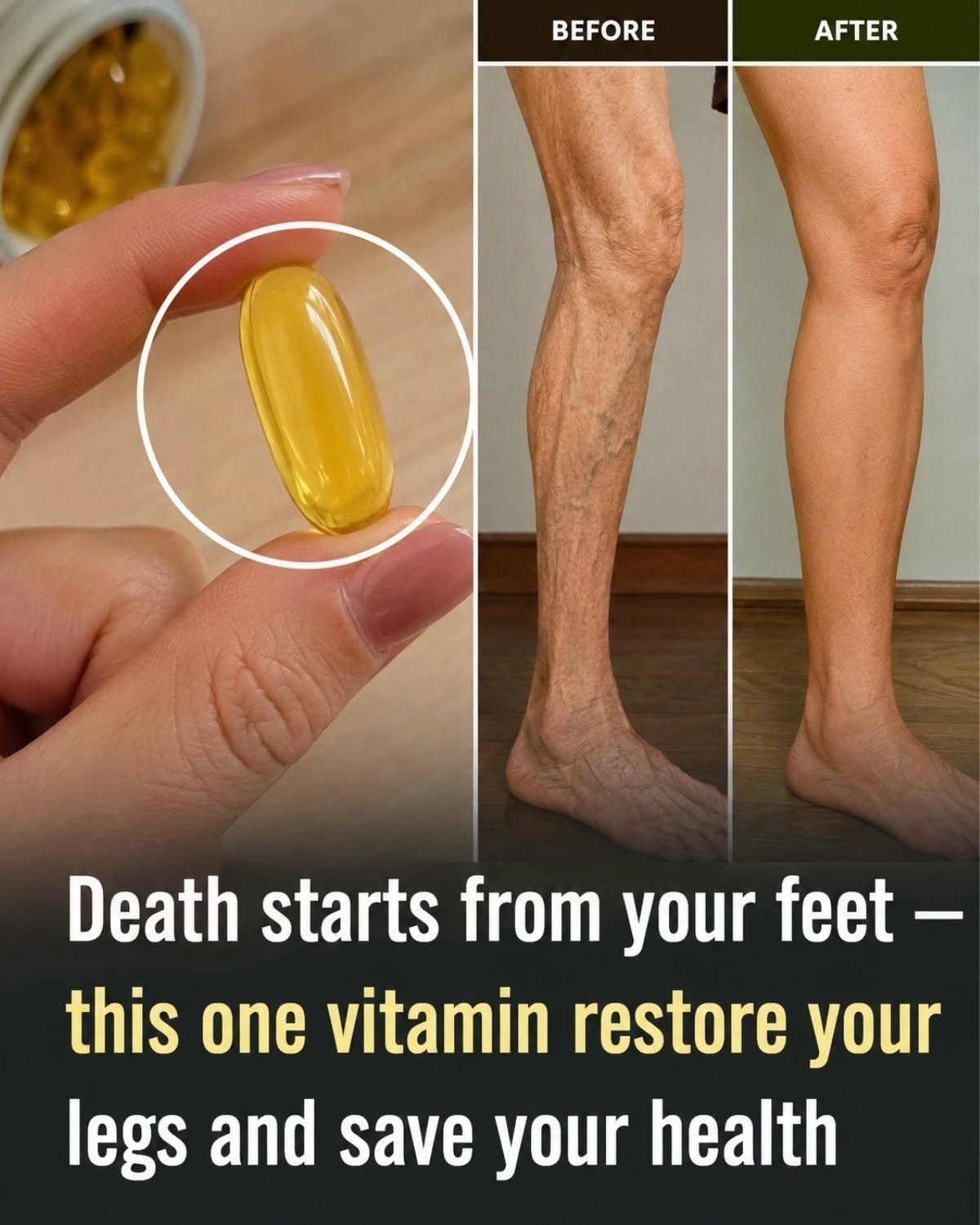
Chronically heavy calves, numbness, tingling (“dead feet”), or cramping in the lower extremities often stem from micro-vascular insufficiency or peripheral nerve degeneration.
While structural vascular issues must always be evaluated by a clinician, the primary micronutrient missing in these clinical presentations is Vitamin B1 (Thiamine)—specifically in its high-bioavailability, lipid-soluble form, Benfotiamine—often working in tandem with Vitamin B12 (Cobalamin) and Magnesium.
Key Biological Drivers
1. Endothelial & Micro-Vascular Damage (Vitamin B1 Deficiency)
-
Mechanism: High circulating blood glucose and oxidative stress activate the polyol and hexosamine pathways, causing advanced glycation end-products ($\text{AGEs}$) to accumulate in the small capillaries supplying the legs.
-
Impact: Micro-vascular starvation restricts oxygen and nutrient delivery to lower-limb muscles, producing a sensation of “heavy,” leaden calves and chronic fatigue after short walks.
2. Peripheral Nerve Demyelination (Vitamin B12 & B1 Deficiencies)
-
Mechanism: Thiamine and Cobalamin are essential cofactors for maintaining the myelin sheath that insulates peripheral sensory and motor nerves.
-
Impact: Deficiencies cause progressive axonal degeneration, leading to “dead feet” (paresthesia, numbness, or loss of protective sensation) starting in the toes and ascending up the legs.
3. Neuromuscular Hyperexcitability (Magnesium Depletion)
-
Mechanism: Magnesium regulates the $\text{Na}^+/\text{K}^+$–$\text{ATPase}$ pump and controls calcium influx at the neuromuscular junction.
-
Impact: Depleted cellular magnesium causes persistent involuntary muscle contractions, resulting in nocturnal calf cramps and tight, rigid leg tissues.
Micronutrient & Symptom Targeted Matrix
| Micronutrient | Specific Form | Primary Physiological Target | Targeted Symptom |
| Vitamin B1 | Benfotiamine (Fat-soluble thiamine) | Crosses nerve cell membranes & blocks $\text{AGE}$ formation | Heavy calves, burning foot pain, and vascular damage |
| Vitamin B12 | Methylcobalamin | Rebuilds peripheral myelin sheaths | “Dead feet,” numbness, and loss of sensation |
| Magnesium | Magnesium Glycinate / Malate | Regulates muscle relaxation & neuromuscular firing | Nocturnal calf cramps & persistent muscle tightness |
| Vitamin B9 | L-Methylfolate | Enhances endothelial nitric oxide production | Poor peripheral micro-circulation and cold feet |
