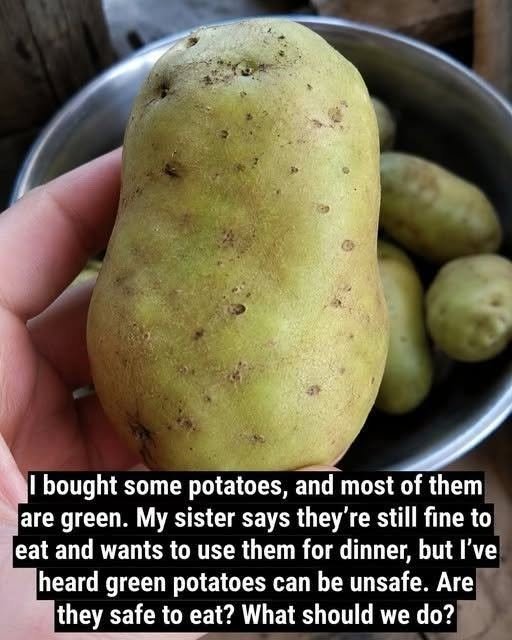
When you pull a bag of potatoes from the pantry and find a greenish hue staring back at you, it is easy to wonder if you are holding a toxic hazard. While sensationalized food blogs sometimes treat green potatoes like a ticking biological clock, the actual science is straightforward and manageable.
Why Do Potatoes Turn Green?
The green color itself is actually two different stories happening at once:
-
Chlorophyll Production: When potatoes are exposed to sunlight or bright indoor store lighting, they begin to photosynthesize. They produce chlorophyll—the exact same harmless, green plant pigment found in broccoli and spinach. Chlorophyll is entirely safe and tasteless.
-
The Solanine Warning Flag: The green color serves as a visual indicator. Under those same conditions of light exposure or bruising, the potato ramps up production of solanine (and related glycoalkaloids), a natural toxin the plant uses as a defense mechanism against insects and animals.
Can You Still Eat Them?
It depends entirely on the extent of the greening:
-
Minor Surface Greening: If a potato has only small, light green patches or a few sprouts, it is usually safe to salvage. Solanine concentrates heavily in the skin, sprouts, and outer layers. Peeling the potato deeply and cutting away all green flesh removes the vast majority of the toxin.
-
Deep Greening or Bitter Taste: If the potato is heavily green beneath the skin, or if a cooked piece tastes sharp or bitter, throw it out. Solanine is heat-stable, meaning standard cooking methods like boiling, baking, or frying will not destroy it. Consuming high amounts of solanine can cause acute gastrointestinal distress, including nausea, vomiting, and stomach cramps.
How to Prevent Potato Greening
Preventing waste comes down to proper storage habits:
-
Keep Them Dark: Store potatoes in a cool, dark place (like a pantry, cupboard, or cellar) away from direct sunlight and harsh overhead kitchen lights.
-
Ditch the Plastic: Avoid storing potatoes in sealed plastic bags. Use a paper bag, cardboard box, or mesh basket that blocks light while allowing air circulation.
-
Separate From Onions: Store onions elsewhere; the gases they emit can accelerate sprouting and spoilage in nearby potatoes.
The Bottom Line
A little bit of surface greening doesn’t mean your entire bag belongs in the trash—just grab a paring knife, peel away the green areas, and cook them with confidence. But if a potato is deeply discolored or tastes bitter, trust your instincts and toss it.
