Viral health clips, social media thumbnails, and online ads frequently warn that “9 symptoms in your feet” are an absolute sign of a single, hidden disease—such as failing kidneys, severe liver damage, or advanced diabetes.
In clinical medicine and podiatry, however, your feet do not point to just one single condition. Because the feet sit at the furthest point from your heart (where blood vessels are smallest and nerves are longest), they act as a sensitive early-warning system for a wide range of underlying cardiovascular, metabolic, neurological, and renal issues.
Here is an objective, science-based breakdown of 9 common foot symptoms, the specific body systems they reflect, and what they actually signal:
The 9 Foot Symptoms and What They Signal
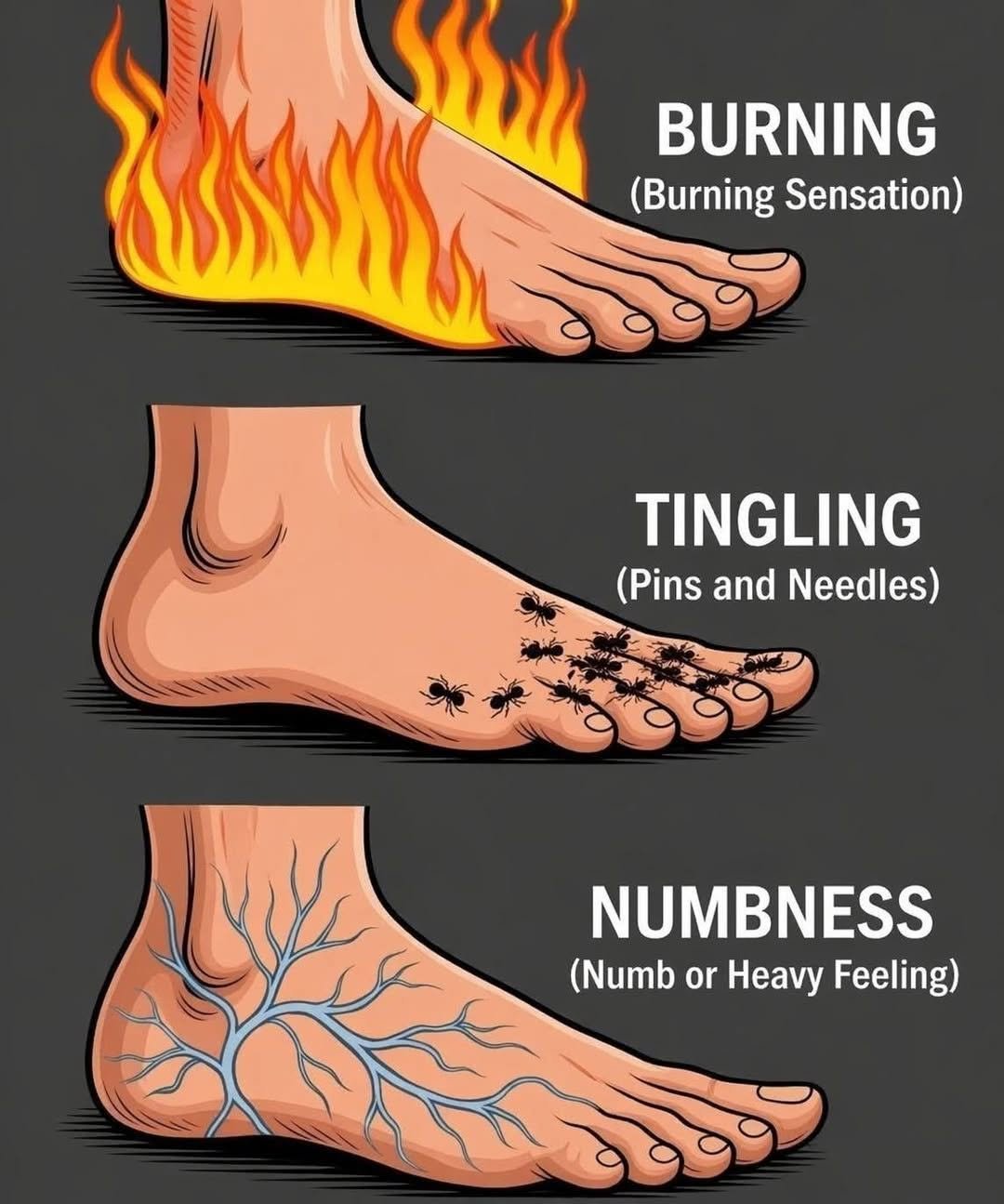
1. Burning, Numbness, or “Pins and Needles” (Paresthesia)
-
What It Signals: Peripheral Nerve Damage or Compression.
-
The Mechanism: Long-term high blood sugar (diabetic neuropathy) damages the small blood vessels (vasa nervorum) supplying foot nerves. It can also stem from severe Vitamin B12 deficiency (myelin sheath loss) or nerve entrapment in the lower spine (sciatica).
2. Persistent Cold Feet and Pale or Bluish Toes
-
What It Signals: Poor Arterial Circulation (Peripheral Artery Disease – PAD).
-
The Mechanism: Plaque buildup (atherosclerosis) narrows the major arteries supplying blood to the lower limbs. Deprived of oxygenated blood flow, the feet feel icy, look pale when elevated, and take on a bluish hue when hanging down.
3. Deep Indented Swelling Around the Ankles (Pitting Edema)
-
What It Signals: Systemic Fluid Retention (Heart, Kidney, or Liver Dysfunction).
-
The Mechanism: When the kidneys fail to flush excess sodium, the heart’s pumping efficiency drops (congestive heart failure), or liver failure reduces blood protein (albumin), fluid leaks out of capillaries and pools in the feet due to gravity.
4. Loss of Hair on the Toes and Lower Legs
-
What It Signals: Chronic Microvascular Ischemia.
-
The Mechanism: Hair follicles require a rich nutrient and oxygen supply from microscopic capillaries to sustain growth. When peripheral blood flow declines severely (often due to advanced PAD or long-standing vascular disease), hair follicles die off and skin becomes shiny and thin.
5. Sudden, Severe Joint Pain in the Big Toe (Podagra)
-
What It Signals: Gout (Uric Acid Crystal Accumulation).
-
The Mechanism: When uric acid levels in the blood run high, excess acid forms sharp, needle-like urate crystals that deposit in joint spaces. Because the big toe joint operates at a slightly lower temperature than the core body, crystals crystallize there first, causing intense inflammation and redness.
6. Frequent Nighttime Foot Cramps (“Charley Horses”)
-
What It Signals: Electrolyte Imbalances or Dehydration.
-
The Mechanism: Involuntary muscle spasms in the arches or calves often signal low serum levels of magnesium, potassium, or calcium. It can also be triggered by chronic kidney disease altering mineral balance or simple dehydration after exertion.
7. Non-Healing Sores or Ulcers on the Soles or Toes
-
What It Signals: Impaired Tissue Healing (Diabetic Foot Ulcers / PAD).
-
The Mechanism: A combination of loss of sensation (neuropathy prevents you from feeling a small blister or pebble) and inadequate arterial blood supply means minor skin damage cannot repair itself, quickly turning into a deep, high-risk ulcer.
8. Thick, Yellowed, or Crumbly Nails
-
What It Signals: Fungal Nail Infection (Onychomycosis) or Vascular Stasis.
-
The Mechanism: Fungal spores thrive in dark, moist footwear, slowly invading the keratin layers of the nail bed. Poor local blood circulation makes it harder for the immune system to fight off localized nail bed infections.
9. Discolored, Dark Spots Under the Toenail
-
What It Signals: Subungual Hematoma or Melanoma.
-
The Mechanism: A dark purple or black mark is most often trapped blood from physical trauma (like dropping an object or tight shoes). However, a persistent dark streak running vertically through the nail without trauma can occasionally signal a rare form of skin cancer (subungual melanoma).
The Medical Takeaway
Foot symptoms are rarely a single diagnostic sentence, but rather a collection of clues. If you notice a persistent cluster of these signs—particularly non-healing ulcers, sudden swelling in both legs, or burning numbness that worsens at night—do not rely on herbal foot soaks or internet detox patches.
Schedule an evaluation with your primary care physician or a podiatrist for basic diagnostic checks, such as a physical vascular exam (checking foot pulses), blood sugar tests (HbA1c), or nerve conduction checks.
