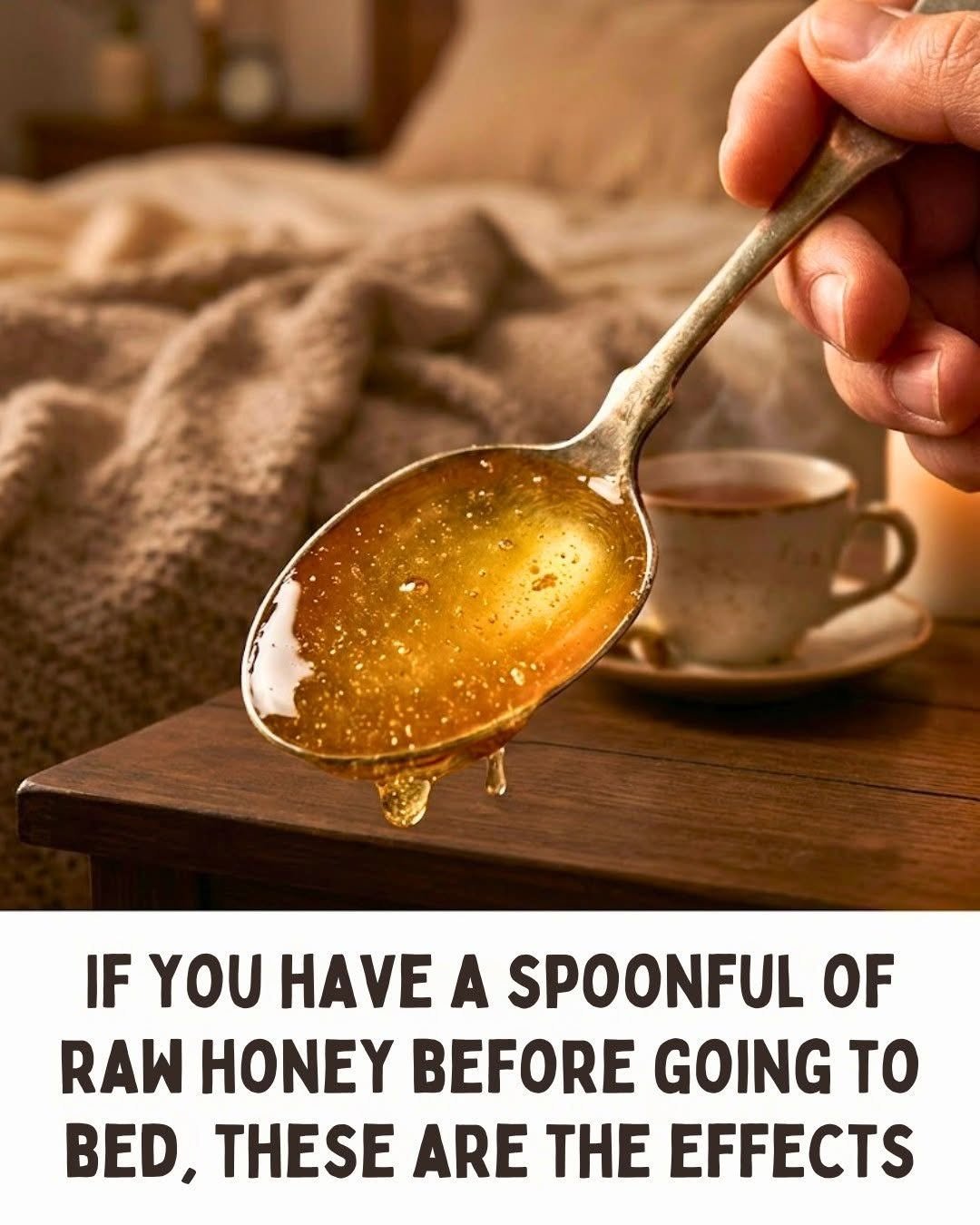
Taking a spoonful of honey before going to bed is a popular traditional sleep remedy that has gained interest in integrative medicine and sleep research. While online videos often exaggerate it as a guaranteed cure for insomnia, a small amount of raw honey before bed influences metabolic and neurological pathways during sleep.
Here is an objective, science-based breakdown of the physiological mechanisms behind taking a spoonful of honey before sleep, its proven benefits, and important precautions:
The Science: How Honey Works Overnight
The physiological effects of taking roughly 1 teaspoon to 1 tablespoon (about 10 to 15 grams) of honey before bed revolve around two key mechanisms: liver glycogen storage and melatonin synthesis.
1. Replenishing Liver Glycogen (Preventing Overnight Stress Signals)
-
The Mechanism: Your brain consumes energy continuously throughout the night, relying primarily on glucose stored in the liver (liver glycogen). If liver glycogen stores drop too low during the 7 to 8 hours of fast, the brain perceives an energy crisis.
-
The Hormonal Trigger: In response, the adrenal glands release stress hormones like cortisol and adrenaline to stimulate gluconeogenesis (breaking down protein to produce glucose). Elevated nighttime cortisol can cause early awakening, light fragmented sleep, or midnight restlessness.
-
The Role of Honey: Honey contains a nearly equal ratio of fructose and glucose. Fructose preferentially travels to the liver, where it is efficiently converted and stored as liver glycogen. This provides a steady, slow-burning fuel supply for the brain, helping prevent nocturnal cortisol spikes.
2. Supporting Tryptophan and Melatonin Production
-
The Mechanism: The small, controlled amount of glucose in honey causes a gentle, subtle rise in circulating insulin.
-
The Brain Pipeline: Insulin facilitates the movement of competing amino acids out of the bloodstream and into skeletal muscle, allowing tryptophan (an essential amino acid) to cross the blood-brain barrier more easily. Once in the brain, tryptophan is converted into serotonin, which is then synthesized into melatonin—the primary hormone that regulates your circadian sleep-wake cycle.
3. Suppressing Coughs (Demulcent Action)
-
The Mechanism: For individuals whose sleep is interrupted by a dry throat, post-nasal drip, or a nighttime tickle/cough, honey acts as a physical demulcent. It coats the mucous membranes of the pharynx, soothing sensory nerve endings and suppressing the cough reflex. Clinical trials show raw honey can be as effective as over-the-counter cough suppressants (like dextromethorphan) for nocturnal cough relief.
Best Practices for Nighttime Honey Use
If you want to incorporate honey into your evening routine safely:
-
The Proper Dose: Stick to 1 teaspoon to 1 tablespoon (about 5 to 10 ml). Taking excessive amounts introduces too much sugar right before bed, which can spike blood glucose and backfire on sleep quality.
-
Type of Honey: Unprocessed, raw honey or high-grade wildflower honey is preferred over commercial, highly refined honey blends, as raw varieties retain beneficial micronutrients, enzymes, and trace minerals.
-
How to Take It: Consume it directly off the spoon, or stir 1 teaspoon into a warm, caffeine-free herbal tea (such as chamomile, valerian, or lemon balm) about 30 to 60 minutes before turning off the lights.
Critical Precautions and Contraindications
-
Infant Warning (Under 12 Months): Never give honey to infants under one year old. Raw honey can contain spores of Clostridium botulinum, which can cause severe, life-threatening infant botulism in an immature digestive system.
-
Diabetes and Insulin Resistance: While honey has a slightly lower glycemic index than table sugar due to its fructose content, it is still a concentrated source of carbohydrates (fructose and glucose). Individuals with type 1 or type 2 diabetes should consult their physician or dietitian before adding late-night sugars to their routine.
-
Dental Hygiene: Because honey is sticky and contains natural sugars, ensure you brush your teeth after consuming it to prevent tooth decay and dental cavities overnight.
