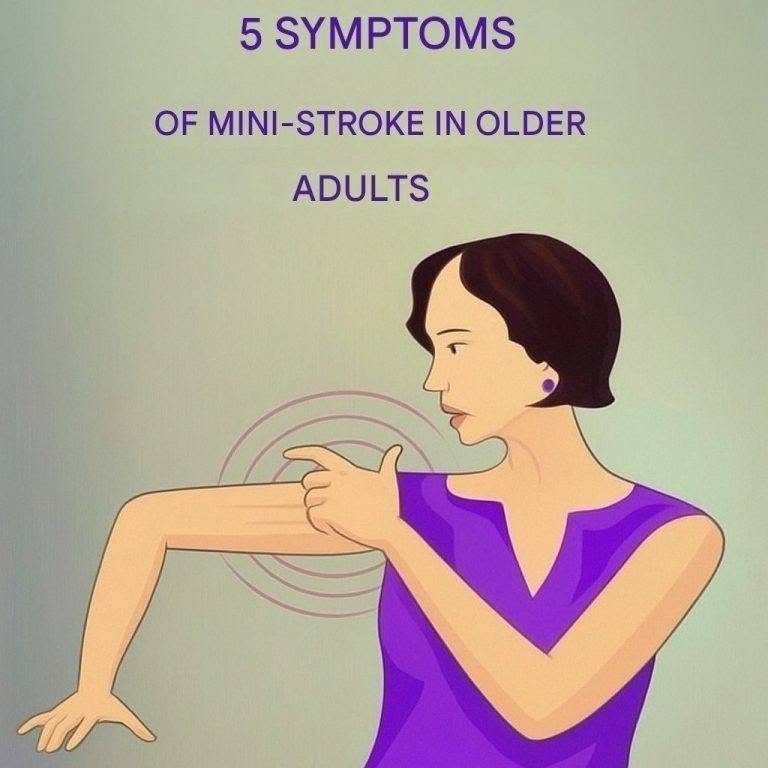
Viral health clips and online wellness blogs frequently use dramatic headlines like “5 symptoms of a mini-stroke you should never ignore” to highlight sudden neurological events.
In clinical neurology and emergency medicine, a “mini-stroke”—medically known as a Transient Ischemic Attack (TIA)—is not just a minor scare; it is a critical medical emergency and a major warning sign that a full, debilitating stroke may soon occur.
Here is an objective, science-based breakdown of what a TIA is, the 5 classic warning signs, and why immediate emergency medical evaluation is mandatory.
What Is a Transient Ischemic Attack (TIA)?
A TIA occurs when a blood clot temporarily blocks an artery supplying blood to a region of the brain, starving brain tissue of oxygen.
-
The Key Distinction: Unlike a full ischemic stroke (where brain tissue dies permanently), the blockage in a TIA dissolves or dislodges on its own within minutes to a few hours.
-
The Clinical Reality: Because the symptoms disappear completely, many older adults and families mistakenly brush it off as “fatigue,” “a pinched nerve,” or “vertigo.” However, clinical studies show that up to 10% to 15% of people who suffer a TIA will have a major stroke within three months, with the highest risk concentrated in the first 24 to 48 hours.
The 5 Classic Warning Signs (The FAST Framework and Beyond)
Neurologists use the FAST acronym, alongside broader neurological symptoms, to identify sudden vascular events in the brain. If an older adult experiences any of these symptoms—even if they resolve in 10 minutes—it demands immediate attention:
1. Sudden Facial Droop or Asymmetry
-
The Mechanism: Ischemia in the motor cortex or cranial nerves disrupts voluntary muscle control on one side of the face.
-
The Sign: One side of the face suddenly droops or feels numb. When asked to smile, the smile is uneven or lopsided.
2. Sudden Weakness or Numbness in One Arm or Leg
-
The Mechanism: A blockage in the middle cerebral artery disrupts sensory and motor pathways controlling one entire lateral half of the body (hemiparesis).
-
The Sign: Sudden difficulty lifting an arm, a heavy or numb feeling in one leg, or dropping objects unexpectedly due to loss of grip strength on one side.
3. Sudden Slurred Speech or Difficulty Finding Words (Aphasia)
-
The Mechanism: Ischemia affecting the language centers of the brain (such as Broca’s or Wernicke’s areas) impairs the ability to articulate or comprehend speech.
-
The Sign: Slurred words, garbled speech, talking in unintelligible sentences, or an inability to understand what others are saying.
4. Sudden Loss of Vision in One or Both Eyes (Amaurosis Fugax)
-
The Mechanism: A tiny micro-embolus temporarily blocks the retinal artery, cutting off blood flow to the eye.
-
The Sign: A sudden, painless dimming, blurring, or total temporary loss of vision in one eye, often described by patients as a “shade pulling down” over their field of vision.
5. Sudden Severe Dizziness, Loss of Balance, or Coordination
-
The Mechanism: A vascular event in the posterior circulation (the brainstem or cerebellum) disrupts balance, spatial orientation, and fine motor control.
-
The Sign: Sudden, unprovoked vertigo, a staggering gait, sudden inability to walk straight, or uncharacteristic clumsiness.
What to Do Immediately
If you or an older adult experience any of these symptoms:
-
Call Emergency Services (911 or local emergency number) immediately. Do not wait to see if the symptoms go away on their own.
-
Note the Exact Time: Document the precise minute the symptoms first appeared. This is critical information for emergency physicians if clot-busting medications or interventional procedures are required.
-
Never Drive Yourself: Always arrive at the emergency department via ambulance so medical triage and neurological monitoring begin immediately.
