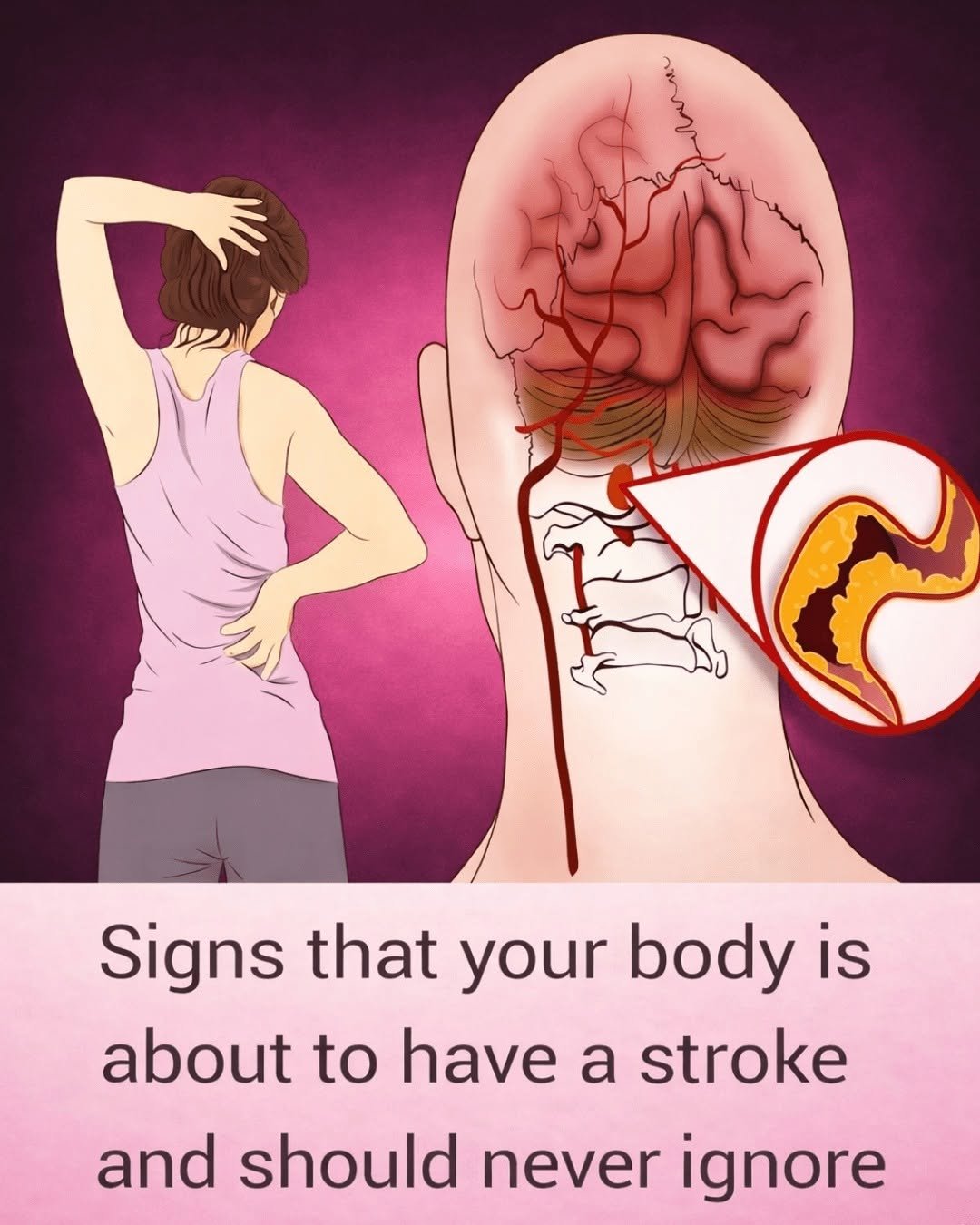
Viral health articles and medical PSAs frequently emphasize stroke awareness because time is brain. When blood flow to a region of the brain is abruptly interrupted, millions of neurons begin to die every minute.
While the classic FAST acronym covers the most frequent presentations, cerebrovascular events can manifest in diverse ways depending on which specific blood vessel or area of the brain is affected.
Here is an objective, science-based breakdown of 10 early warning signs of a stroke, the physiological mechanisms behind them, and why immediate emergency intervention is critical:
1. Sudden Unilateral Facial Weakness or Drooping
-
The Mechanism: Ischemia in the motor cortex or disruption of the facial nerve pathway impairs voluntary muscle control on one side of the face.
-
The Sign: One side of the face droops or feels numb. When the person attempts to smile, the movement is uneven, or one corner of the mouth fails to lift.
2. Sudden Weakness or Numbness in One Arm or Leg (Hemiparesis)
-
The Mechanism: A blockage or hemorrhage in the middle cerebral artery disrupts the neural circuits that govern motor and sensory function on the opposite side of the body.
-
The Sign: Sudden difficulty lifting one arm, a heavy or numb feeling down an entire side of the body, or unexpectedly dropping items due to a loss of grip strength.
3. Sudden Slurred Speech or Inability to Speak (Dysarthria or Aphasia)
-
The Mechanism: Ischemia affecting the dominant hemisphere’s language centers (such as Broca’s or Wernicke’s areas) or the motor nerves controlling the tongue and lips impairs speech articulation and comprehension.
-
The Sign: Words sound garbled, slurred, or nonsensical. The person may struggle to find the right words or be completely unable to understand speech directed at them.
4. Sudden Loss of Vision or Dimming in One or Both Eyes
-
The Mechanism: Interrupted blood flow to the occipital lobe (the brain’s visual processing center) or a temporary blockage in the retinal artery cuts off visual signals.
-
The Sign: Sudden blurred vision, double vision (diplopia), a dark “shade” pulling down over one eye, or a sudden loss of peripheral vision.
5. Sudden, Severe Unexplained Headache (“Thunderclap Headache”)
-
The Mechanism: A hemorrhagic stroke (bleeding inside or around the brain) rapidly increases intracranial pressure and irritates the pain-sensitive membranes (meninges) surrounding the brain.
-
The Sign: A sudden, agonizing headache that strikes with maximum intensity within seconds—frequently described by patients as the “worst headache of their life”—sometimes accompanied by vomiting or a stiff neck.
6. Sudden Loss of Balance, Coordination, or Ataxia
-
The Mechanism: A disruption of blood flow to the cerebellum or brainstem—the regions responsible for spatial orientation, posture, and fine motor control.
-
The Sign: Sudden, unprovoked dizziness, a staggering or drunken gait, a sudden inability to walk straight, or unexplained clumsiness.
7. Sudden Confusion or Disorientation
-
The Mechanism: Ischemia affecting widespread cortical association areas impairs higher cognitive functions, memory retrieval, and environmental processing.
-
The Sign: Sudden difficulty understanding simple instructions, spatial disorientation (not knowing where you are), or abrupt personality and behavioral shifts.
8. Sudden Difficulty Swallowing (Dysphagia)
-
The Mechanism: Damage to the lower cranial nerves housed within the brainstem impairs the intricate muscular coordination required to move food and liquids safely from the mouth to the esophagus.
-
The Sign: Sudden drooling, coughing or choking while attempting to swallow saliva or water, or a feeling that food is stuck in the throat.
9. Sudden Numbness or “Pins and Needles” on One Side of the Body
-
The Mechanism: Interruption of the sensory pathways in the thalamus or parietal lobe blocks sensory signals traveling up from the body.
-
The Sign: A sudden, deadened numbness or localized “pins and needles” sensation confined entirely to one arm, leg, or one vertical half of the body.
10. Sudden Memory Loss or Visual Neglect
-
The Mechanism: Ischemia in specialized parietal or temporal lobes can temporarily erase recent memory or disable the brain’s ability to process one side of space.
-
The Sign: Complete disregard for objects, sounds, or even limbs on one side of the body (hemianesthesia or spatial neglect), alongside sudden short-term memory lapses.
What to Do Immediately
If you or someone nearby exhibits any of these signs—even if the symptoms fluctuate or disappear after a few minutes—call emergency services (911 or your local emergency number) immediately.
-
Note the Time: Document the exact minute symptoms began; this window dictates whether emergency physicians can administer time-sensitive clot-busting medications (thrombolytics) or perform endovascular thrombectomy.
-
Do Not Drive: Always transport the patient via ambulance so emergency medical personnel can begin neurological monitoring and vital sign stabilization en route to a certified stroke center.
