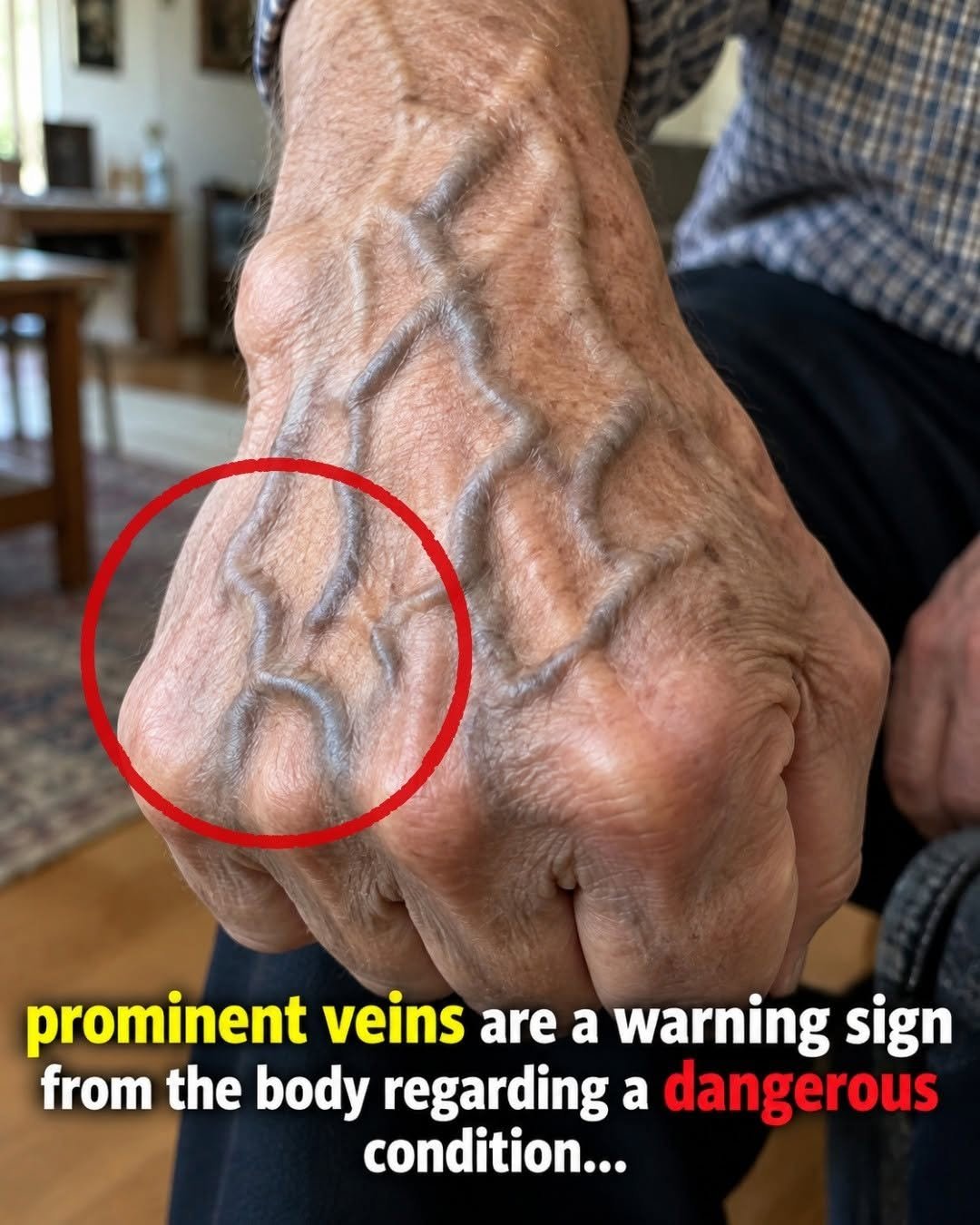
Viral video thumbnails and health posts frequently use alarmist headlines like “Visible Blue Veins After 60: What Your Blood Flow Is Screaming” to suggest that prominent blue veins are an urgent warning sign of failing circulation, dangerous blood clots, or severe heart disease.
In dermatology, phlebology, and gerontology, however, seeing prominent blue veins through the skin as you age is a completely normal anatomical shift. While sudden bulging, heat, or localized pain in a vein requires clinical evaluation, clear blue veins on your hands, arms, feet, and legs are usually the natural result of normal skin changes rather than a vascular crisis.
Here is an objective, science-based breakdown of why veins become more visible after 60, what optical physics makes them look blue, and when to differentiate normal aging from true medical issues:
The Science: Why Veins Become Prominent After 60
The reason veins look larger or more noticeable on mature skin comes down to structural changes in the skin and underlying tissues, not a sudden malfunction in your blood flow:
1. Dermal Thinning & Collagen Depletion
-
The Mechanism: As we age, the body slows its production of collagen and elastin—the structural proteins that keep skin thick and firm. By age 60, the dermal layer of the skin has thinned significantly, making underlying vascular structures far more visible.
2. Loss of Subcutaneous Fat
-
The Mechanism: Beneath the dermis lies a layer of subcutaneous fat that cushions and conceals deeper tissues. Over time—particularly on the backs of the hands, forearms, and tops of the feet—this fat layer naturally thins out. Without this cushioning pad, normal veins rest much closer to the surface.
3. Reduced Vascular Elasticity
-
The Mechanism: Venous walls contain elastic fibers and tiny one-way valves that help push deoxygenated blood back toward the heart against gravity. Over decades, these venous walls gradually lose elasticity and stretch slightly, allowing the veins to widen (dilate) and hold a slightly larger volume of blood.
The Optical Physics: Why Do Veins Look Blue?
A common myth is that blue veins mean blood inside them is oxygen-deprived and blue. In reality, human blood is always red.
Veins appear blue because of how light interacts with skin and tissue:
-
Red light has a long wavelength and penetrates deep into the tissue, where it is absorbed by hemoglobin in the blood.
-
Blue light has a short wavelength and cannot penetrate deeply. Instead, it scatters off the skin and subcutaneous tissue above the vein and reflects back to your eyes, giving the vein a blue or bluish-green tint.
Normal Aging vs. Signs of Vascular Issues
While visible blue veins are typically benign, it is important to recognize when a vein symptom reflects an underlying condition:
| Feature | Normal Age-Related Blue Veins | Potential Vascular Issue (e.g., Varicose Veins, Phlebitis, DVT) |
| Appearance | Flat or slightly raised, smooth blue/green lines | Twisted, cord-like, bulging, or ropey clusters |
| Sensation | Painless, normal body temperature | Tender, hot to the touch, throbbing, or painful |
| Skin Changes | Normal skin texture and tone | Discolored (dark brown/red), shiny, tight, or inflamed skin |
| Swelling | Minimal to none | Significant unilateral swelling (swelling in only one leg/foot) |
When to Consult a Physician
You should schedule a medical evaluation with a physician or vascular specialist if you experience any of the following:
-
Sudden, unilateral swelling in one leg accompanied by pain or warmth (a potential indicator of Deep Vein Thrombosis or DVT).
-
Hard, red, or tender cords along a vein (potential superficial thrombophlebitis).
-
Skin ulcers or dark skin discoloration near the ankles (signs of chronic venous insufficiency).
-
Bleeding from a varicose vein after minor skin trauma.
For flat or slightly raised blue veins on your hands and feet that cause no pain, rest assured: your circulatory system is simply showing through thinner, mature skin—not “screaming” in crisis.
