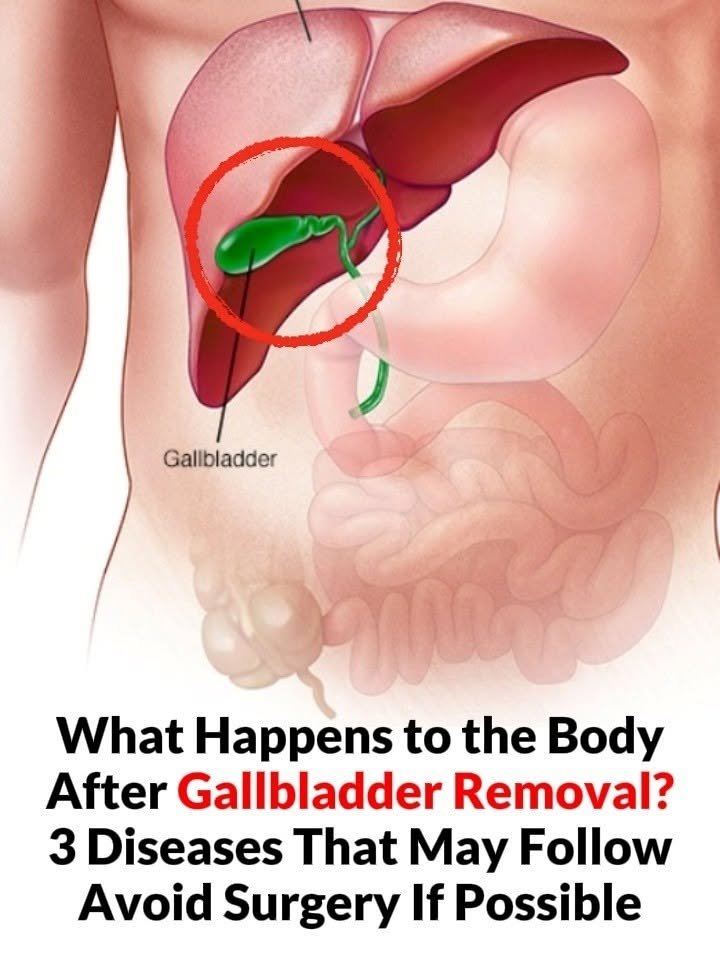
Viral health posts and social media headlines often use alarming titles like “3 Diseases That May Follow Gallbladder Removal – Avoid Surgery If Possible!” to suggest that cholecystectomy (gallbladder removal) destroys digestion, triggers systemic disease, or should be avoided at all costs.
In gastroenterology and general surgery, gallbladder removal is one of the most common and safest surgical procedures performed worldwide. While surgery should only be undertaken when medically necessary, delaying a required cholecystectomy for symptomatic gallstones or chronic inflammation carries severe risks, including gallbladder rupture, life-threatening pancreatitis, and severe bile duct infection (cholangitis).
Here is an objective, science-based breakdown of how the body adapts after gallbladder removal, the actual long-term gastrointestinal shifts that can occur, and the truth behind these sensationalized “3 disease” claims.
Physiology: How the Body Functions Without a Gallbladder
A common misconception is that removing the gallbladder stops the body from producing bile. In reality, the liver manufactures bile, not the gallbladder.
-
With a Gallbladder: The liver continuously secretes bile, which travels to the gallbladder to be stored and concentrated. When you eat a fat-containing meal, the gallbladder contracts, squirting a concentrated burst of bile into the small intestine (duodenum) to emulsify fats for digestion.
-
Without a Gallbladder: The liver continues to produce bile normally. However, instead of being stored and released in concentrated spurts, bile drips continuously from the liver directly into the small intestine.
For most people, the digestive system adapts smoothly within a few weeks to months, and fat digestion continues without major disruption.
Fact-Checking the “3 Diseases That May Follow”
Online posts claiming “3 diseases follow surgery” typically exaggerate manageable, benign post-surgical digestive adjustments into scary clinical conditions. Here is what medical science actually says:
1. Post-Cholecystectomy Syndrome (PCS) / Bile Acid Diarrhea
-
The Claim: “Removal triggers a permanent, incurable gut disease.”
-
The Reality: Up to 10% to 20% of patients experience loose stools, urgency, or mild abdominal cramping after eating fatty meals. Because bile now flows continuously into the gut regardless of whether food is present, excess bile acids can enter the large intestine, pulling water in and causing rapid transit (bile acid diarrhea).
-
The Clinical Fix: This is usually temporary as the intestines adapt. If persistent, it is easily and effectively managed with dietary modifications or low-dose bile acid sequestrants (such as cholestyramine), which bind excess bile in the gut.
2. Non-Alcoholic Fatty Liver Disease (NAFLD / MASLD)
-
The Claim: “Losing your gallbladder automatically destroys your liver.”
-
The Reality: Observational studies show an association between cholecystectomy and metabolic dysfunction-associated steatotic liver disease (MASLD). However, gallstones and fatty liver disease share the exact same underlying risk factors: metabolic syndrome, insulin resistance, central obesity, and high systemic inflammation. Removing the gallbladder does not “cause” liver disease; rather, individuals who develop gallstones were already at higher baseline risk for metabolic liver changes.
3. Increased Risk of Colon Cancer or SIBO
-
The Claim: “Continuous bile dripping causes immediate gut toxicity and bacterial overgrowth.”
-
The Reality: Some researchers have examined whether altered bile flow shifts the gut microbiome or mildly increases exposure of the colonic mucosa to secondary bile acids. However, large population-based epidemiological studies show that any absolute increase in risk is extremely low, and routine colon cancer screening protocols remain identical for post-cholecystectomy patients. Small Intestinal Bacterial Overgrowth (SIBO) is managed effectively with targeted dietary shifts or short-term antimicrobial protocols if it occurs.
The Dangers of “Avoiding Surgery at All Costs”
While avoiding unnecessary surgery is sound advice, ignoring a doctor’s recommendation for a necessary cholecystectomy can lead to acute, life-threatening complications:
-
Acute Cholecystitis: A blocked cystic duct causes severe inflammation, infection, and potential gangrene or perforation (rupture) of the gallbladder wall.
-
Gallstone Pancreatitis: A small stone slips out of the gallbladder and blocks the main pancreatic duct, triggering severe, autolytic inflammation of the pancreas that often requires ICU care.
-
Choledocholithiasis & Cholangitis: Stones block the main bile duct, causing severe jaundice and bacterial infection throughout the biliary tree.
Dietary Guidelines for Post-Gallbladder Care
To ensure a smooth recovery and prevent digestive distress after surgery:
-
Phase Fat In Gradually: For the first 3 to 4 weeks post-surgery, limit heavy, fried, or high-fat meals. Gradually reintroduce healthy fats (olive oil, avocados, nuts) in small portions so your liver’s continuous bile output can manage them.
-
Increase Soluble Fiber: Foods high in soluble fiber (oats, barley, apples, psyllium husk) help absorb excess bile acids in the digestive tract, firming up stools.
-
Eat Smaller, Frequent Meals: Spreading your food intake across 4 to 5 smaller meals prevents your digestive system from being overwhelmed by a single large, high-fat load.
