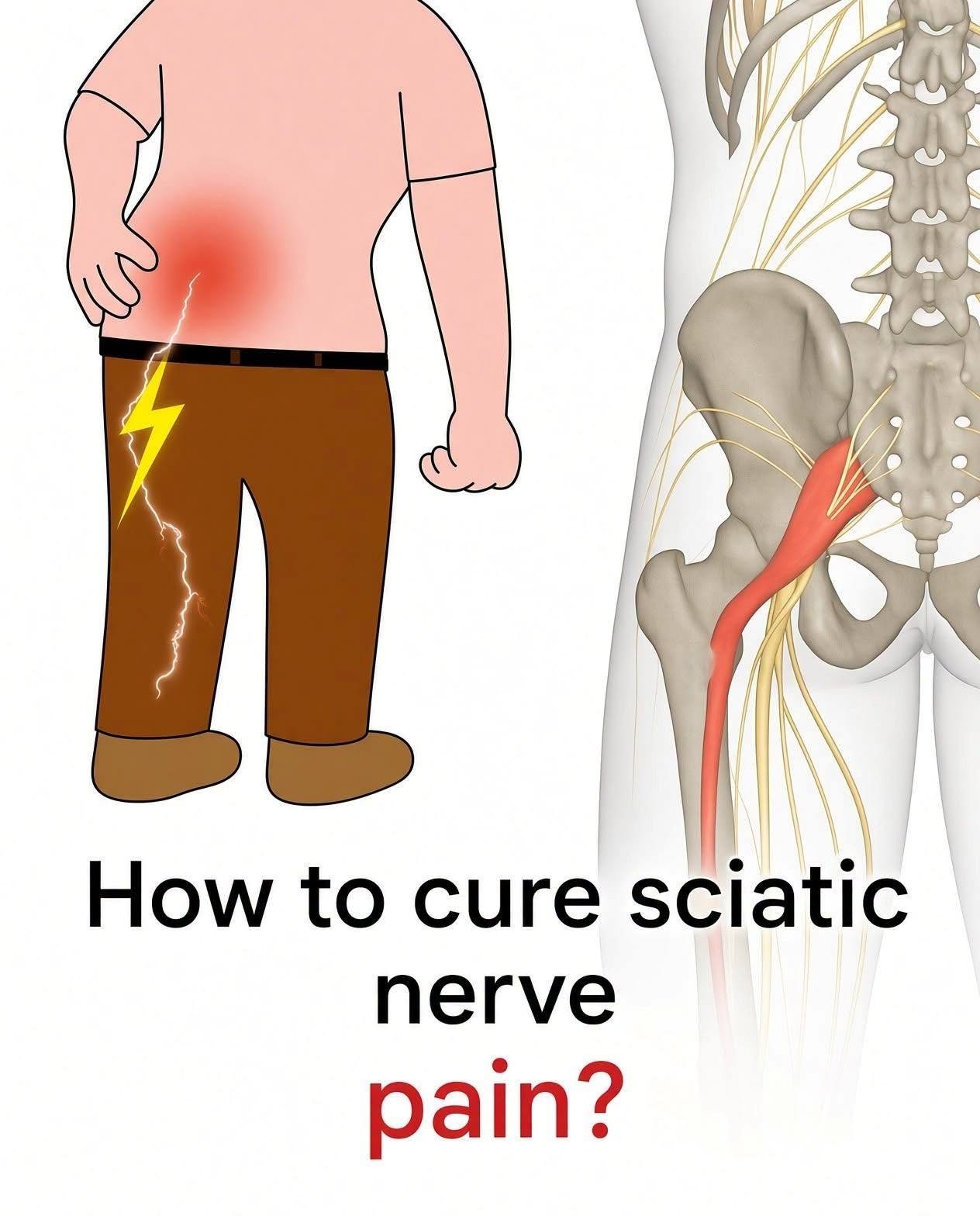
Viral health videos and social media wellness posts frequently feature quick, high-impact routines promising to “cure sciatica instantly in 3 minutes.”
In physical therapy and clinical orthopedics, sciatica is not a single diagnosis, but a symptom caused by irritation, inflammation, or compression of the sciatic nerve—the largest nerve in the body, which runs from your lower back through your buttocks and down each leg. Because the root cause can range from a bulging disc (herniated disc) to tight hip rotators (piriformis syndrome), a one-size-fits-all exercise routine can sometimes worsen symptoms if it compresses an already inflamed nerve root.
However, when performed gently and matched to your tolerance, specific therapeutic movements can decompress the nerve, relieve muscle spasms around the spine and hip, and significantly ease radiating leg pain.
Here is an objective, science-based breakdown of 3 effective, gentle exercises to relieve sciatica pain, the mechanics behind them, and crucial safety rules:
1. The Supine Figure-4 Stretch (For Piriformis-Related Sciatica)
-
Best For: Sciatica caused by tightness or spasms in the piriformis muscle in the buttock, which can pinch the sciatic nerve as it passes underneath or directly through it.
-
How to Perform:
-
Lie flat on your back on a comfortable surface with your knees bent and both feet flat on the floor.
-
Cross your right ankle over your left knee, creating a “figure-4” shape.
-
Reach your hands behind your left thigh (or over your left shin) and gently pull your left knee toward your chest.
-
Hold the stretch for 20 to 30 seconds while breathing deeply, feeling a gentle, non-sharp pull in the right buttock.
-
Lower down slowly and switch sides. Repeat 2 to 3 times per side.
-
-
The Mechanism: This external rotation and gentle stretch lengthens the tight piriformis muscle, lifting pressure off the underlying sciatic nerve trunk.
2. Gentle Pelvic Tilts (For Lower Back and Disc Relief)
-
Best For: Sciatica driven by mild lumbar spine stiffness or disc irritation, helping to mobilize the lower back without placing stress on weight-bearing joints.
-
How to Perform:
-
Lie on your back with your knees bent and feet flat on the floor, keeping your arms relaxed by your sides.
-
Take a gentle breath in, and as you exhale, tighten your abdominal muscles and flatten your lower back flat against the floor, tilting your pelvis upward slightly.
-
Hold this gentle engagement for 3 to 5 seconds, then relax your back back into its natural neutral curve.
-
Repeat this fluid rocking motion 10 to 12 times.
-
-
The Mechanism: Pelvic tilts engage the deep core stabilizers (transversus abdominis) and gently open up the facet joints and intervertebral foramina in the lower spine where the nerve roots exit, reducing localized compression.
3. Standing Hamstring Stretch (Modified)
-
Best For: Relieving tight hamstrings that pull on the pelvis and aggravate nerve tension down the posterior leg.
-
How to Perform:
-
Stand upright and place the heel of your affected leg up onto a low, stable surface (like a small step or footstool), keeping your leg straight and your toes pointing upward.
-
Keeping your spine straight (do not hunch or round your back), gently hinge forward at your hips until you feel a mild, comfortable stretch down the back of your thigh.
-
Hold for 20 to 30 seconds, breathe steadily, and step down. Repeat 2 to 3 times.
-
-
The Mechanism: Tight hamstrings pull the pelvis into a posterior tilt, flattening the natural curve of the lower back and irritating the sciatic nerve pathway. Lengthening them safely restores proper pelvic mechanics.
Critical Safety Rules for Sciatica Exercises
-
Never “Work Through” Sharp Pain: A mild pulling or stretching sensation is normal, but if an exercise causes sharp, electric, shooting pain down your leg, numbness, or tingling, stop immediately. Pushing through nerve pain can worsen inflammation.
-
Identify Your Trigger: If forward-bending movements (like toe touches) make your pain worse, your sciatica is likely disc-driven (where flexion pushes a disc backward). In that case, focus on extension-based movements (like gentle walking or standing extensions) and avoid deep forward stretches.
-
When to See a Doctor: If your sciatica is accompanied by “red flag” symptoms—such as sudden loss of bladder or bowel control, progressive leg weakness (drop foot), or severe numbness in the groin area (saddle anesthesia)—seek emergency medical evaluation immediately, as this can indicate cauda equina syndrome requiring urgent intervention.
