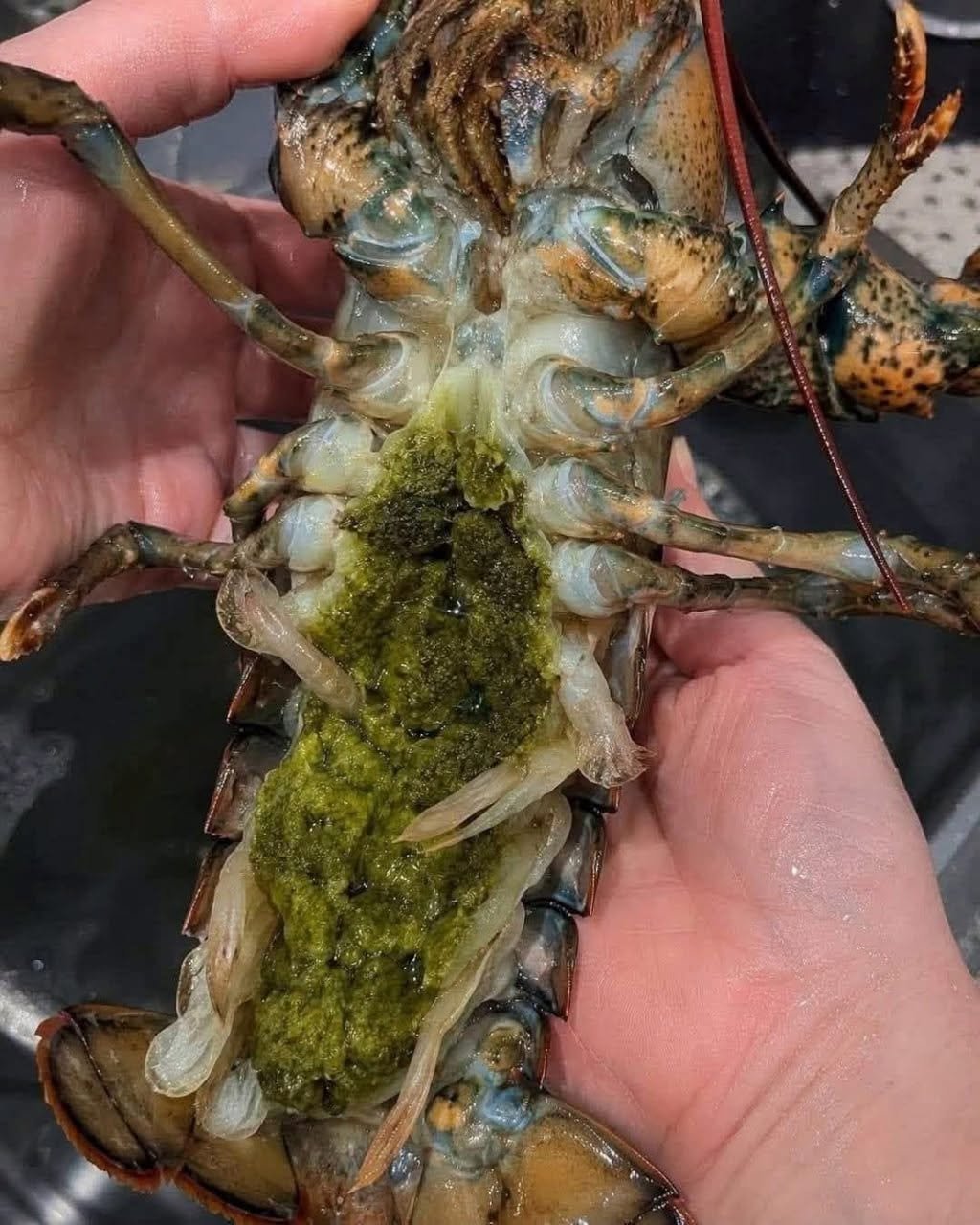
That green stuff inside your lobster is called tomalley, and it is completely natural—in fact, many seafood lovers consider it a delicacy.
Here is an objective breakdown of what it is, its culinary role, and important health advisories regarding its consumption:
What Is Tomalley?
Tomalley is the lobster’s hepatopancreas, an organ that functions as a combination of a human liver and pancreas. Its biological roles include filtering toxins from the water, producing digestive enzymes, and storing nutrients and fat. Because it stores fats and nutrients, the tomalley has a rich, buttery texture and a strong, savory flavor.
-
Color Variations: While it is typically pale green, tomalley can sometimes appear yellowish-brown depending on what the lobster has been feeding on (such as green algae or kelp).
-
Cooking Transformation: When raw, it is soft and greenish. When cooked, it firms up and turns a dark, mossy green.
Culinary Use vs. Safety Advisories
-
The Culinary Perspective: In traditional lobster boils and fine dining, the tomalley is often prized for its rich flavor. Cooks frequently mix it into melted butter, sauces, or gravies to add depth, or eat it straight from the body cavity.
-
The Health Advisory: Because the hepatopancreas acts as a filter, it can accumulate environmental contaminants, heavy metals (like cadmium), or natural marine biotoxins (such as paralytic shellfish poisoning toxins) if the lobster lived in waters affected by algal blooms (“red tide”) or industrial pollution.
For this reason, government health agencies (such as the FDA and Canadian Food Inspection Agency) advise against eating the tomalley, particularly for pregnant women, children, and individuals who consume lobster frequently.
The Bottom Line
If you accidentally eat a little bit mixed into the tail or claw meat, there is no need to panic—it will not harm you. However, for peace of mind, it is safest to scrape out and discard the green tomalley from the body cavity before enjoying the rest of the lobster meat.
