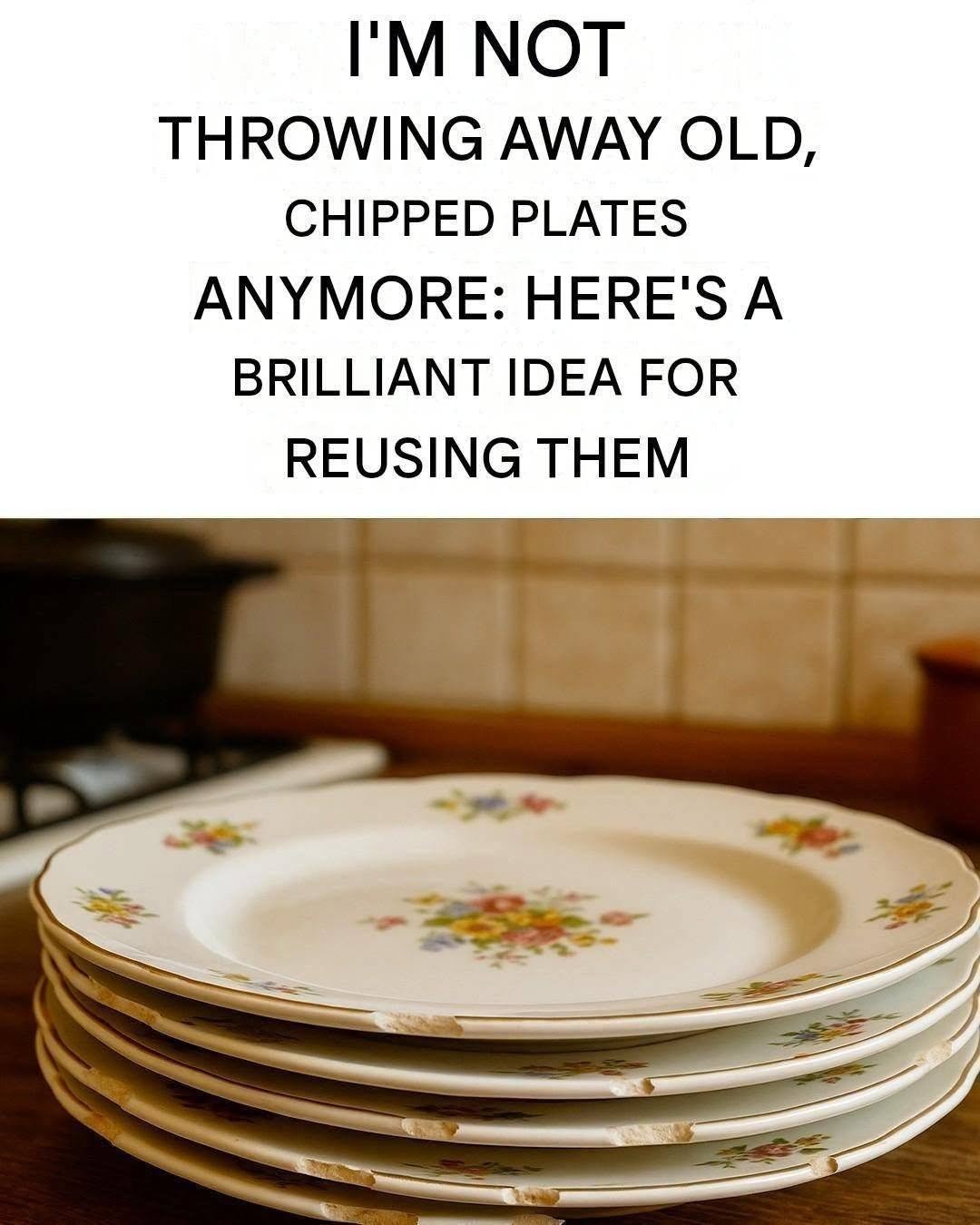
Viral DIY and upcycling videos frequently feature catchy headlines like “I’m not throwing away old, chipped plates anymore: here’s a brilliant idea!”—transforming cracked or mismatched ceramic dinnerware into decorative garden art, mosaic stepping stones, or tiered dessert stands.
While repurposing chipped plates into mosaic art or plant markers is a charming and creative craft project, chipped or cracked ceramic and stoneware plates should never be used for serving food.
Here is an objective, science-based breakdown of why chipped plates pose health risks in the kitchen, followed by creative, safe ways to upcycle them around your home and garden:
The Kitchen Safety Risk: Why Chipped Plates Must Retire
When a ceramic, porcelain, or stoneware plate develops a chip, crack, or flake along the rim, it undergoes two major structural and hygienic changes:
1. Bacterial Traps and Biofilms
-
The Mechanism: Most dinnerware is coated with a vitrified glass glaze that creates a smooth, non-porous surface. Once that glaze is chipped, the underlying raw ceramic or clay body (bisque) is exposed.
-
The Clinical Risk: Raw ceramic is porous like unglazed pottery. Microscopic cracks and pores absorb moisture, food particles, and bacteria from dishwater and meals. Even running chipped plates through a high-heat dishwasher often fails to fully sanitize deep interior pores, creating a breeding ground for bacterial biofilms.
2. Chemical Leaching Risks (Lead and Cadmium)
-
The Mechanism: Many vintage, hand-painted, or brightly colored ceramic glazes contain heavy metals like lead or cadmium to achieve vibrant reds, yellows, and greens.
-
The Clinical Risk: These heavy metals are securely locked beneath the smooth surface glaze. However, once the rim or surface is chipped, acidic foods (such as tomato sauce, citrus dressings, or vinegar) can interact with the exposed under-layer, potentially leaching trace heavy metals directly into your food.
Brilliant (and Safe) Ways to Reuse Chipped Plates
Instead of tossing your old dinnerware into the trash, you can safely repurpose them outside of the kitchen. Here are three creative upcycling projects:
1. Mosaic Garden Stepping Stones or Plant Trays
-
The Idea: Break the plates into smaller, manageable shards (wearing safety glasses and wrapping the plates in a thick towel before tapping them gently with a hammer) and use them to create vibrant mosaic patterns on concrete stepping stones, terracotta plant pots, or birdbaths.
-
Why It Works: It gives broken ceramics a stunning, colorful second life as outdoor decor without any food-contact risks.
2. Garden Markers and Drainage Shards
-
The Idea:
-
Plant Markers: Use a waterproof ceramic marker to write herb or vegetable names on broken plate rims, then push them upright into the soil of your garden beds.
-
Pot Drainage: Place a curved ceramic shard over the bottom drainage hole of a large flowerpot. It prevents potting soil from washing out through the hole while allowing excess water to drain freely.
-
-
Why It Works: The durable, weather-resistant nature of glazed ceramic stands up to rain, soil, and sun for years.
3. DIY Tiered Jewelry or Trinket Stand
-
The Idea: If a plate only has a minor chip on the outer rim, you can clean it thoroughly, drill a small hole in the exact center using a specialized diamond-tip glass/tile drill bit, and assemble a multi-tiered stand using a metal spindle kit.
-
Why It Works: Used strictly for holding rings, earrings, watches, or bathroom trinkets, it completely bypasses food contact while showcasing a lovely vintage pattern on your dresser.
