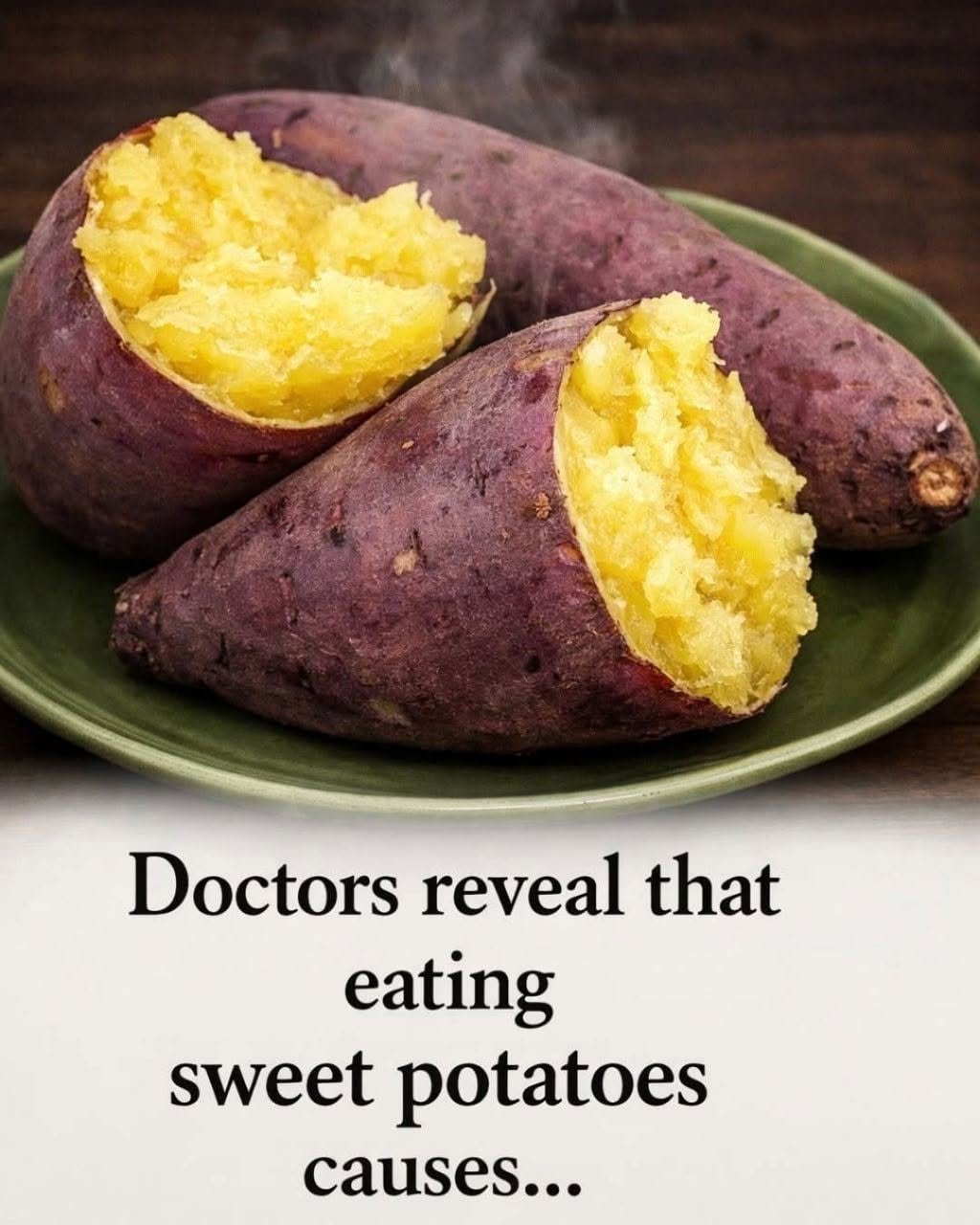
Viral wellness headlines and clickbait health articles love to feature dramatic cliffhangers like “Doctors reveal that eating sweet potatoes causes…”—often warning of sudden toxicity, dangerous vitamin overdoses, or mysterious health shocks.
In clinical nutrition and physiology, eating sweet potatoes does not cause hidden medical harm. Instead, regular consumption triggers several profound, well-documented metabolic and physiological responses in the body.
Here is an objective, science-based breakdown of what actually happens when you eat sweet potatoes:
1. Steady, Sustained Energy (Low Glycemic Impact)
-
The Mechanism: Unlike white potatoes or refined carbohydrates that can cause rapid blood sugar spikes, sweet potatoes are rich in complex carbohydrates and soluble dietary fiber.
-
What Happens: This fiber matrix slows down the digestive breakdown of starches into glucose. Glucose enters your bloodstream at a steady, gradual rate, providing sustained cellular energy without triggering the sharp insulin spikes and subsequent crashes associated with sugary snacks.
2. Massive Vitamin A and Antioxidant Infusion
-
The Mechanism: Bright orange sweet potatoes are packed with beta-carotene, a powerful carotenoid pigment that your liver and intestinal walls convert into active Vitamin A as the body needs it.
-
What Happens: Beta-carotene acts as a potent antioxidant, neutralizing free radicals that cause cellular damage and oxidative stress. This supports optimal immune function, protects skin cells from UV damage, and maintains the health of your retinal photoreceptors for sharp vision.
3. A Temporary Skin Color Shift (Carotenodermia)
-
The Mechanism: Because sweet potatoes are so dense in beta-carotene, eating large quantities of them over a sustained period can temporarily alter your skin tone.
-
What Happens: Excess beta-carotene that isn’t immediately converted into Vitamin A is stored in the outermost layer of skin (the stratum corneum). This results in a harmless, yellow-to-orange tint on the palms of the hands and soles of the feet—a benign condition called carotenodermia. It is completely harmless and reverses quickly if you reduce your intake of beta-carotene-rich foods.
4. Improved Gut Microbiome Diversity
-
The Mechanism: Sweet potatoes contain unique starch fractions and high levels of both soluble and insoluble dietary fiber.
-
What Happens: These fibers reach your large intestine intact, where they act as prebiotics. Beneficial gut bacteria ferment these fibers into short-chain fatty acids (SCFAs) like butyrate, which nourish the cells lining your colon, reduce gut inflammation, and support healthy digestive motility.
A Few Clinical Caveats
While sweet potatoes are exceptionally healthy, a couple of physiological factors are worth keeping in mind:
-
Oxalates and Kidney Stones: Sweet potatoes contain moderate levels of oxalates. If you have a personal history of calcium oxalate kidney stones, your physician may advise you to moderate your intake.
-
Potassium Content: Like bananas, sweet potatoes are rich in potassium. While excellent for blood pressure and muscle function, individuals with advanced chronic kidney disease (CKD) who require a low-potassium diet must monitor their portions carefully.
