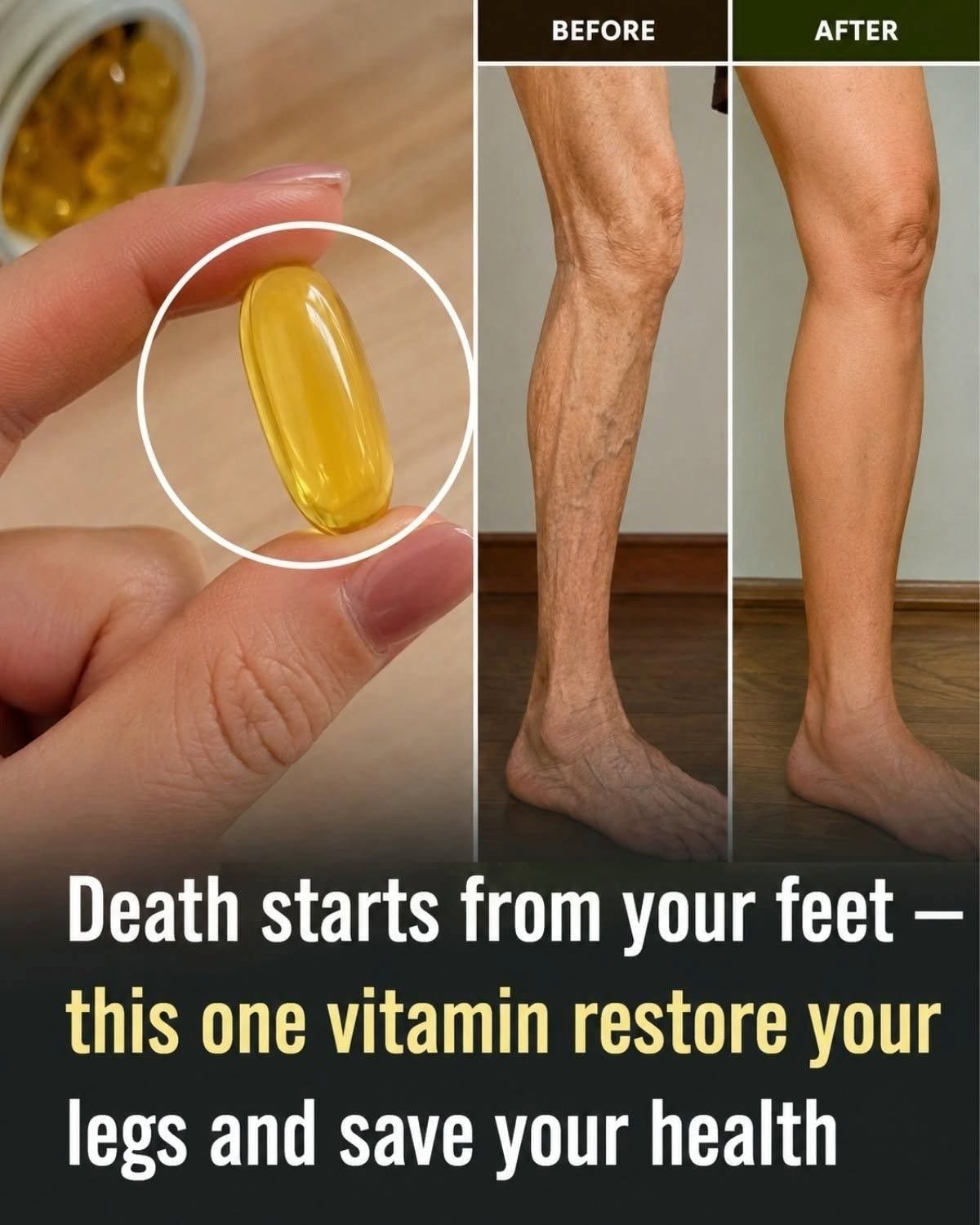
When your legs feel leaden, exhausted, or persistently achy, and your feet frequently go numb or feel “dead” with pins and needles, it is easy to write it off as just a long day on your feet. However, when these sensations become a regular occurrence, your lower extremities are often signaling a specific nutritional shortage or circulatory bottleneck.
While no single pill is a magic bullet for every leg issue, the constellation of “dead feet” and “heavy calves” usually points to a deficiency in a few key micronutrients—most notably Vitamin B12, Vitamin B1 (Thiamine), and iron.
Here is what your body is actually missing when your legs and feet feel heavy, numb, and drained, and how to address it.
1. Vitamin B12: The Nerve Protector (Addressing “Dead Feet”)
If you frequently experience numbness, a loss of sensation, or crawling “pins and needles” in your feet and toes, your peripheral nerves may be starving for Vitamin B12.
-
What It Does: B12 is essential for maintaining the myelin sheath—the protective insulating coating around your nerves that allows electrical signals to travel efficiently from your brain down to your toes. It also plays a vital role in producing red blood cells, which carry oxygen to your lower limbs.
-
The Deficiency Effect: When B12 levels drop, nerve signaling stumbles. This results in the classic “dead foot” sensation, burning feet, or a heavy, clumsy stride because your brain isn’t receiving crisp feedback from the nerves in your feet.
-
Top Sources: Clams, beef liver, fish, poultry, eggs, and fortified nutritional yeast or plant milks.
2. Vitamin B1 (Thiamine): The Muscle & Energy Fuel (Addressing “Heavy Calves”)
When your calves feel like they are weighted down with concrete after minimal exertion, or you experience stubborn nighttime muscle cramps, you may be low on thiamine (Vitamin B1).
-
What It Does: Thiamine acts as a metabolic spark plug, helping your muscle cells convert glucose into usable energy. It is also heavily involved in transmitting nerve signals to muscle tissue.
-
The Deficiency Effect: Without enough B1, your calf muscles run out of cellular fuel rapidly, leading to profound heaviness, fatigue, and sluggish muscle contraction.
-
Top Sources: Whole grains, legumes, pork, nuts, seeds, and green peas.
3. Iron and Oxygen Transport
Sometimes the issue isn’t nerve signaling or muscle energy, but a lack of oxygen delivery.
-
What It Does: Iron is the core component of hemoglobin, the protein in red blood cells responsible for hauling oxygen from your lungs down to your hardworking leg muscles.
-
The Deficiency Effect: Low iron stores (even before full-blown anemia sets in) rob your legs of oxygen, causing rapid fatigue, heaviness, and a strong link to Restless Legs Syndrome (RLS)—that uncomfortable, creeping sensation that forces you to constantly move your legs at rest.
-
Top Sources: Lean red meats, lentils, chickpeas, spinach, and pumpkin seeds.
Beyond Vitamins: Other Reasons Your Legs Feel Heavy
While nutritional gaps are a frequent culprit, persistent heavy calves and numb feet can also stem from:
-
Chronic Venous Insufficiency (CVI): If the tiny one-way valves in your leg veins weaken, blood pools in your lower calves due to gravity, creating a swelling, heavy sensation by the end of the day.
-
Dehydration and Electrolyte Implosion: Low magnesium, potassium, or sodium drastically impairs how muscles contract and relax, leading to early exhaustion and cramping.
-
Lumbar Nerve Compression: A tight lower back or mild disc bulge can pinch the nerves traveling down into your legs, mimicking the numbness of a vitamin deficiency.
How to Support Your Legs from the Ground Up
-
Focus on Whole-Food Density: Ensure your diet incorporates plenty of leafy greens, lean proteins, nuts, seeds, and B-complex-rich foods rather than relying on processed, calorie-dense foods that deplete nutrients.
-
Check Your Hydration and Electrolytes: Sometimes “heavy legs” are simply dehydrated muscles lacking adequate magnesium and potassium balance.
-
Keep Circulation Moving: If you sit or stand for long periods, perform seated calf raises and ankle rotations every hour to activate your lower leg “muscle pump,” which pushes blood back up toward your heart.
When to See a Doctor
If supplementing your diet or adjusting your hydration doesn’t resolve the heaviness, or if the numbness in your feet is constant, accompanied by swelling in only one leg, or linked to skin discoloration, schedule an appointment with your doctor. A simple blood panel can quickly rule out B12, iron, or thyroid imbalances and pinpoint the exact support your body needs.
