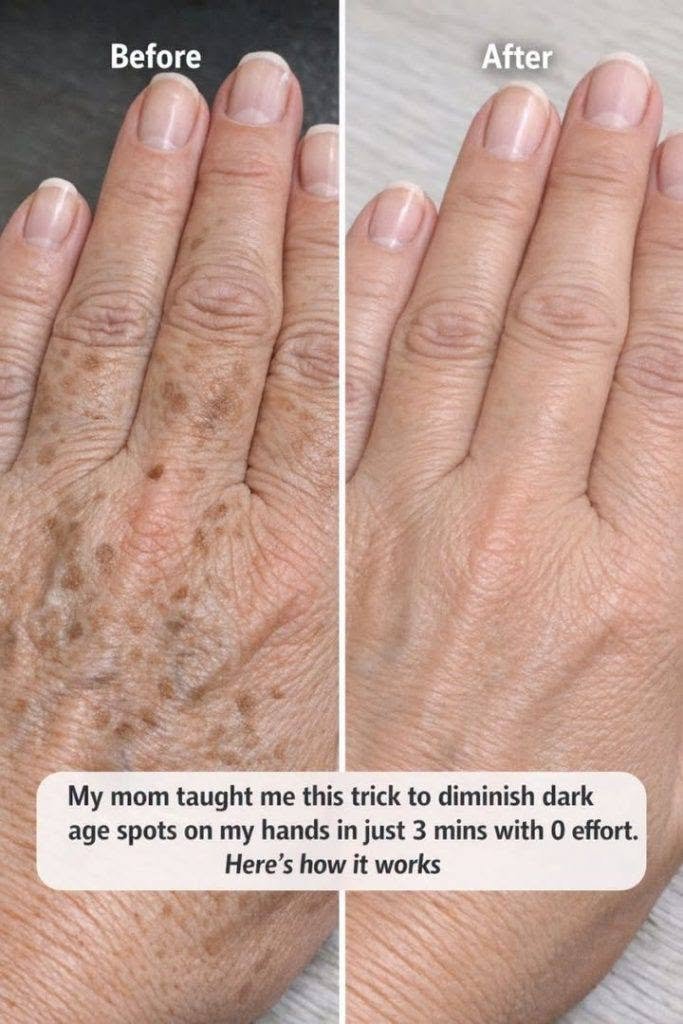
Viral claims promising to erase dark age spots (solar lentigines) on the hands in “just 3 minutes with zero effort” usually point to quick DIY kitchen remedies—most commonly rubbing lemon juice, apple cider vinegar, castor oil, or a steeped green tea bag over the skin.
While these home hacks are widely shared as low-effort secrets, the reality behind how age spots form and how dermatological science actually treats them reveals important nuances.
Why the “3-Minute” Trick Is a Myth
-
Melanin Lies Deep in the Skin: Age spots are caused by years of ultraviolet (UV) radiation exposure, which triggers pigment-producing cells (melanocytes) to overproduce melanin in the deeper layers of the epidermis. No surface rub or quick soak can dissolve hyperpigmentation trapped deep within the skin in three minutes.
-
Instant Brightening vs. True Fading: Acidic home ingredients like lemon juice (citric acid) or apple cider vinegar (acetic acid) act as mild chemical exfoliants. They can strip dead surface skin cells, giving the temporary illusion of brighter skin, but they do not eliminate age spots overnight.
The Hidden Risks of Kitchen Remedies
Attempting quick-fix remedies with raw kitchen ingredients often does more harm to the delicate skin on the back of your hands than good:
-
Phytophotodermatitis (Chemical Burns): Applying raw citrus juices (like lemon or lime) to the skin and then going into sunlight triggers a severe reaction. The furocoumarins in citrus react with UV rays, causing painful blistering, severe redness, and deep post-inflammatory hyperpigmentation—making the dark spots significantly worse.
-
Skin Barrier Disruption: Undiluted vinegar or strong citrus acids disrupt the skin’s protective acid mantle, leading to chronic dryness, chemical irritation, and micro-cracks.
What Actually Works to Fade Age Spots on Hands
If you want to visibly reduce age spots safely, dermatologists rely on treatments backed by clinical evidence:
1. Daily Broad-Spectrum Sunscreen (The Most Important Step)
-
Applying an SPF 30 or higher to the backs of your hands every morning stops UV radiation from driving further melanin production. Without daily sun protection, no fading treatment will succeed.
2. Evidence-Based Topical Ingredients (Over-the-Counter & Prescription)
Rather than raw food items, look for structured topical ingredients that inhibit the enzyme responsible for producing melanin (tyrosinase):
-
Topical Retinoids (Retinol or Tretinoin): Accelerate cell turnover to bring pigmented cells to the surface and fade them over several weeks.
-
Vitamin C (L-Ascorbic Acid): A powerful antioxidant that brightens tone and suppresses excess pigment production.
-
Niacinamide (Vitamin B3): Blocks the transfer of pigment from melanocytes to surrounding skin cells.
-
Alpha Arbutin & Licorice Root Extract: Gentle, effective natural skin brighteners that target hyperpigmentation without harsh irritation.
3. In-Clinic Dermatological Treatments (For Fast, Dramatic Results)
For rapid, noticeable removal, clinical procedures target the pigment directly:
-
Cryotherapy: A quick application of liquid nitrogen freezes the excess pigment cells, causing the dark spot to crust over and flake off in 1–2 weeks.
-
Q-Switched or IPL Lasers: Intense light beams target and shatter melanin deposits without damaging the surrounding tissue.
-
Medical-Grade Chemical Peels: High-strength glycolic or trichloroacetic acid (TCA) peels shed the outer pigmented layers safely.
The Bottom Line
While passing down family skincare tricks is a cherished tradition, there is no zero-effort, 3-minute home remedy that can erase dark age spots instantly. Real fading requires protecting your skin barrier, using proven topical brighteners consistently over weeks, or seeing a dermatologist for targeted clinical treatments.
