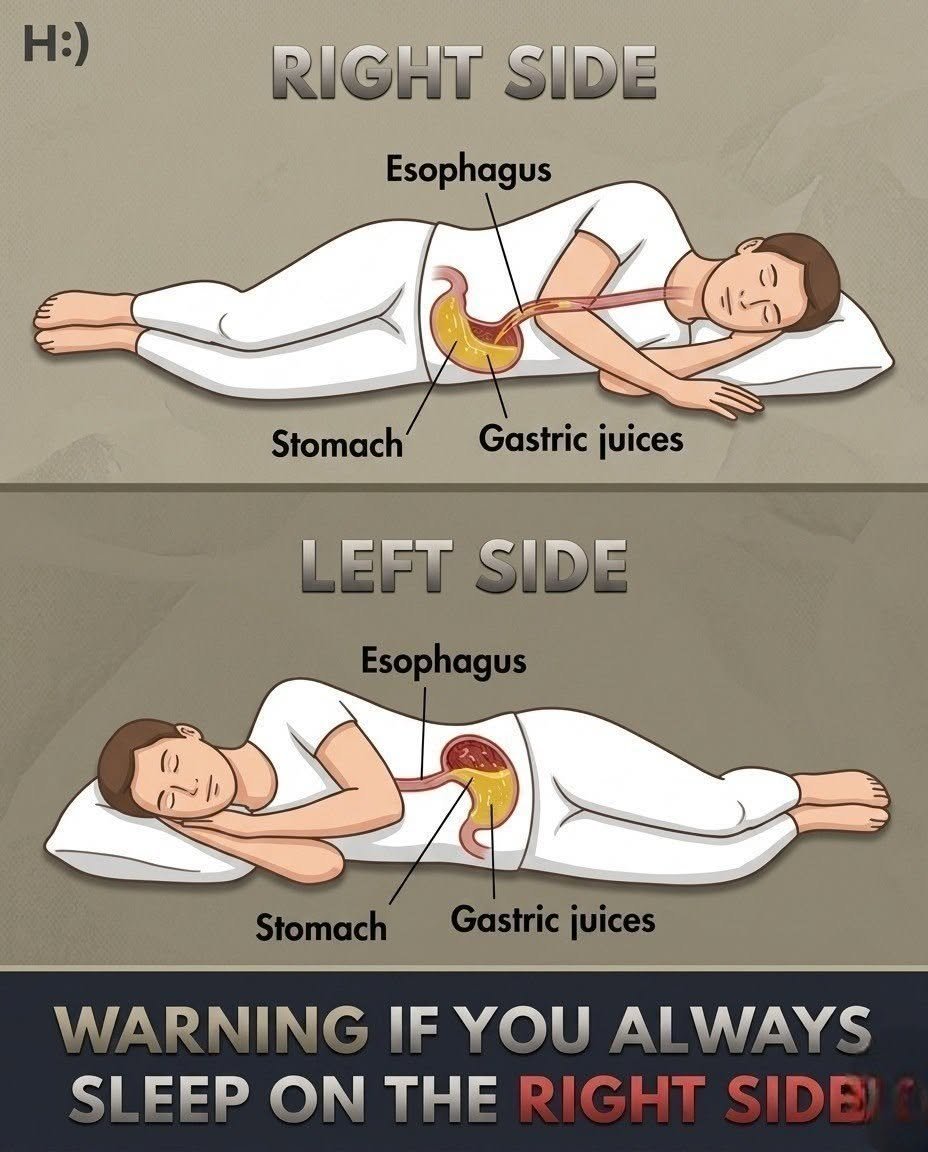
…proper postural support and awareness of how it affects your digestion and alignment. Because side sleeping places concentrated pressure on one half of your body, keeping certain habits in mind can help prevent morning stiffness, skin creasing, and digestive discomfort:
-
Proper Pillow Loft for Neck Alignment: Ensure your pillow fills the exact gap between your ear and the mattress. If it is too low, your neck bends downward; if it is too high, your neck strains upward, both of which lead to chronic cervical tension.
-
A Knee Spacer for Pelvic and Spinal Alignment: Place a firm pillow or rolled-up towel between your knees. This stops your top leg from pulling your spine out of alignment and relieves twisting pressure on your lower back and hips.
-
Awareness of Acid Reflux (GERD): If you frequently experience heartburn or acid reflux, keep in mind that the anatomy of the stomach makes right-side sleeping more prone to letting gastric acids escape into the esophagus compared to sleeping on your left side.
-
Skin Friction Considerations: Long-term, one-sided facial compression against standard cotton pillowcases can contribute to asymmetrical sleep wrinkles or under-eye creases. Switching to a silk or satin pillowcase can significantly reduce surface friction.
While side sleeping is generally comfortable and helps keep airways open, alternating sides or incorporating supportive props ensures your body stays balanced and well-rested throughout the night.
