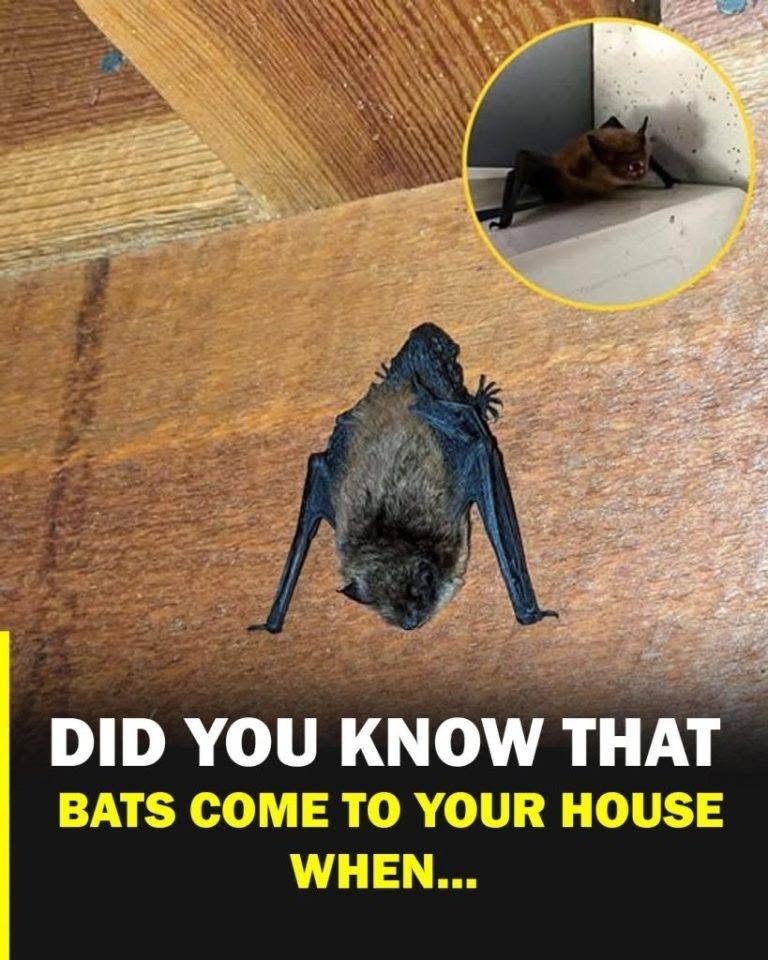
…you leave your porch lights on at night, have open windows without screens, or have outdoor insects gathering near your entryway!
While folklore and superstitions have assigned dramatic spiritual meanings to bats flying into a home—viewing them as either bad omens, warnings of major life shifts, or symbols of good fortune and prosperity—the practical biological reasons behind their visits are much simpler:
1. They Are Following an Insect Buffet
Insects such as moths, mosquitoes, and beetles are naturally drawn to outdoor house lights. Because bats use echolocation to hunt prey in the dark, bright lights essentially act as a giant dinner bell, drawing bats directly toward your doors and windows to feast on swarming bugs.
2. Young Bats Are Learning to Navigate
During late summer and early autumn (often July through September), juvenile bats begin learning to fly and forage on their own. Unskilled and unfamiliar with navigating tight spaces, these young bats frequently take a wrong turn through an open window, chimney, or screenless door while chasing insects.
3. They Are Seeking a Temperature-Controlled Roost
Bats look for dark, quiet, elevated spaces to rest during the day or hibernate in winter. Attics, wall voids, or chimneys offer the perfect temperature stability and protection from predators, making homes an attractive shelter.
What to Do If a Bat Enters Your Home
If a bat gets lost inside your house, try not to panic:
-
Isolate the Room: Close interior doors to keep the bat contained in a single room.
-
Give It an Exit: Turn off the lights in the room, open an exterior window or door wide, and leave the room for 30 to 60 minutes. The bat will typically use its echolocation to find the fresh air draft and fly back out on its own.
-
Never Touch a Bat with Bare Hands: Bats can transmit rabies through bites or tiny scratches. If you must move a grounded or immobile bat, wear thick leather gloves and use a box or bucket to gently cover it, slide a piece of cardboard underneath, and release it outside near a tree.
-
Seek Medical Advice If Unsure: If you wake up in a room with a loose bat—or if a bat was found near a sleeping child or pet—contact your local health department or healthcare provider, as rabies exposure can occur without noticeable bite marks.
