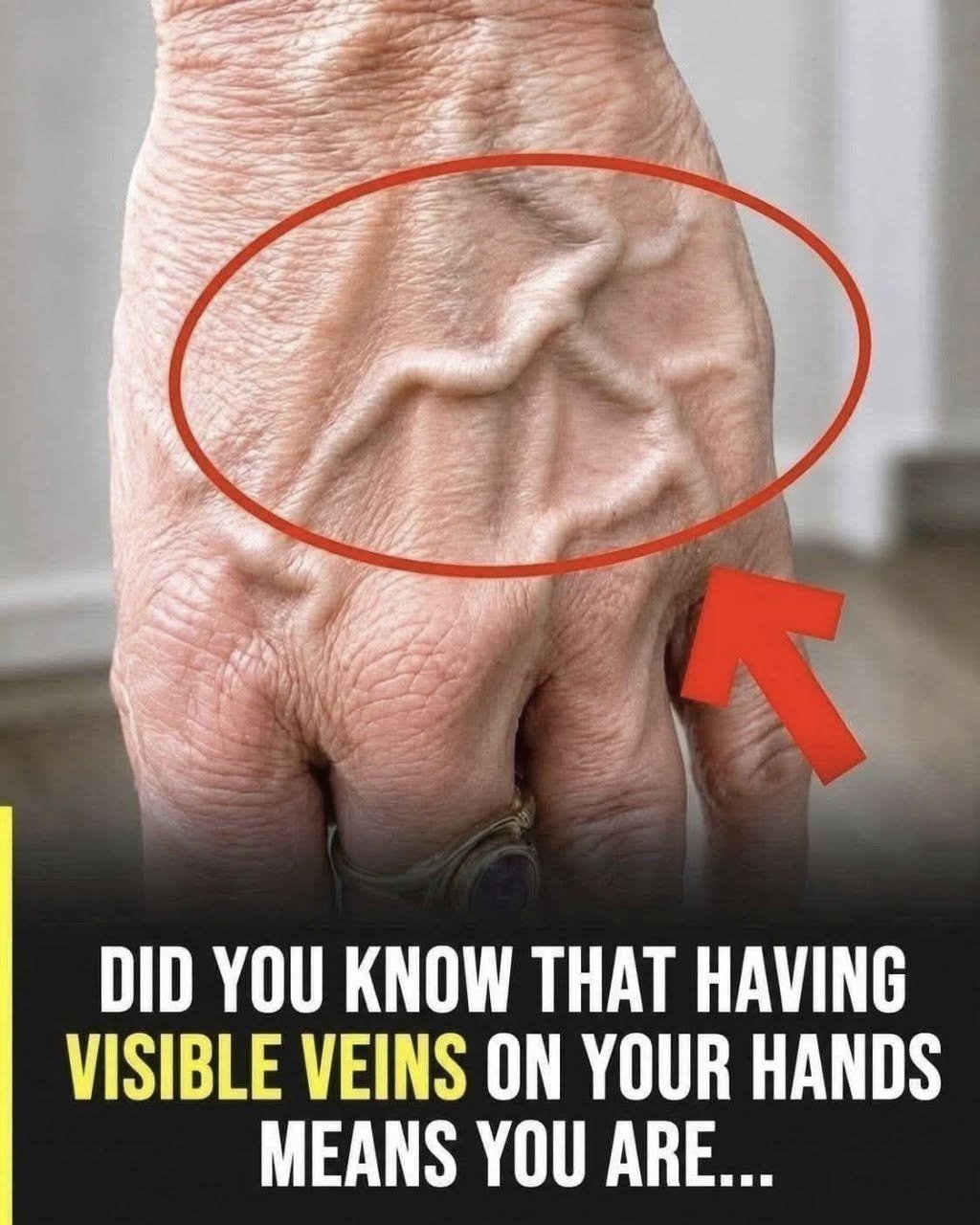
…leaner, but depending on where those veins are visible, it can also point to a few different physiological factors.
While pop culture and fitness circles often associate prominent, visible veins (vascularity) purely with having a low body fat percentage and high muscle definition, your genetics, biology, and lifestyle play a massive role.
Here is what having visible veins typically indicates:
1. Low Body Fat and High Muscle Mass
This is the most common reason. When your subcutaneous fat layer (the layer of fat right beneath your skin) is thin, it acts like clear glass rather than tinted windows, making the network of veins running just below the surface much easier to see. Additionally, regular resistance training increases blood flow and muscle size, which pushes veins outward toward the skin.
2. Genetic Predisposition (Thin Skin and Vein Placement)
Genetics dictate how thick your skin is and how close your veins lie to the surface. Some people naturally have very translucent skin or inherit a genetic layout where superficial veins are simply more prominent, regardless of whether they are an elite athlete or carry a higher percentage of body fat.
3. Hormonal Shifts and Vasodilation
When your body temperature rises—such as during a intense workout, a hot summer day, or due to hormonal changes—your blood vessels dilate (widen) to help cool you down. This increased blood flow causes veins to expand and push closer to the skin’s surface, making them temporarily much more visible.
4. Age and Loss of Skin Elasticity
As we age, our skin naturally thins and loses collagen and elasticity. This age-related thinning means that veins on the hands, arms, and legs often become much more pronounced and visible over time.
5. Medical Factors (Varicose and Spider Veins)
While surface vascularity from fitness is generally harmless, bulging, twisted, or rope-like veins—particularly in the legs—are often varicose veins. These occur when tiny valves inside the veins weaken, causing blood to pool backward rather than flowing smoothly back up to the heart. If visible veins are accompanied by aching, heaviness, swelling, or throbbing in the legs, it can indicate underlying venous insufficiency.
