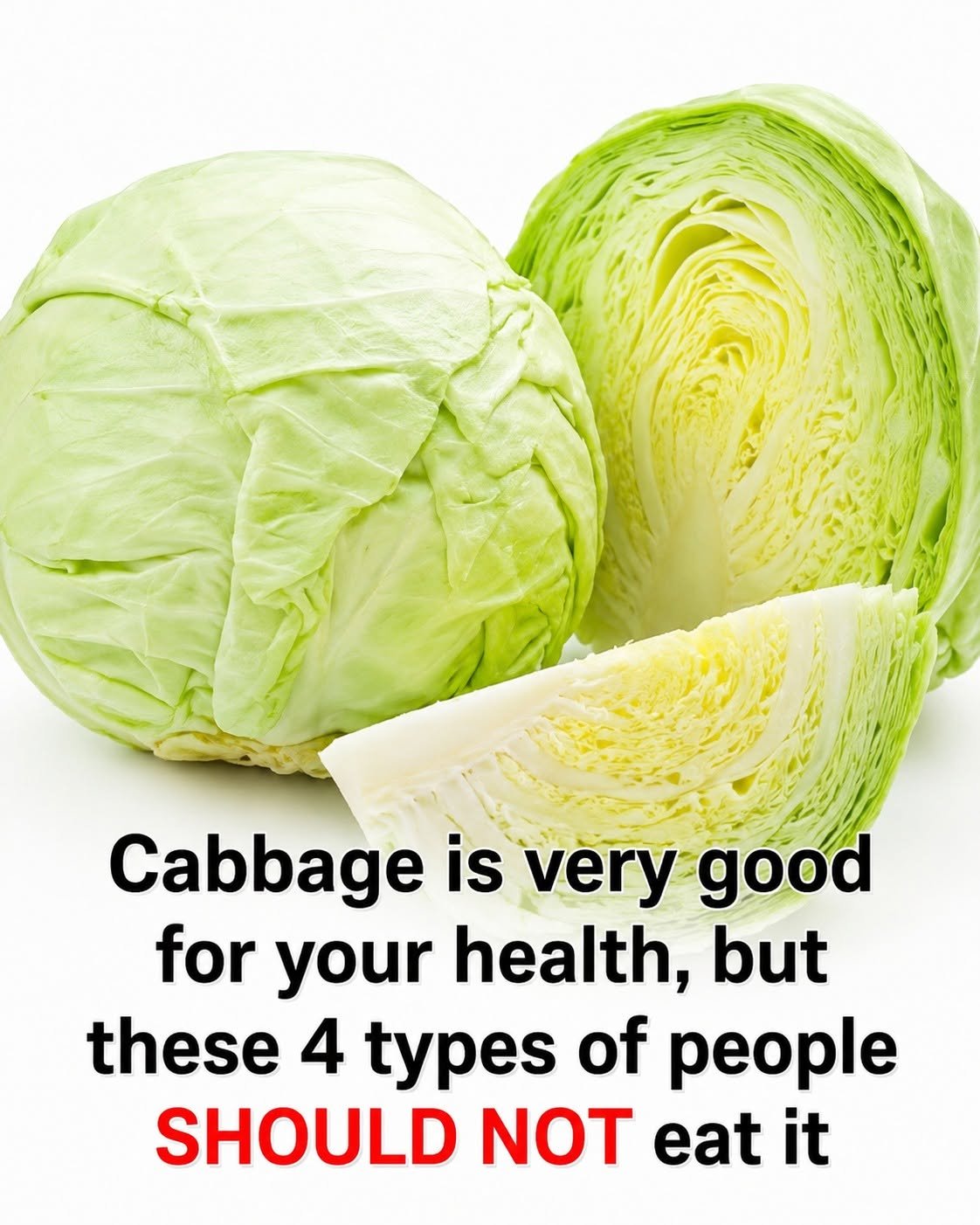
While cabbage is packed with nutrients, fiber, and Vitamin C, certain compounds in brassica vegetables can trigger issues for individuals with specific medical conditions. Here are four types of people who should generally limit or avoid eating cabbage—especially raw—or consume it with caution:
1. People with Underactive Thyroid (Hypothyroidism or Hashimoto’s)
-
The Reason: Cabbage contains natural compounds called goitrogens. When consumed in large amounts, goitrogens can interfere with the thyroid gland’s ability to absorb iodine, which is needed to synthesize thyroid hormones.
-
The Precaution: Raw cabbage poses the highest risk. Cooking cabbage breaks down most of the goitrogenic compounds, making it much safer for those with thyroid concerns when eaten in moderation.
2. Individuals with Irritable Bowel Syndrome (IBS) or Severe Bloating
-
The Reason: Cabbage is rich in raffinose (a complex sugar that human enzymes cannot easily digest) and high in insoluble fiber. As gut bacteria ferment these unabsorbed sugars in the large intestine, it produces significant hydrogen and methane gas.
-
The Precaution: For those with IBS or sensitive digestive tracts, eating cabbage can cause severe abdominal cramping, painful gas, and bloating. Fermented cabbage (like sauerkraut or kimchi) or well-cooked cabbage in small portions is often easier on the gut.
3. People Taking Blood Thinners (e.g., Warfarin / Coumadin)
-
The Reason: Cabbage is extremely high in Vitamin K, a critical nutrient that plays a key role in blood clotting. A sudden surge or large fluctuation in daily Vitamin K intake can counteract the effect of anticoagulant medications, potentially altering blood clotting times.
-
The Precaution: You don’t necessarily have to eliminate cabbage entirely, but consistency is key. People on blood thinners should maintain a steady, predictable daily level of Vitamin K rather than making drastic changes in their intake.
4. Individuals Recovering from Gastrointestinal Surgery or Bowel Obstructions
-
The Reason: Because cabbage is fibrous and bulky, it takes longer to pass through the digestive system. For patients recovering from recent abdominal surgery, bowel resection, or those prone to intestinal strictures or partial blockages, high-fiber raw vegetables can cause mechanical strain or blockages in the digestive tract.
-
The Precaution: Doctors typically recommend a low-residue (low-fiber), easily digestible diet during recovery, meaning raw brassicas like cabbage should be temporarily avoided until cleared by a physician.
