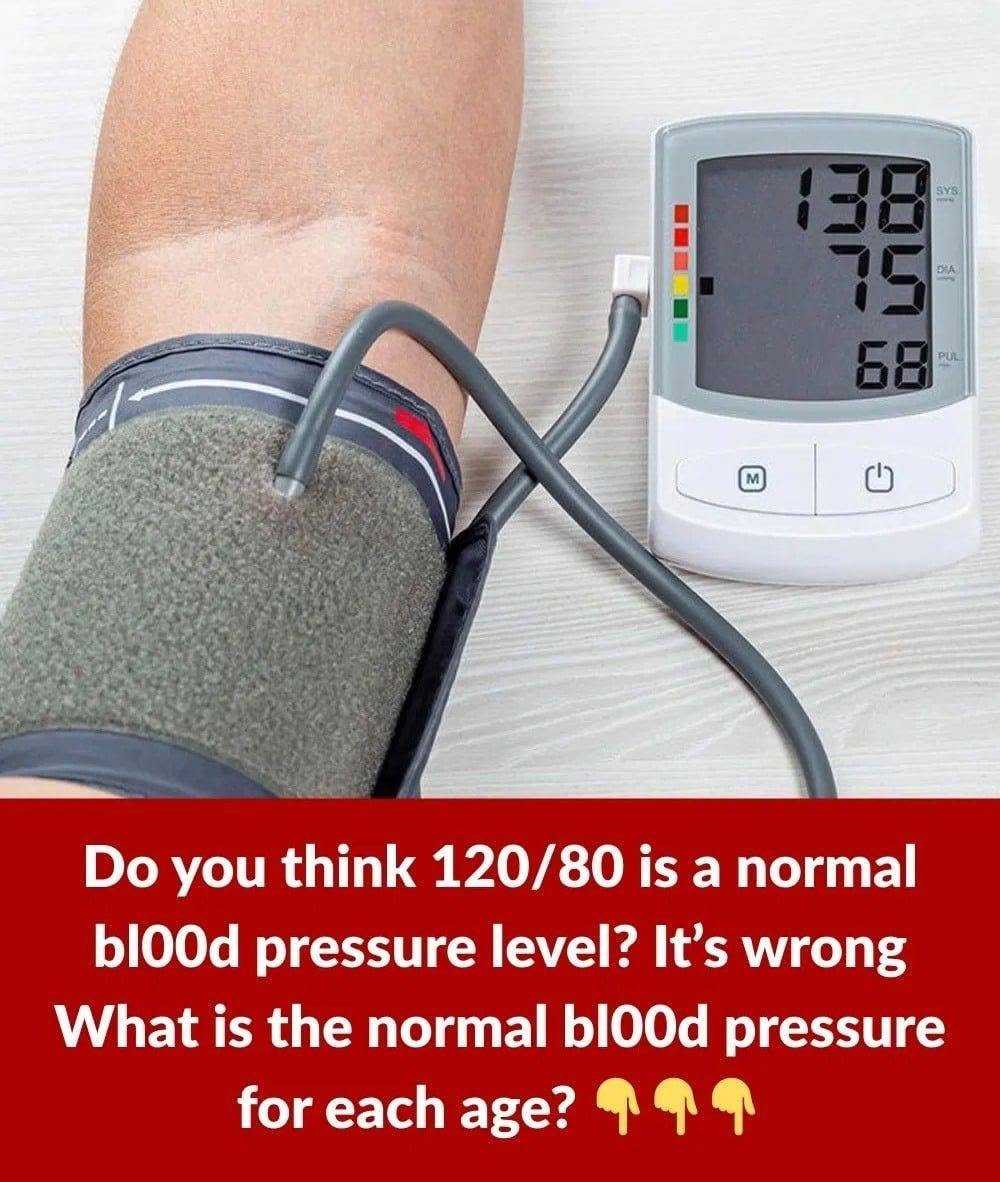
While average blood pressure tends to creep up as people age due to natural stiffening of the arteries, major medical organizations (such as the American Heart Association and the American College of Cardiology) maintain that the ideal clinical target for all adults remains under 120/80 mm Hg.
A breakdown of how blood pressure standards apply across different life stages illustrates what is typically expected:
1. Adults (Ages 18 and Older)
For adult men and women alike, medical guidelines categorize blood pressure into distinct tiers based on the systolic (top number) and diastolic (bottom number) readings:
-
Normal: Less than 120 / 80 mm Hg
-
Elevated: 120–129 / less than 80 mm Hg
-
Stage 1 Hypertension: 130–139 / 80–89 mm Hg
-
Stage 2 Hypertension: 140 or higher / 90 or higher mm Hg
-
Hypertensive Crisis: Higher than 180 and/or higher than 120 mm Hg (Requires immediate emergency care)
Note on Aging and Averages: While clinical guidelines do not raise the “normal” threshold for older adults, statistical averages do shift. For instance, an average healthy reading for someone in their 20s might sit around 115/75 mm Hg, whereas an average reading for an active, healthy individual in their 60s or 70s might naturally rest closer to 130/75 mm Hg. However, consistently hitting 130/80 or higher is technically classified as Stage 1 hypertension, prompting doctors to recommend lifestyle adjustments.
2. Children and Adolescents (Ages 1 to 18)
Unlike adults, pediatric blood pressure targets are not fixed numbers. Instead, a child’s normal range is calculated based on their age, gender, and height percentile using specialized pediatric charts managed by pediatricians:
-
Infants (1–12 months): Typically ranges from 65–100 / 35–55 mm Hg.
-
Toddlers & Preschoolers (1–5 years): Typically ranges from 95–110 / 53–70 mm Hg.
-
School-Aged Children (6–12 years): Typically ranges from 97–115 / 57–75 mm Hg.
-
Adolescents (13–18 years): Typically ranges from 110–128 / 65–80 mm Hg.
For teenagers, readings that regularly exceed 130/80 mm Hg are evaluated as elevated or high by pediatric standards.
Understanding the Numbers
-
Systolic (Top Number): Measures the pressure in your arteries when your heart beats and pushes blood out.
-
Diastolic (Bottom Number): Measures the pressure in your arteries when your heart rests between beats.
-
Crucial Rule: Whichever number is higher places you in that specific blood pressure category. For example, a reading of 118/86 mm Hg is considered Stage 1 hypertension because the bottom number (86) falls into that range, even though the top number is normal.
