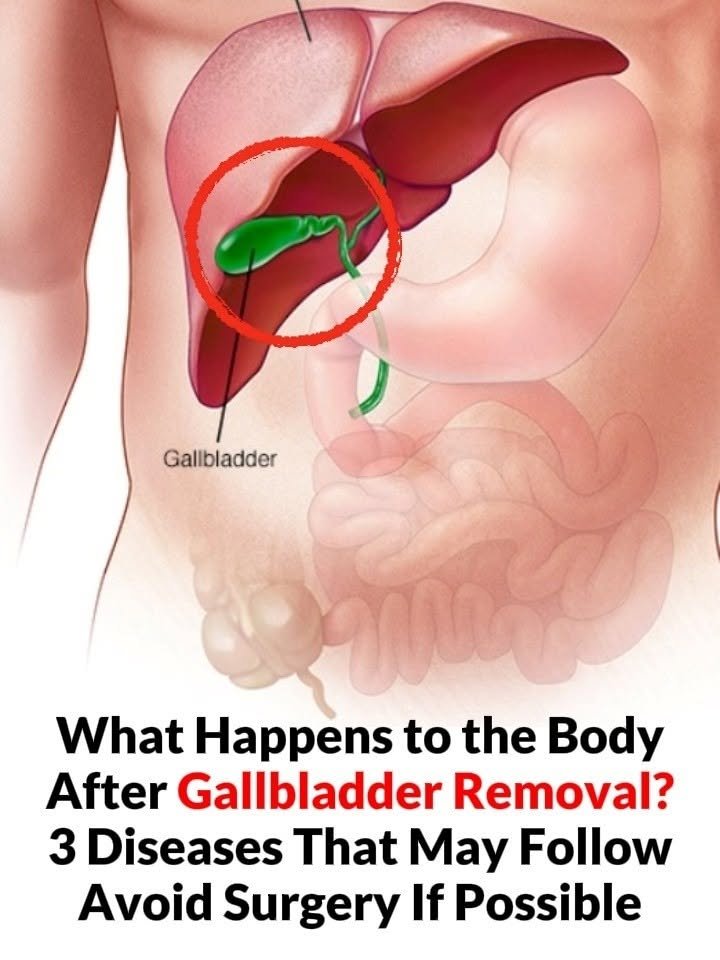
When the gallbladder is removed (a procedure known as a cholecystectomy), the body adapts to living without a storage organ for bile. While the surgery is often necessary for severe gallstones or inflammation, it alters how your digestive system processes dietary fats.
What Happens to the Body After Removal?
Normally, the liver produces bile, which is stored and concentrated in the gallbladder. When you eat fat, the gallbladder contracts to release a concentrated burst of bile into the small intestine to break it down.
Once the gallbladder is removed, the liver continuously drips bile directly into the small intestine in a slow, unregulated stream. Because there is no longer a reservoir to store extra bile for heavy, fatty meals, digesting large amounts of fat at one time becomes much harder. This physiological shift is why many people experience chronic diarrhea, bloating, or fat intolerance after surgery.
3 Conditions That May Follow Gallbladder Removal
While many people recover without long-term issues, the altered bile flow can contribute to subsequent digestive conditions:
1. Bile Acid Malabsorption (Chronic Diarrhea)
Without a gallbladder to regulate flow, excess bile acids can spill over into the large intestine faster than the body can reabsorb them. These extra bile acids irritate the colon lining, drawing water into the bowel and resulting in chronic, watery diarrhea (sometimes called post-cholecystectomy diarrhea).
2. Non-Alcoholic Fatty Liver Disease (NAFLD)
Because the continuous, unregulated drip of bile changes lipid metabolism and how the body handles fats, some studies suggest an increased risk of fat accumulating within liver cells (hepatic steatosis) following gallbladder removal, especially if dietary habits are not adjusted.
3. Gastric Reflux and Bile Acid Reflux
In some cases, the continuous flow of bile can back up not only into the intestines but occasionally upward through the stomach and into the esophagus. This causes a particularly harsh form of reflux (bile reflux) that can lead to chronic heartburn, nausea, and irritation of the esophageal lining.
A Note on Avoiding Surgery When Possible
For mild or non-emergency gallbladder issues (such as small, asymptomatic sludge or minor discomfort), gastroenterologists and functional medicine specialists often emphasize conservative management to preserve the organ:
-
Dietary Adjustments: Reducing heavy, greasy, and highly processed fried fats prevents painful gallbladder spasms.
-
Regular Eating Patterns: Eating balanced meals consistently prevents bile from stagnating and forming sludge or stones inside the gallbladder.
-
Hydration and Fiber: Supporting overall digestive motility helps keep the biliary system functioning smoothly.
Of course, if you are experiencing acute cholecystitis, severe gallbladder attacks, or infection, surgical removal is a necessary and life-saving intervention. Always consult a physician to weigh the risks and benefits for your specific health situation.
