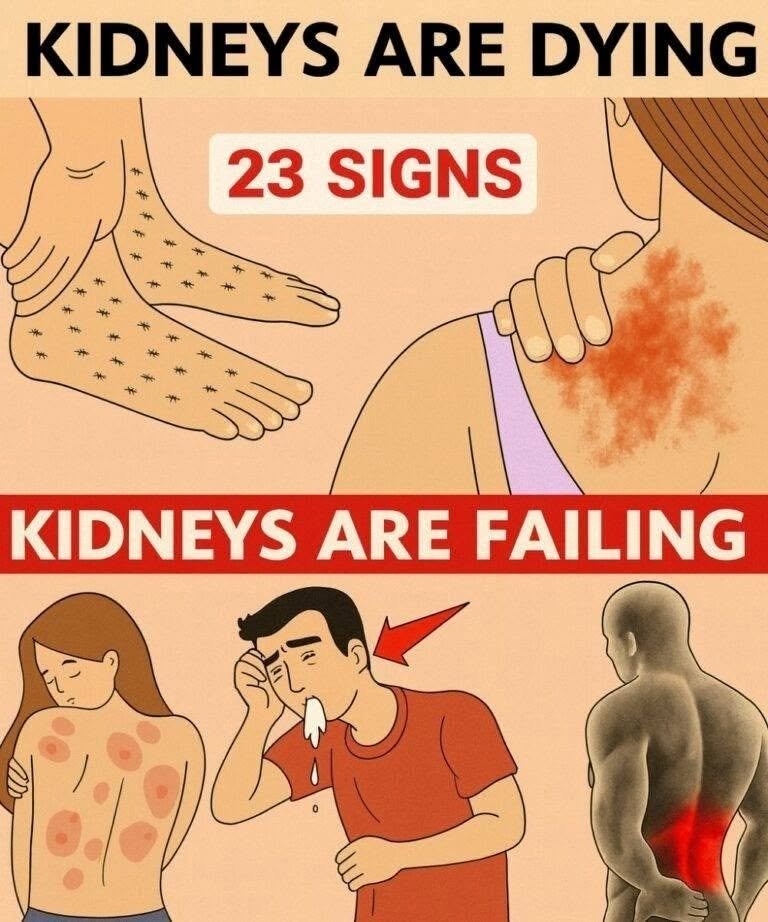
Because the kidneys act as the body’s master filtration and chemical-balancing system, when they begin to struggle, the effects can show up in unexpected, seemingly unrelated parts of the body. While classic indicators like swelling or changes in urination are well known, a failing or stressed renal system often triggers peculiar, subtle warning signs that are easy to overlook or misattribute to other causes.
Here are 23 unusual and striking signs that your kidneys may be under stress or in trouble:
Unusual Urinary and Fluid Signs
-
Foamy or Bubbly Urine: Resembling scrambled eggs or whipped foam, this happens when damaged kidney filters allow large amounts of protein (albumin) to leak into the urine.
-
“Half-and-Half” Fingernails: Also known as Lindsay’s nails, the bottom half of the nail bed turns stark white while the top half remains pink or reddish-brown, a classic sign linked to advanced kidney waste buildup.
-
Uremic Frost: In rare cases of severe waste accumulation, urea comes out through the sweat glands, leaving a fine, powdery, frost-like white residue on the skin’s surface.
-
Unexplained Puffy Eyes (Periorbital Edema): Waking up with heavy bags or swelling around the eyes because the kidneys are leaking protein into the body rather than retaining it, causing fluid to pool in loose facial tissues.
-
Nocturia (Waking Up Multiple Times to Pee): Having to get up repeatedly through the night because the kidneys’ concentrating ability has declined, failing to slow down urine production while you sleep.
-
Rust, Tea, or Cola-Colored Urine: A dark or brownish hue caused by microscopic or gross bleeding as damaged renal filters allow red blood cells to pass through.
Skin, Hair, and Sensory Changes
-
Deep, Inconsolable Itching (Pruritus): A relentless, body-wide itch that doesn’t improve with lotions or antihistamines, driven by a buildup of phosphorus and metabolic waste products in the bloodstream.
-
Metallic Taste or “Ammonia” Breath: Food suddenly tasting like tin foil or pennies, or breath that carries a faint smell of urine, caused by a accumulation of urea in the saliva (uremia).
-
Unusual Skin Discoloration: Skin taking on a pale, dull, yellowish, or grayish-brown tone due to a combination of chronic anemia and waste deposits.
-
Unexplained Easy Bruising or Purpura: Finding random black-and-blue marks on your skin because poor kidney health and uremia can alter platelet function and make blood vessels fragile.
-
Calciphylaxis (Painful Calcium Bumps): The development of painful, calcium-infused skin lesions or hard white bumps under the skin caused by severe mineral and parathyroid imbalances.
Neurological, Muscular, and Sleep Disruptions
-
Restless Legs Syndrome (RLS): An uncontrollable, uncomfortable urge to move your legs while trying to rest or sleep, heavily correlated with toxin buildup and mineral imbalances in late-stage kidney strain.
-
Frequent, Painful Muscle Cramps: Sudden spasms—particularly in the calves and feet at night—triggered by electrolyte imbalances such as low calcium, low magnesium, or erratic potassium levels.
-
Severe “Brain Fog” and Concentration Issues: Difficulty focusing, mental sluggishness, or short-term memory lapses resulting from oxygen deprivation (anemia) and circulating uremic toxins.
-
Bone Pain or Spontaneous Fractures: Weakened, brittle bones (renal osteodystrophy) because the kidneys can no longer properly activate Vitamin D or balance calcium and phosphorus.
-
Persistent Metallic or Bitter Taste Causing Food Aversion: A sudden, strong distaste for meat, protein-rich foods, or coffee because changing taste buds make them unpalatable.
Systemic and Cardiorespiratory Warnings
-
Unexplained Shortness of Breath: Getting winded from very mild exertion because failing kidneys cause fluid to back up into the lungs or trigger severe anemia.
-
High Blood Pressure Out of Nowhere: Developing sudden or difficult-to-control hypertension, especially at a younger age. The kidneys control blood pressure via hormones; when they are stressed, they misfire and raise vascular pressure.
-
Deep, Bone-Deep Fatigue That Sleep Doesn’t Fix: A heavy, crushing exhaustion caused by a drop in erythropoietin (EPO)—the hormone healthy kidneys produce to tell the bone marrow to make red blood cells.
-
Sudden Intolerance to Cold: Feeling chilled or shivering in a warm room because chronic anemia reduces oxygen delivery throughout the body, slowing down internal heat generation.
-
Persistent Loss of Appetite or Unexplained Weight Loss: Food suddenly losing its appeal, leading to unintended weight drop due to constant internal nausea and toxin accumulation.
-
Chest Pain or Pericardial Friction: A heavy pressure or sharp pain in the chest if waste toxins trigger inflammation in the lining surrounding the heart (uremic pericarditis).
-
Hiccups That Won’t Stop: Persistent, stubborn bouts of hiccups that last for days, occasionally appearing as a peculiar neurological side effect of advanced metabolic waste buildup irritating the diaphragm nerve pathways.
Protecting Your Kidneys Early
Because the kidneys have a remarkable ability to compensate, they can lose a significant portion of their function before major symptoms become obvious. Routine annual blood work (checking serum creatinine and eGFR) and simple urine tests (checking for albumin/protein leakage) remain the most reliable ways to catch minor kidney strain long before strange physical signs appear.
