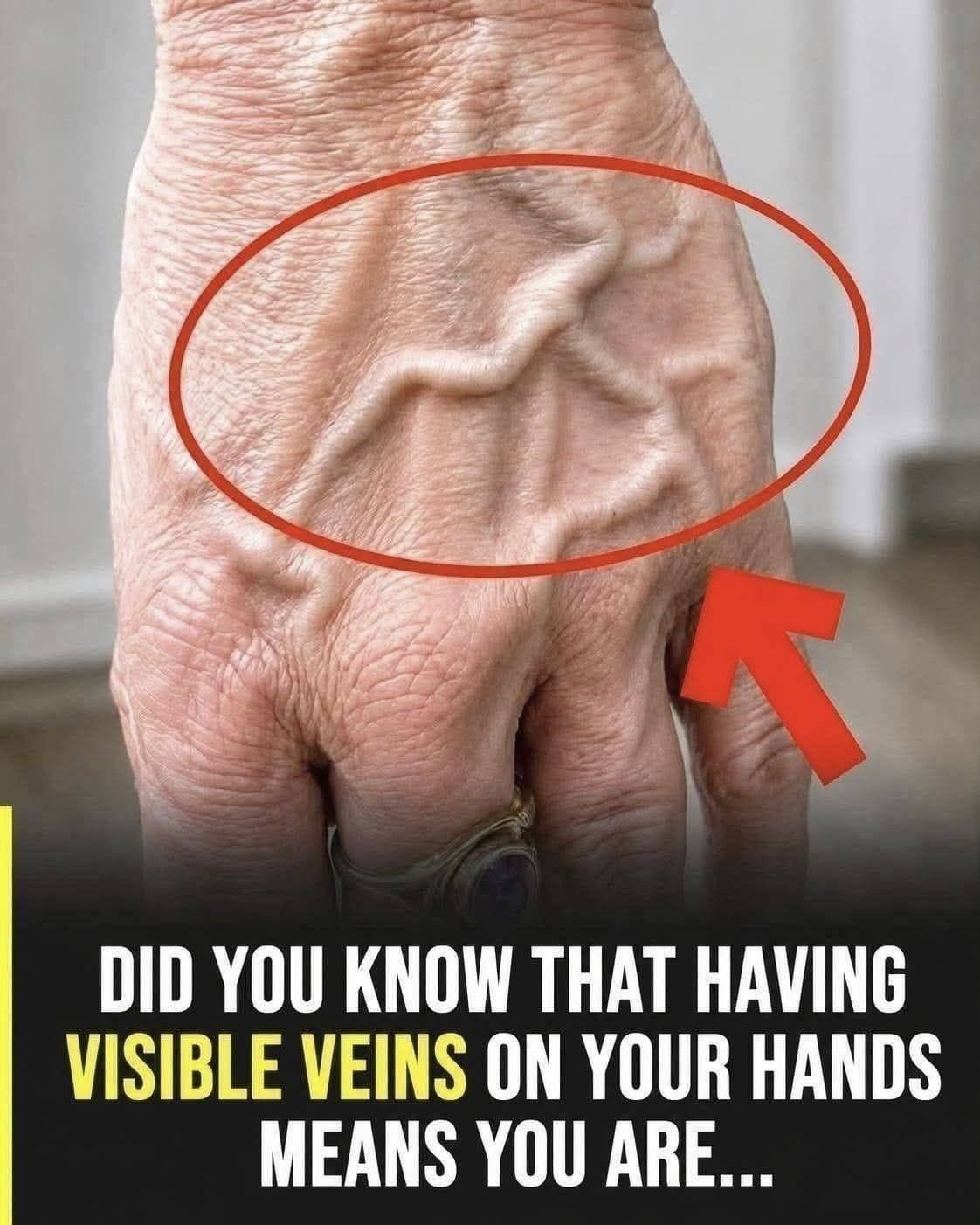
While social media trends often claim that having prominent, visible veins means you have low body fat, exceptional fitness, or even a specific body type, the reality is a mix of simple anatomy, genetics, and daily factors.
Having visible veins—a phenomenon often called vascularity—is very common, and what it actually means about your health depends on where and how they appear:
1. Low Body Fat Percentage
Subcutaneous fat sits directly beneath the skin, resting over your muscles and blood vessels. When your body fat percentage drops lower, the layer of fat insulating your veins becomes thinner, allowing the blood vessels to push closer to the skin’s surface and become far more pronounced.
2. Genetics and Skin Tone
Genetics play the largest role in how visible your veins are:
-
Skin Translucency & Collagen Structure: Naturally fair, pale, or thin skin allows dark, oxygen-depleted blood in the veins to show through much more easily.
-
Anatomical Depth: Some people are simply born with veins that run closer to the surface of the skin than others, regardless of their fitness level or weight.
3. High Muscle Mass & Physical Activity
When you exercise or engage in manual labor, your muscles expand and demand more oxygenated blood. This process—called hyperemia—causes your blood pressure within the capillaries to rise, pushing fluid into the surrounding muscle tissue and forcing your superficial veins outward against the skin.
4. Heat and Dehydration
-
Temperature: In warm weather or during hot showers, your body dilates blood vessels (vasodilation) near the surface of the skin to release excess heat and cool you down, making veins look larger and more swollen.
-
Dehydration: When you are dehydrated, your tissues lose water content, which can temporarily cause the skin to hug the underlying veins more tightly.
5. Age-Related Changes
As we age, our skin naturally loses collagen and elastic tissue, making it thinner, more fragile, and less elastic. At the same time, subcutaneous fat decreases in areas like the hands, forearms, and lower legs, making veins appear much more prominent over time.
When Visible Veins May Signal a Health Issue
While prominent veins on the arms, hands, or athletic legs are typically completely normal and harmless, certain types of visible veins warrant medical attention:
-
Varicose Veins: Swollen, twisted, or rope-like veins—most commonly on the legs or feet—that occur when internal tiny valves fail, allowing blood to pool. They can cause aching, heaviness, or throbbing.
-
Spider Veins: Small, web-like clusters of red or blue capillaries near the skin surface, often linked to hormone changes, prolonged standing, or circulation pressure.
-
Sudden Asymmetrical Swelling: If a vein on one leg suddenly becomes swollen, warm, red, or tender to the touch, it can be a sign of a superficial vein inflammation (phlebitis) or a deeper blood clot (deep vein thrombosis or DVT), which requires immediate evaluation.
