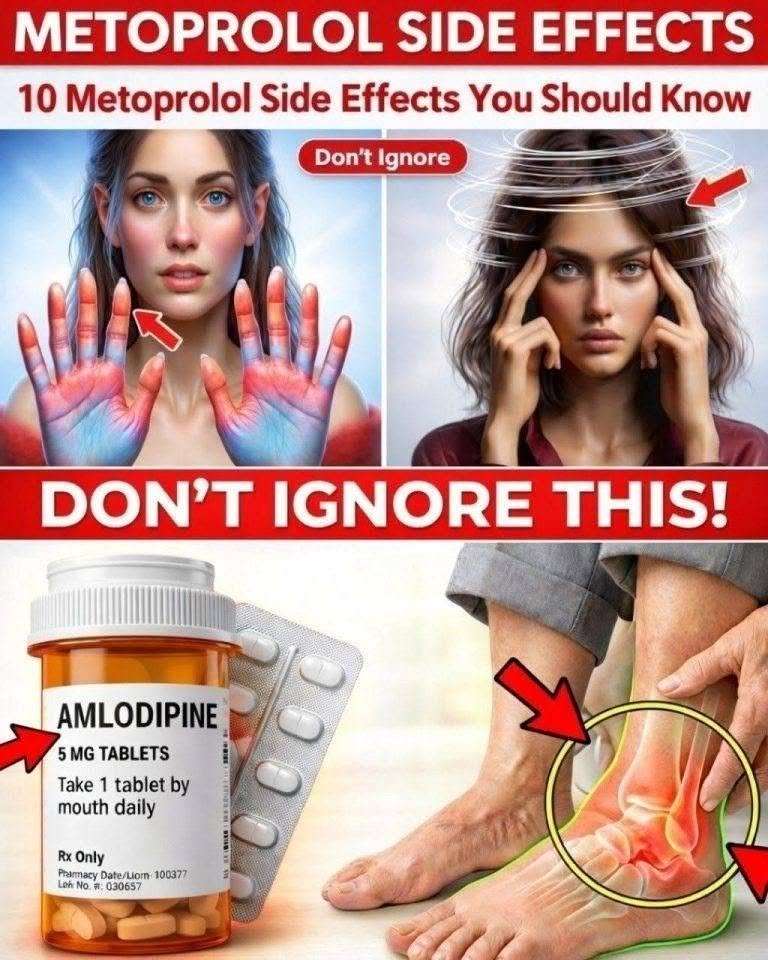
When discussing beta-blockers like metoprolol (commonly known by brand names such as Lopressor and Toprol-XL), standard conversations usually focus on well-known effects like lowered heart rate and fatigue. However, because metoprolol alters how epinephrine (adrenaline) interacts with beta receptors across various organ systems, it can trigger several subtle or overlooked physiological responses.
Here are 10 Metoprolol side effects that are often overlooked in everyday clinical conversations:
1. Masking the Early Warning Signs of Low Blood Sugar (Hypoglycemia)
-
What happens: Epinephrine is the hormone responsible for triggering the classic “fight-or-flight” alarm bells when your blood sugar drops too low—causing shakiness, rapid heartbeat, sweating, and intense anxiety. Because metoprolol blocks adrenaline receptors and slows the heart rate, it can effectively “mute” these warning alarms.
-
Why it matters: For individuals managing diabetes, this side effect can make it difficult to recognize when blood sugar is dropping dangerously low until more severe symptoms (like confusion or dizziness) set in.
2. Worsening Raynaud’s Phenomenon (Extreme Cold Sensitivity)
-
What happens: By reducing sympathetic nervous system stimulation, metoprolol narrows peripheral blood vessels to prioritize core organ perfusion. For people with underlying vascular sensitivities, this can severely restrict blood flow to the fingers and toes.
-
Why it matters: This can trigger or worsen Raynaud’s phenomenon, causing fingers or toes to turn pale, feel numb, or experience painful throbbing when exposed to even mild cold.
3. Subtle Cognitive Changes and “Brain Fog”
-
What happens: Beta-blockers can cross the blood-brain barrier. While some patients report feeling a calming effect, others experience a dulling of mental sharpness, mild memory lapses, word-finding difficulties, or a general feeling of mental fogginess.
-
Why it matters: These subtle cognitive shifts are frequently overlooked or dismissed as normal aging or general tiredness, even though they directly impact daily productivity and focus.
4. Hair Thinning or Alopecia (Telogen Effluvium)
-
What happens: Though relatively rare, beta-blockers have been linked in dermatological literature to hair shedding. By altering blood flow to the scalp or shifting the hair follicle cycle into a resting phase prematurely, some patients notice gradual hair thinning several months after starting the medication.
-
Why it matters: Because hair loss occurs months down the road, patients rarely connect it back to their blood pressure prescription.
5. Altered Lipid Profiles (Mild HDL and Triglyceride Shifts)
-
What happens: Certain beta-blockers—particularly older, non-cardioselective or high-dose variants—can subtly impact lipid metabolism. They can occasionally cause a minor decrease in protective HDL (“good”) cholesterol and an increase in serum triglycerides.
-
Why it matters: While usually modest, these shifts are routinely monitored during routine metabolic panels for patients on long-term therapy.
6. Dry Eyes and Reduced Tear Production
-
What happens: The autonomic nervous system regulates tear film production in the eyes. Beta-blockers can decrease lacrimal gland secretion, leading to chronic dry, gritty, or irritated eyes.
-
Why it matters: Patients who wear contact lenses or spend long hours looking at screens often find this side effect particularly uncomfortable, though they rarely link it to a heart medication.
7. Subtle Increases in Airway Resistance (Mild Bronchospasm)
-
What happens: Even though cardioselective beta-blockers like metoprolol primarily target the heart, receptor selectivity is dose-dependent. At higher doses, they can partially block beta-2 receptors in the lungs.
-
Why it matters: This can cause minor airway constriction, leading to a subtle feeling of breathlessness, a dry cough, or increased sensitivity in individuals with mild, undiagnosed airway hyperreactivity.
8. Paresthesia (Tingling or “Pins and Needles” in Extremities)
-
What happens: The combination of lowered blood pressure and restricted microvascular perfusion in the outer extremities can occasionally provoke a prickling sensation, mild numbness, or a feeling that the hands and feet have “fallen asleep.”
-
Why it matters: It is often mistaken for a peripheral nerve issue rather than a hemodynamic side effect of reduced peripheral blood flow.
9. Exercise Intolerance (Disproportionate Breathlessness During Workouts)
-
What happens: During physical exertion, your heart rate naturally accelerates to pump oxygenated muscle fuel. Because metoprolol places a strict ceiling on your maximum heart rate, your body cannot ramp up cardiovascular output normally.
-
Why it matters: Patients often feel frustrated that routine exercise feels unusually exhausting or heavy, mistaking this protective cardiac ceiling for a sudden drop in overall physical fitness.
10. Emotional Flattening or Subtle Depressive Mood Shifts
-
What happens: By dampening the physiological surges of adrenaline and central nervous system arousal, some patients experience an unexpected flattening of emotional responses—feeling less enthusiastic, emotionally detached, or experiencing low mood.
-
Why it matters: Mental health side effects are rarely anticipated from a heart medication, making it important to evaluate whether mood changes correlate with the timing of therapy.
Managing Overlooked Side Effects Safely
If you or someone you know is experiencing unusual, persistent symptoms while taking metoprolol, never adjust the dose or discontinue the medication abruptly, as sudden cessation can cause a dangerous rebound spike in blood pressure and heart rate. Instead, consult your prescribing physician or cardiologist, who can evaluate whether a dosage adjustment, timed intake change, or an alternative class of medication is appropriate.
