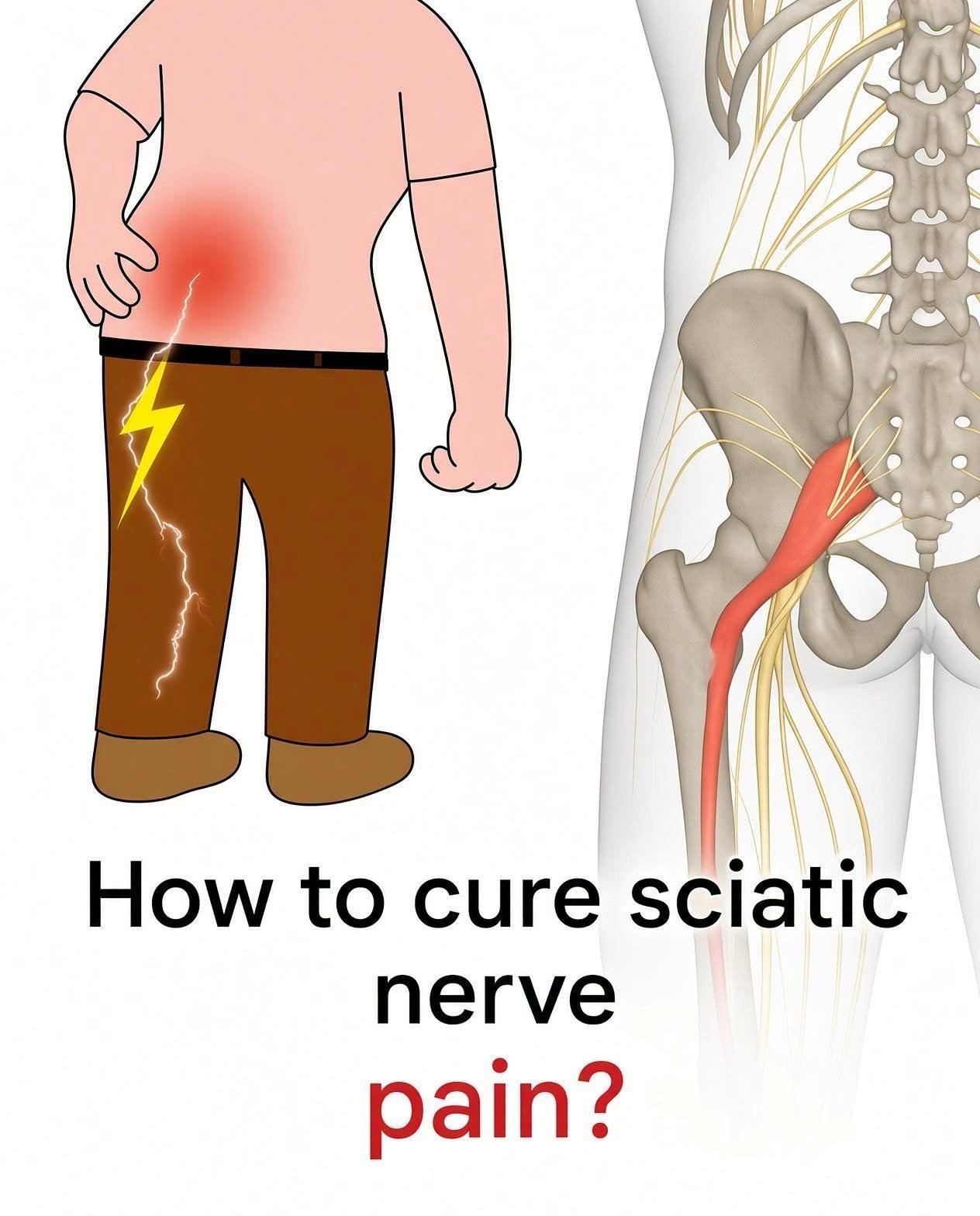
Sciatica—the sharp, shooting, or burning pain that radiates from the lower back down through the buttock and leg—occurs when the sciatic nerve becomes compressed or irritated. While intense leg pain can make you want to stay in bed, targeted movement is actually one of the most effective ways to reduce inflammation and relieve pressure on the nerve.
Here are 3 practical and surgeon-approved exercises specifically designed to decompress the sciatic nerve and ease leg pain:
1. The Seated Figure-4 Stretch (Piriformis Decompression)
-
Why it works: Tightness in the piriformis muscle—a deep gluteal muscle—can directly compress the sciatic nerve running beneath or through it. Stretching this muscle opens up space and provides immediate relief to shooting leg pain.
-
How to do it:
-
Sit upright near the front edge of a sturdy chair with your feet flat on the floor.
-
Lift the leg affected by sciatica and place your ankle across the opposite knee (forming a “4” shape).
-
Keep your back straight, chest elevated, and gently lean your torso forward from the hips until you feel a deep, comfortable stretch in your buttock and outer hip.
-
Hold for 20 to 30 seconds while breathing deeply. Repeat 3 times.
-
2. The Cobra / Press-Up (Spinal Decompression)
-
Why it works: If your sciatica is caused by a bulging or herniated disc in the lumbar spine, bending forward can push the disc further against the nerve. Backward extension helps push the disc material away from the nerve root, centralizing the pain out of your leg.
-
How to do it:
-
Lie flat on your stomach on a yoga mat or firm bed, placing your hands palms-down next to your shoulders (as if setting up for a push-up).
-
Keep your hips, legs, and glutes completely relaxed on the floor.
-
Gently press through your palms to lift your chest and shoulders off the mat, arching your lower back as far as comfortable. Keep your elbows slightly bent.
-
Hold at the top for 2 to 3 seconds, then slowly lower back down.
-
Perform 10 to 15 slow repetitions.
-
3. Sciatic Nerve Glides (“Flossing”)
-
Why it works: When tissues around the sciatic nerve become inflamed, the nerve can stick to nearby fascia. Nerve flossing gently slides the nerve back and forth through its neural pathway, restoring mobility and reducing nerve sensitivity without overstretching it.
-
How to do it:
-
Sit on the edge of a chair with a upright posture.
-
Slouch slightly through your upper back, tilt your head down toward your chest, and straighten the affected leg out in front of you.
-
As you flex your foot backward (pointing your toes up toward the ceiling), raise your head up to look toward the ceiling.
-
As you point your toes away from you, lower your head back down toward your chest.
-
Key Rule: Your head and foot move in harmony. Perform this gentle “rocking” motion 10 to 12 times. Never push into sharp, shooting pain—it should feel like a smooth, gentle glide.
-
Safety Tips for Sciatica Relief
-
Listen to your pain: If an exercise causes pain to travel further down your leg, stop immediately. Relief occurs when pain moves upward toward your lower back (a process called centralization).
-
Avoid deep forward bends: Avoid touching your toes or doing standing hamstring stretches, as pulling hard on an inflamed sciatic nerve will aggravate the condition.
-
Seek medical attention if: You experience sudden loss of bowel/bladder control, severe weakness (such as “foot drop”), or numbness around your groin—these are medical emergencies requiring immediate evaluation.
