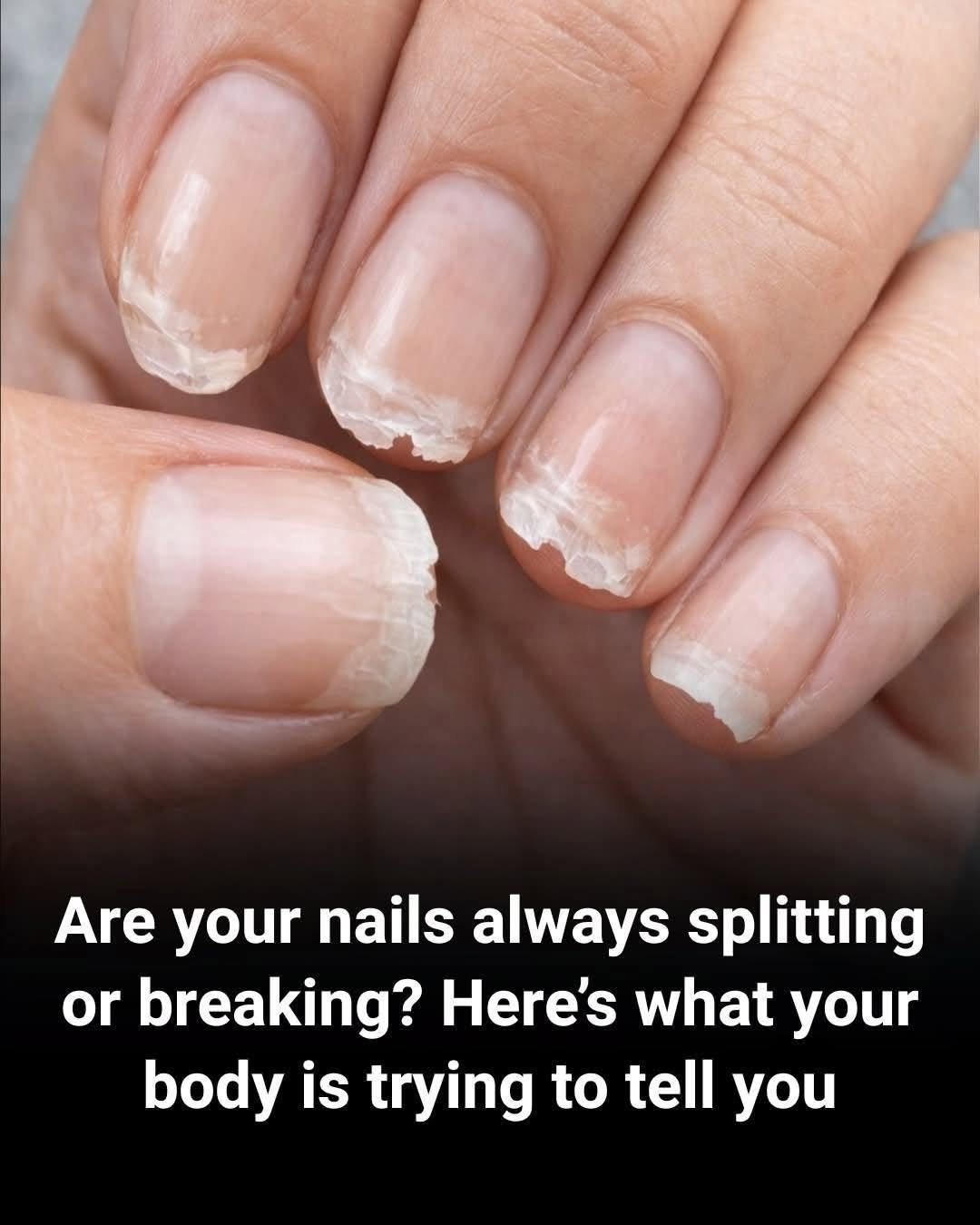
Fingernails are remarkably sensitive barometers of internal health. Made of stacked layers of a tough protein called keratin, your nails require a steady supply of oxygen, blood flow, vitamins, and minerals to grow strong and smooth. When fingernails become noticeably weak, soft, splitting, or brittle, your body is often signaling an internal imbalance, a nutrient gap, or an environmental stressor.
Here is what your body may be trying to tell you through weak or brittle nails:
1. Iron Deficiency or Anemia
-
The Sign: Nails that are soft, thin, break easily, or begin to curve inward like a spoon (a condition known as koilonychia).
-
Why it happens: Iron is crucial for producing hemoglobin, the protein in red blood cells that carries oxygen to your tissues—including the nail matrix where new nail cells are formed. Without enough oxygen and iron, nail cell production slows down and yields weak, structural integrity.
2. Thyroid Dysfunction (Hypothyroidism or Hyperthyroidism)
-
The Sign: Dry, brittle nails that peel, crack, or lift away from the nail bed (onycholysis), often accompanied by cold hands, fatigue, or unexplained weight changes.
-
Why it happens: Thyroid hormones regulate your body’s overall metabolism and tissue regeneration. An underactive thyroid (hypothyroidism) slows cell turnover, leading to dry, brittle nails, while an overactive thyroid can cause rapid, improper nail separation.
3. Key Nutrient Deficiencies (Biotin, Zinc, Protein)
-
The Sign: Nails that split horizontally into layers (onychoschizia), grow very slowly, or develop white spots and ridges.
-
Why it happens:
-
Biotin (Vitamin B7): Essential for building healthy keratin structures. Low levels make nails prone to peeling.
-
Zinc: Crucial for cellular growth and protein synthesis. A lack of zinc manifests as weak nails and white spots.
-
Protein: Because nails are pure protein, low dietary protein intake starves the nail matrix of essential building blocks.
-
4. Poor Circulation or Peripheral Artery Disease (PAD)
-
The Sign: Nails that grow unusually slowly, feel thick yet brittle, or turn pale or bluish.
-
Why it happens: Reduced blood flow to your fingers and toes starves the nail bed of vital nutrients and oxygen, compromising healthy growth.
5. Overexposure to Water, Chemicals, and Harsh Soap
-
The Sign: Nails that swell when wet and contract as they dry, causing them to crack, split, and become soft over time.
-
Why it happens: Frequent handwashing, washing dishes without gloves, or using harsh household cleansers strips natural oils and moisture from the nail plate, weakening the lipid bonds that hold keratin layers together.
6. Acetone Nail Polish Removers and Excessive Treatments
-
The Sign: Rough, thin, flaking nails that feel delicate and bend easily.
-
Why it happens: Acetone and frequent gel or acrylic nail applications dry out the nail plate, causing superficial damage and stripping away protective outer layers.
7. Natural Aging
-
The Sign: Nails becoming thinner, duller, more brittle, or developing longitudinal (vertical) ridges running from cuticle to tip.
-
Why it happens: As we age, moisture retention decreases, blood circulation to the extremities naturally slows, and keratin production decreases. Vertical ridges are generally a harmless sign of aging, akin to wrinkles on the skin.
How to Restore and Protect Your Nails
-
Hydrate and Moisturize: Apply a thick hand cream, jojoba oil, or vitamin E oil to your nail beds and cuticles twice daily, especially after washing your hands.
-
Wear Protective Gloves: Put on rubber gloves when doing dishes, cleaning, or handling household chemicals.
-
Assess Your Diet: Incorporate iron-rich foods (lean meats, spinach, lentils), quality proteins, eggs, nuts, and seeds. Consider discussing a biotin supplement with your doctor.
-
Take Break from Harsh Polish Removers: Switch to acetone-free polish removers and give your nails period breaks between manicures.
-
Consult a Doctor: If brittle nails are accompanied by extreme fatigue, hair loss, cold intolerance, or severe changes in skin texture, ask your doctor for a simple blood panel to check thyroid function, iron/ferritin, and vitamin levels.
