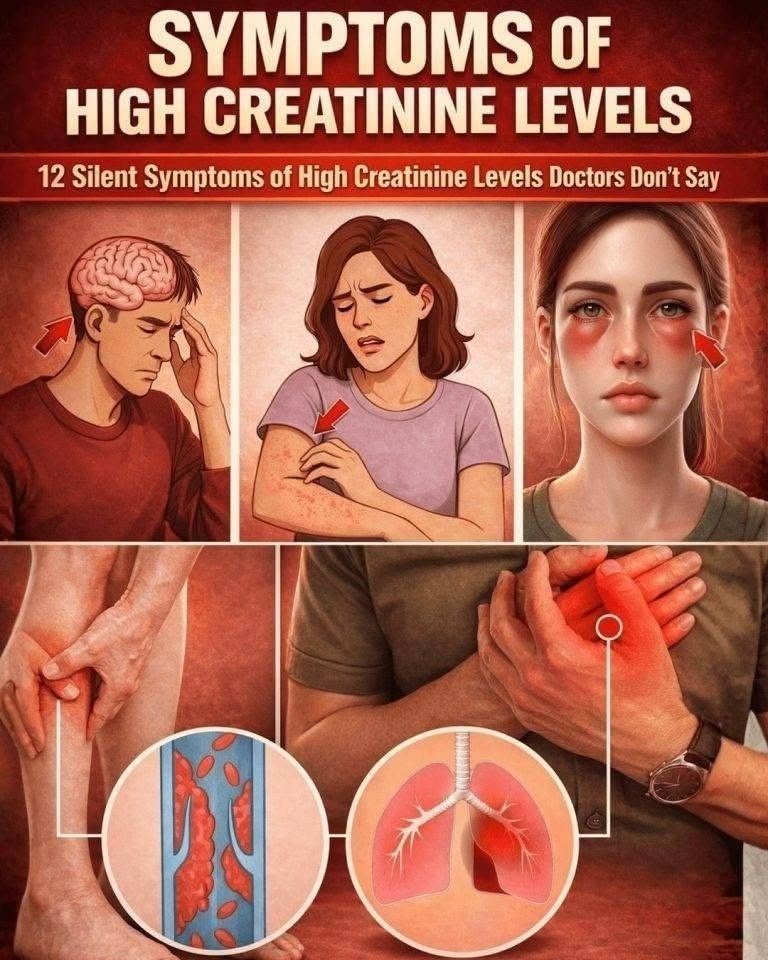
The kidneys act as the body’s filtration system, filtering waste products and excess fluid from the blood to be excreted in urine. Creatinine is a normal waste product created by muscle movement and the breakdown of dietary protein. When kidney function declines, the kidneys struggle to filter creatinine effectively, causing its levels to build up in the bloodstream.
Because early-stage kidney stress often develops quietly without dramatic symptoms, paying attention to minor physical changes is vital. Here are 12 subtle signs that may be linked to high creatinine and underlying kidney problems:
1. Swelling in the Feet, Ankles, or Legs (Edema)
-
What happens: When the kidneys fail to remove excess fluid and sodium efficiently, fluid builds up in the body’s tissues.
-
The subtle sign: You might notice your shoes feeling unusually tight by the end of the day, socks leaving deep indents on your calves, or mild puffiness around your ankles.
2. Puffiness Around the Eyes (Periorbital Edema)
-
What happens: Instead of keeping essential proteins in the blood, damaged kidney filters (glomeruli) may leak large amounts of protein (such as albumin) into the urine.
-
The subtle sign: Persistent puffiness or swelling around the eyes, especially noticeable right after waking up in the morning, caused by fluid retention and low blood protein levels.
3. Changes in Urination Frequency and Volume
-
What happens: As the filtering units are damaged, your bladder and kidney regulation shifts.
-
The subtle sign: You may find yourself waking up multiple times during the night to urinate (nocturia), or conversely, noticing a distinct drop in the overall volume of urine passed during the day despite normal fluid intake.
4. Foamy or Bubbly Urine
-
What happens: While occasional bubbles in the toilet are normal from a fast stream, persistent foam that requires multiple flushes to clear indicates significant protein spilling into the urine (proteinuria).
-
The subtle sign: Urine that looks like whipped foam or the head on a poured beer.
5. Unexplained Unusually Dry, Itchy Skin (Pruritus)
-
What happens: Healthy kidneys balance minerals and remove metabolic waste from the bloodstream. As kidney function drops, high levels of waste products (uremia) and mineral imbalances (such as excess phosphorus) build up in the blood.
-
The subtle sign: Persistent, deep itching across the back, legs, or arms that isn’t relieved by standard skin lotions or creams.
6. Metallic Taste in the Mouth or Ammonia-Smelling Breath
-
What happens: The accumulation of nitrogenous waste products in the blood (uremia) breaks down into ammonia in the saliva.
-
The subtle sign: Food—especially meat—may suddenly taste unappealing or “metallic,” accompanied by persistent bad breath that smells faintly like ammonia or bleach.
7. Unexplained Nausea, Appetite Loss, or Morning Queasiness
-
What happens: Metabolic waste building up in the gastrointestinal tract irritates the stomach lining and triggers the brain’s nausea centers.
-
The subtle sign: Feeling mildly nauseous in the morning, picking at meals, or feeling full after only a few bites of food.
8. Muscle Cramps and Involuntary Twitching
-
What happens: Impaired kidney function disrupts delicate electrolyte balances—specifically calcium, phosphate, and potassium—which are required for normal muscle contraction and nerve signals.
-
The subtle sign: Frequent, painful leg cramps at night, restless legs, or subtle muscle twitching in the calves and hands.
9. Persistent Unexplained Fatigue and Brain Fog
-
What happens: Damaged kidneys produce less erythropoietin (EPO), a hormone that signals the bone marrow to produce red blood cells. Fewer red blood cells mean less oxygen carried to tissues (anemia), combined with waste buildup in the brain.
-
The subtle sign: Feeling constantly drained, struggling to concentrate on routine mental tasks, or feeling sluggish even after a full night’s sleep.
10. Shortness of Breath (Dyspnea) with Minimal Effort
-
What happens: Kidney dysfunction can lead to shortness of breath in two ways: fluid building up in the lungs (pulmonary edema) and severe anemia limiting oxygen delivery.
-
The subtle sign: Feeling winded after walking up a short flight of stairs or needing an extra pillow to prop yourself up comfortably when lying down to sleep.
11. Cold Intolerance (Feeling Cold All the Time)
-
What happens: Anemia resulting from impaired kidney hormone production makes it difficult for the body to regulate its internal temperature.
-
The subtle sign: Needing a sweater or blanket when everyone else in the room feels comfortable, or having persistently cold hands and feet.
12. Dizziness or Lightheadedness Upon Standing
-
What happens: Anemia paired with subtle shifts in blood pressure (often caused by fluid shifts or medications used to manage kidney function) reduces blood flow to the brain when changing positions.
-
The subtle sign: Feeling woozy, unsteady, or seeing spots when standing up quickly from a seated or lying position.
When to Seek Medical Evaluation
High creatinine levels are usually detected through a simple, routine blood test called a Basic Metabolic Panel (BMP) or Comprehensive Metabolic Panel (CMP), which calculates your eGFR (estimated Glomerular Filtration Rate).
If you notice a combination of these subtle signs—especially swelling, changes in urine appearance, or persistent fatigue—consult your primary care physician. Early detection of kidney stress allows for dietary adjustments, medication management, and lifestyle changes that can effectively protect and preserve your long-term kidney function.
