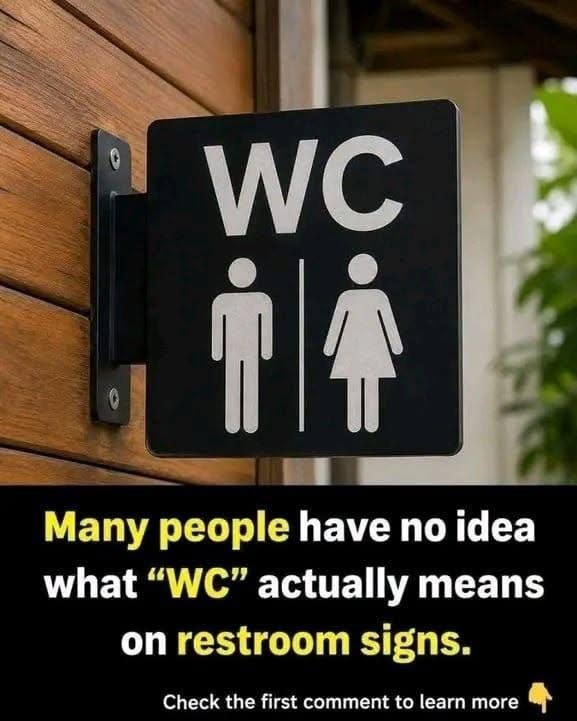
The mystery behind the letters WC is surprisingly straightforward, yet it offers a fascinating glimpse into the history of modern sanitation.
WC stands for “Water Closet.”
The Origin Story: Why “Water Closet”?
During the Victorian era in 19th-century Britain, indoor plumbing and flushable toilets began replacing traditional outdoor privies, latrines, and chamber pots.
When retrofitting existing homes to accommodate this new technology, homeowners usually didn’t have dedicated, large bathrooms. Instead, they converted small, walk-in storage closets or tiny spare rooms into private spaces dedicated solely to the new flush toilet.
-
“Closet”: Referred to a small, private room or cupboard.
-
“Water”: Highlighted the revolutionary new feature—a fixture that used running water to flush away waste rather than dry earth or bucket collection.
Putting the two together gave us the descriptive name Water Closet.
From Polite Euphemism to Global Signage
In 19th-century society, direct language regarding bodily functions was considered vulgar or impolite in formal company. “Water Closet” served as a polite, dignified euphemism.
As architectural blueprints and hotel floor plans abbreviated the term to WC, the two-letter acronym quickly spread across Europe and the rest of the world.
Today, while native English speakers rarely say “water closet” in everyday conversation—preferring terms like restroom, bathroom, toilet, or loo—the abbreviation WC remains the universally recognized international symbol for a toilet in train stations, airports, restaurants, and hotels worldwide.
