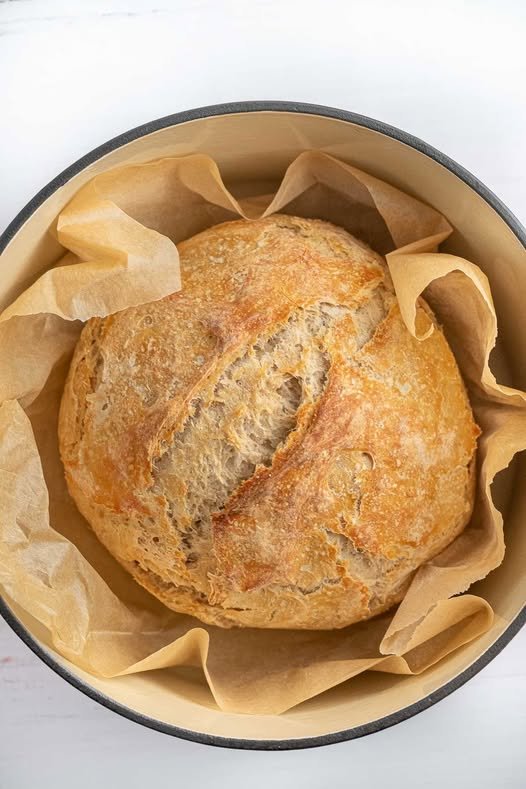
Both artisan no-knead bread and quick sourdough produce bakery-quality loaves with crackling, golden crusts and airy, chewy interiors, but they achieve that result through entirely different chemical and mechanical pathways.
Choosing between the two depends on your schedule, taste preferences, and how much planning ahead you want to do.
1. Artisan No-Knead Bread (The Hands-Off Champion)
Popularized by baker Jim Lahey, this method relies on time and high hydration rather than physical kneading to build gluten strength.
-
How It Works: You mix flour, water, salt, and a tiny pinch of yeast together into a sticky, wet dough. Instead of kneading, you let it sit on your counter for 12 to 24 hours (long slow fermentation). During this window, enzymatic action and gluten strand alignment happen naturally.
-
The Flavor Profile: Mildly yeasty, clean, and subtly complex due to the slow overnight fermentation break-down of starches.
-
Why People Love It:
-
Zero effort: Requires no special equipment, arm strength, or kneading skills.
-
Reliable: Almost foolproof as long as you bake it in a preheated cast-iron Dutch oven to trap steam.
-
-
Best For: Beginners looking for instant baking confidence or anyone who wants a stunning artisan loaf with minimal active work.
2. Quick Sourdough (The Wild Yeast & Tangy Favorite)
Traditional sourdough takes days to feed a starter and ferment. However, “quick sourdough” shortcuts (often using a pre-made active starter combined with a faster room-temperature rise, or utilizing a discard-based quick bread approach with baking powder) try to speed up the timeline.
(Note: True wild-fermented sourdough cannot be rushed in 30 minutes, as live lactic acid bacteria and wild yeasts need several hours to ferment and create that signature rise).
-
How It Works: Active wild sourdough starter is mixed with flour, water, and salt. To speed it up, bakers often use a slightly warmer proofing environment (like an oven with the light turned on) or incorporate stretch-and-folds over a tight 4-to-6-hour window instead of a 24-hour cold retard.
-
The Flavor Profile: Distinctly complex, tangy, and sour, with deeper aromatic notes produced by wild lactobacilli bacteria.
-
Why People Love It:
-
Digestibility: The long fermentation breaks down gluten and phytic acid, making it much easier on the digestive system.
-
Complex Flavor: Unmatched gourmet flavor that store-bought bread cannot replicate.
-
-
Best For: Bakers who have an active starter on hand and love that classic, tangy sourdough bite.
Head-to-Head Comparison
| Feature | Artisan No-Knead Bread | Quick Sourdough |
| Leavening Agent | Commercial dry yeast (tiny amount) | Wild sourdough starter (lactobacilli + wild yeast) |
| Active Prep Time | 5 minutes | 20–30 minutes (plus stretch-and-folds) |
| Total Time | 12 to 24 hours (mostly waiting) | 6 to 12 hours |
| Flavor | Clean, yeasty, classic bread flavor | Complex, tangy, sour |
| Crust & Crumb | Blistery crust, large open crumb | Thick, crunchy crust, chewy open crumb |
| Skill Level | Absolute Beginner | Intermediate (requires managing a starter) |
Which One Should You Bake?
-
Choose Artisan No-Knead if you want maximum reward for minimum effort, don’t want to maintain a live starter, and want a gorgeous crusty loaf by tomorrow with 5 minutes of mixing tonight.
-
Choose Sourdough if you already keep a starter alive, love the rich, tangy depth of fermented bread, and enjoy the hands-on process of stretching, folding, and shaping dough.
