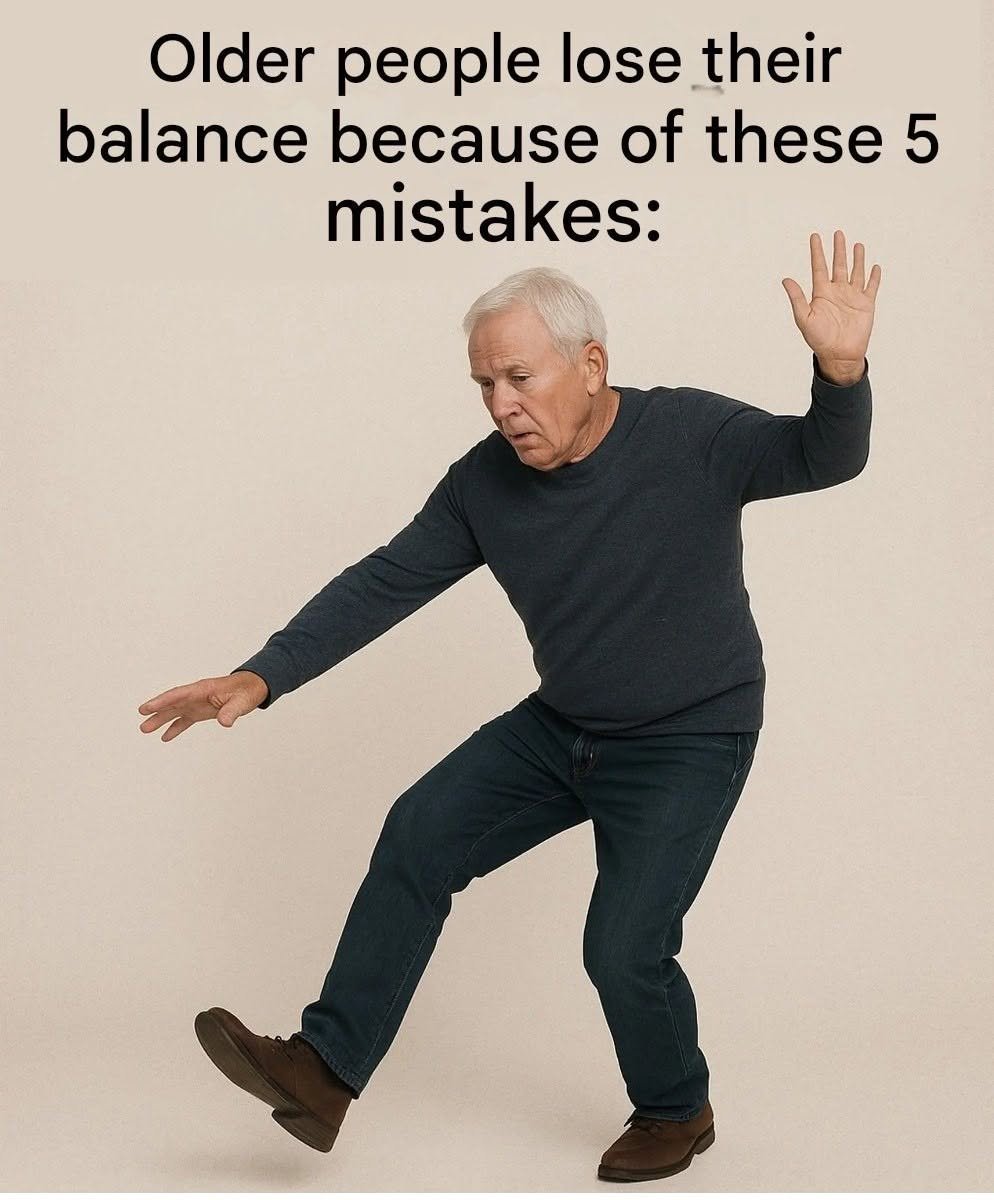
As we age, maintaining balance is a complex neurological and physical balancing act involving our vision, inner ear (vestibular system), and proprioception (our body’s awareness of where it is in space). When older adults experience frequent stumbles or falls, it is rarely due to just “getting older”—it is frequently triggered by everyday habits and oversight errors that quietly erode stability.
Here are 5 common mistakes that cause older adults to lose their balance, along with how to correct them:
1. Wearing Unsupportive or Improper Footwear Indoors
-
The Mistake: Walking around the house barefoot, in smooth-soled socks, or wearing old, worn-out slippers with zero arch support or traction.
-
Why It Triggers Falls: Without a firm shoe or slipper with a non-skid rubber sole, the foot loses crucial sensory feedback from the ground. Socks on hardwood or tile floors act like ice skates, drastically increasing the risk of a sudden slip.
-
The Fix: Wear supportive indoor shoes or slippers with a structured heel cup and a dedicated non-slip rubber tread, even when just walking around the house.
2. Ignoring Foot and Toe Numbness or Pain
-
The Mistake: Brushing off chronic foot pain, bunions, or numbness (peripheral neuropathy) without addressing the root cause or adjusting footwear.
-
Why It Triggers Falls: Your feet are your body’s primary touch-sensors. If nerve signals from your soles cannot properly communicate with your brain, your balance control center flies “blind,” making it hard to correct micro-stumbles before they become full falls.
-
The Fix: Inspect your feet daily, wear wide-toed shoes that don’t compress nerves, and have a podiatrist evaluate persistent numbness or balance-disrupting foot pain.
3. Turning the Head Too Quickly While Walking
-
The Mistake: Pivoting the head sharply to answer someone, look at a pet, or check a side street while in motion.
-
Why It Triggers Falls: Rapid head turns can instantly disrupt the fluid in your inner ear’s balance canals or cause momentary lightheadedness (especially if mild orthostatic blood pressure drops are present), pulling your center of gravity completely off-axis.
-
The Fix: Practice “whole-body turns”—instead of whipping just your head around, turn your shoulders and feet together to change direction securely.
4. Overlooking Decluttering and Home Lighting Hazards
-
The Mistake: Leaving loose throw rugs unsecured, running electrical cords across walkways, or navigating dim hallways at night without adequate lighting.
-
Why It Triggers Falls: Even the strongest legs will trip if a foot catches the edge of a curled rug or fails to see a low obstacle in the dark.
-
The Fix: Remove loose area rugs unless they are firmly anchored with heavy-duty nonslip backing. Install motion-sensor nightlights along the path from the bedroom to the bathroom to ensure clear, safe visibility 24/7.
5. Neglecting Lower-Body Strength and Core “Use It or Lose It” Training
-
The Mistake: Adopting a completely sedentary routine out of fear of falling, which paradoxically accelerates muscle atrophy.
-
Why It Triggers Falls: When leg muscles (quads, calves, and glutes) weaken, you lose the explosive corrective strength needed to catch yourself if you start to lean too far to one side. Balance is a dynamic reflex that requires active muscular engagement.
-
The Fix: Incorporate daily lower-body stability movements—such as supported sit-to-stands, heel raises, and single-leg balance holds—to keep your nervous system and stabilizing muscles sharp and reactive.
