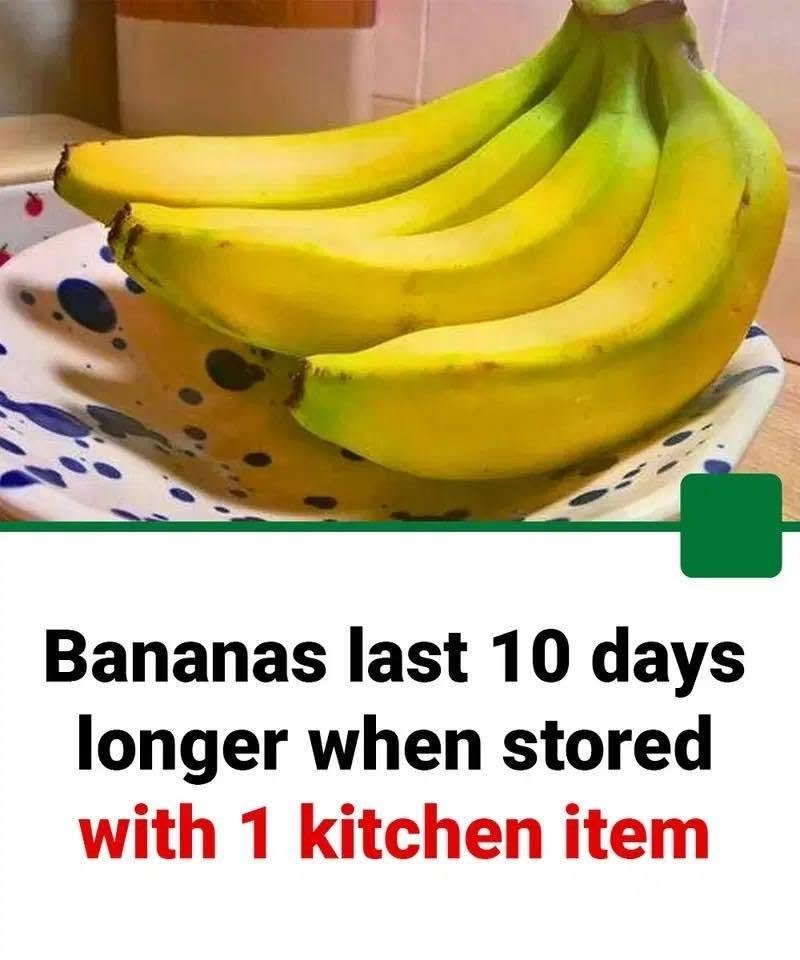
Storing bananas away from the traditional fruit bowl and utilizing aluminum foil (or plastic wrap) around their stems can extend their freshness by up to 10 days or more.
Why the Fruit Bowl Is the Enemy of Bananas
Most people default to tossing bananas into a multi-fruit bowl on the kitchen counter. However, this accelerates decay due to ethylene gas—the natural plant hormone responsible for ripening fruit.
-
Self-Accelerated Ripening: Bananas naturally emit high volumes of ethylene gas.
-
Cross-Contamination: When trapped in a fruit bowl alongside other high-ethylene producers or ethylene-sensitive fruits (like apples, pears, and avocados), the concentrated gas triggers rapid over-ripening, turning bananas mushy and brown within days.
The Foil Stem Hack: How It Works
The vast majority of a banana’s ethylene gas is released directly from the crown and upper stem where the bunch connects.
-
Creating an Airtight Barrier: Wrapping the stem cluster tightly with aluminum foil or plastic wrap seals in the gas release.
-
Slowing Down the Clock: Containing the gas prevents it from reaching the rest of the banana skin and surrounding fruit, dramatically slowing down cellular breakdown and brown spot development.
Step-by-Step Guide for Maximum Freshness
-
Separate from the Fruit Bowl: Move your bananas to a cool, dry area of the kitchen counter away from direct sunlight and other fruits.
-
Wrap the Stems: Tear off a small piece of aluminum foil and wrap it tightly around the main stem where the bananas are joined. (For even longer shelf life, separate the bananas individually and wrap each stem separately).
-
Avoid Porous Wraps: Do not use parchment paper or paper towels, as they are breathable and fail to block gas release.
What About the Fridge?
Once bananas reach your ideal level of yellow ripeness, you can transfer them to the refrigerator. Cold temperatures slow down internal enzymatic ripening. While the outer peel will turn dark brown or black in cold air, the inner fruit will remain firm, sweet, and perfectly edible for another 5 to 7 days.
