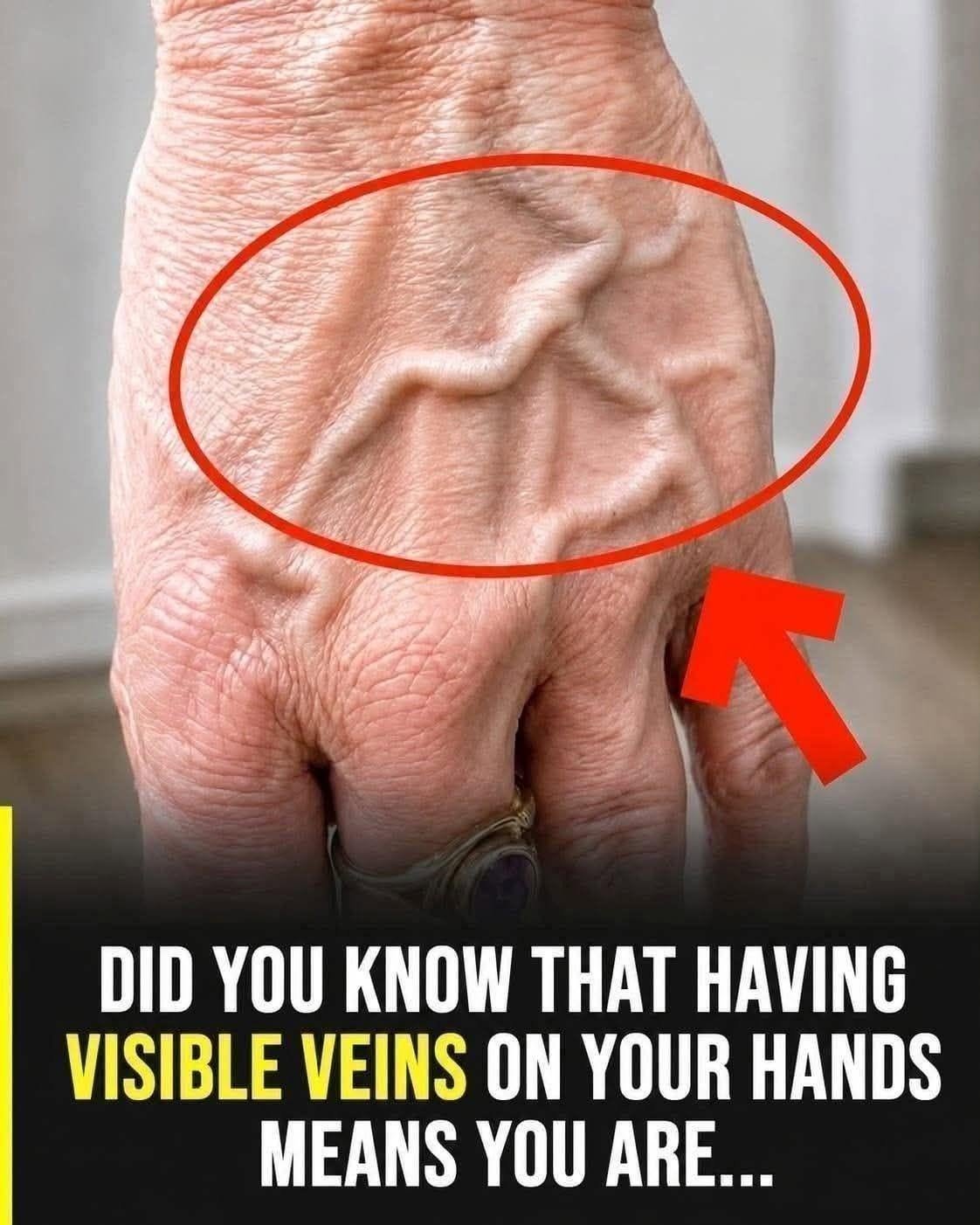
Internet clickbait headlines often love to finish that sentence with dramatic claims like “…uniquely healthy, super fit, or harboring a hidden medical condition.”
The reality is much simpler and more varied. Having visible veins isn’t a single “yes or no” indicator of your health status; instead, vein visibility depends entirely on a combination of biology, body composition, genetics, and lifestyle factors.
Here is what your veins actually reveal about you:
1. Low Body Fat Percentage
One of the most common reasons veins stand out is having a lower layer of subcutaneous fat (the fat stored right underneath the skin). When body fat decreases, the layer cushioning your skin gets thinner, bringing superficial veins closer to the surface so they become much easier to see.
2. High Muscle Mass and Exercise
When you exercise regularly—especially resistance training—your blood pressure temporarily rises, and your muscles pump up, pushing veins outward toward the skin. Over time, consistent weight training and increased muscle mass can permanently increase vascularity as your body needs to supply more blood and oxygen to working muscle tissue.
3. Genetics and Fair Skin Tone
Genetics play a massive role in how close your veins sit to the surface and how elastic your blood vessel walls are. Furthermore, people with lighter or fairer skin tones naturally have more visible veins simply because light passes through the skin differently compared to richer, more deeply pigmented skin tones.
4. Age and Natural Skin Thinning
As we age, the skin naturally loses collagen, elasticity, and subcutaneous fat layers, becoming thinner and more translucent. This is why older adults frequently notice more prominent veins on their hands, arms, and legs, even without changes in fitness or weight.
5. Heat and Hydration
When the weather is hot, your blood vessels dilate (expand) to help cool your body down, pushing blood closer to the skin’s surface. Similarly, high fluid intake or increased blood volume can temporarily make veins appear more pronounced.
When Visible Veins Do Warrant Medical Attention
While normal vascularity is harmless, certain types of prominent veins can signal an underlying medical issue that shouldn’t be ignored:
-
Varicose Veins: Enlarged, twisted, or bulging veins—usually appearing in the legs—caused by weakened valves that allow blood to pool rather than flow smoothly back to the heart. They can cause aching, swelling, or heavy legs.
-
Spider Veins: Smaller, damaged capillaries that appear close to the surface in a web-like pattern, often linked to genetics, prolonged standing, or hormonal shifts.
-
Sudden Painful Swelling or Redness: If a vein becomes hard, warm, tender, or swollen very suddenly, it can indicate a clot or inflammation (such as superficial thrombophlebitis) and requires a doctor’s evaluation.
Ultimately, having visible veins is usually just a normal reflection of your genetics, skin thickness, or fitness level—rather than a single magic indicator of your overall health!
