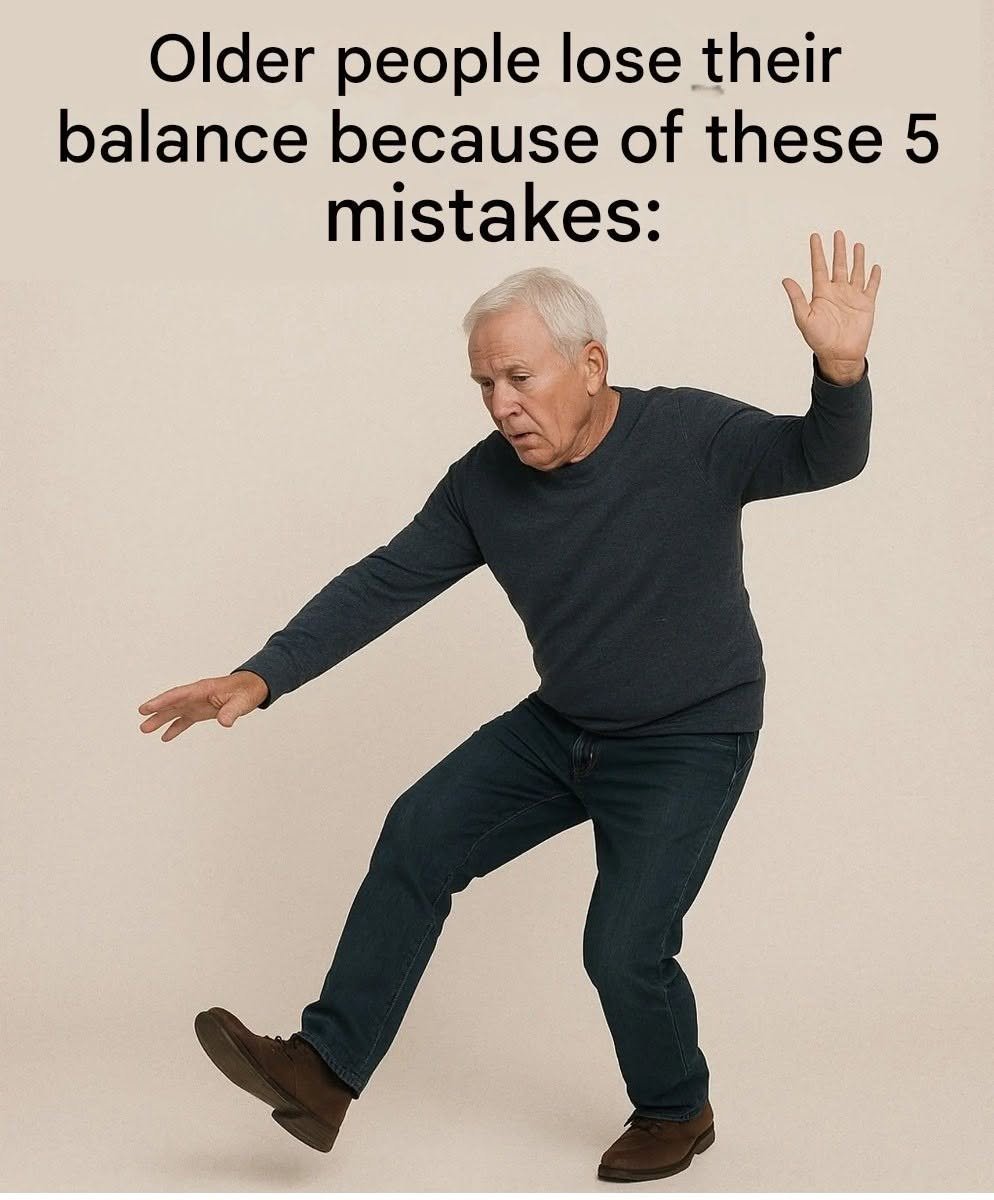
Maintaining good balance is one of the most critical factors for preserving independence and mobility as we age. While many people view a decline in balance as an inevitable part of growing older, physical therapists and geriatricians emphasize that balance is a skill that can be maintained—and that many sudden stumbles are caused by subtle, everyday habits.
Here are five common mistakes that can quietly compromise balance for older adults, along with ways to correct them:
1. Neglecting Lower Body Strength Training
Balance relies heavily on the strength of your core, hips, glutes, and legs.
-
The Mistake: Relying solely on walking for exercise. While walking is wonderful for cardiovascular health, it doesn’t build lateral strength or target the specific stabilizing muscles needed to catch yourself if you trip.
-
The Fix: Incorporate simple, functional strength exercises—such as sit-to-stands (rising from a chair without using your hands), gentle squats, or heel-to-toe raises—to keep leg and core muscles strong.
2. Wearing Improper or Unsupportive Footwear
Your feet are your primary connection to the ground. What you wear indoors and outdoors plays a massive role in stability.
-
The Mistake: Wearing loose slippers, socks on hardwood floors, or shoes with worn-out, slick soles around the house. Shoes with thick, overly cushioned, or high wedge heels can also distort your foot’s natural feedback to your brain.
-
The Fix: Choose well-fitting shoes with non-slip, low-profile rubber soles, even indoors. If you prefer slippers, look for styles with structured, anti-slip bottoms rather than soft, flimsy fabric.
3. Ignoring Vision and Hearing Changes
Balance is a complex sensory puzzle that relies on three main systems working together: your eyes (visual), your inner ear (vestibular), and your joints/muscles (proprioception).
-
The Mistake: Skipping annual eye exams or ignoring subtle hearing changes. The inner ear houses your balance center, and untreated hearing loss is directly linked to an increased risk of falls.
-
The Fix: Get your vision checked yearly, keep glasses prescriptions up to date (and be cautious with multi-focal lenses when navigating stairs), and have hearing evaluated if you notice changes.
4. Overlooking Hidden Home Hazards
Many balance mishaps don’t happen because of a physical failure, but because of environmental obstacles.
-
The Mistake: Keeping loose throw rugs, clutter in hallways, trailing electrical cords, or poor lighting in stairwells and bathrooms.
-
The Fix: Secure or remove loose area rugs, install bright lighting or nightlights along common nighttime pathways (like the way to the bathroom), and clear clutter from walkways.
5. Over-Medicating or Ignoring Dehydration
Internal factors like medication side effects or low fluid intake can cause sudden dizziness, lightheadedness, or fatigue.
-
The Mistake: Not reviewing medications regularly with a doctor or pharmacist. Certain drugs—especially blood pressure medications, sedatives, and antihistamines—can cause drowsiness or drop blood pressure when standing up. Not drinking enough water can also cause blood pressure to dip, leading to sudden unsteadiness.
-
The Fix: Ask your doctor or pharmacist to review your medications for “dizziness risks” or interactions, and sip water steadily throughout the day to stay hydrated.
A Proactive Step: If balance has felt unsteady lately, physical therapists can perform a quick assessment and design a personalized routine to build confidence and stability safely!
