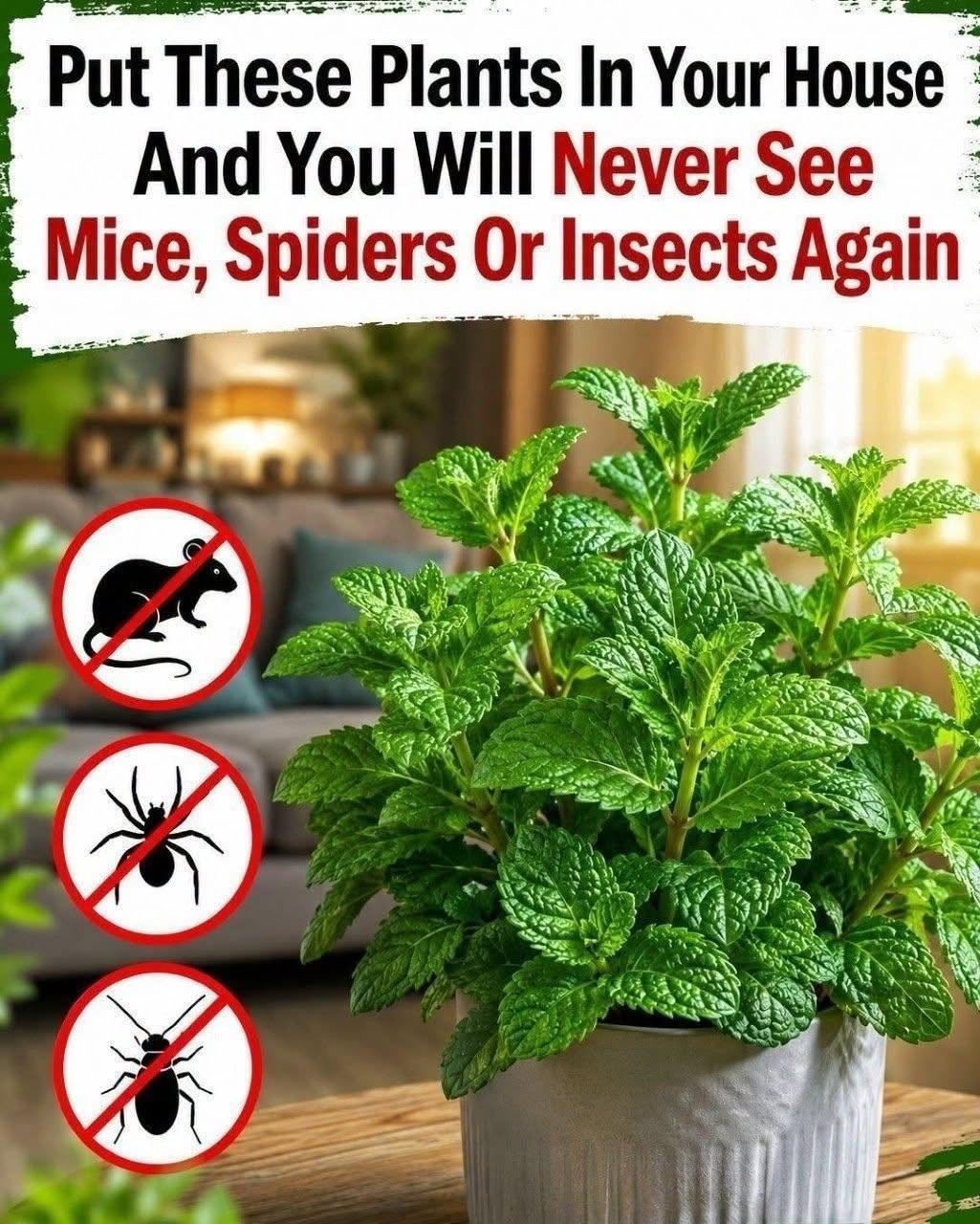
Internet lists and garden blogs love highlighting “8 plants that help repel mice, spiders, and other insects” as a foolproof, natural way to pest-proof your entire home.
While filling your windowsills and garden beds with fragrant greenery is a wonderful, eco-friendly tactic, pest control experts and botanists point out a slight catch: living plants alone are usually not active exterminators. Pests won’t automatically flee just because a pot of mint is sitting across the room. However, these plants do contain potent essential oils and aromatic compounds that many critters strongly dislike.
Here is a look at 8 powerhouse plants known for their pest-repelling properties, how they work, and how to actually use them effectively:
1. Peppermint
-
Target Pests: Spiders, mice, ants, and mosquitoes.
-
Why it works: Peppermint is rich in menthol, which overloads the sensory receptors of pests like spiders and mice (who smell and taste through receptors on their legs and face). They find the intense scent overwhelming and will actively avoid areas where it’s strong.
-
How to use it: Plant it in pots (keep it contained, as mint spreads like wildfire in gardens) or use concentrated peppermint oil diluted in water as a natural perimeter spray.
2. Lavender
-
Target Pests: Moths, fleas, flies, and mosquitoes.
-
Why it works: While humans find the floral aroma of lavender deeply relaxing, insects like moths, midges, and mosquitoes despise the heavy concentration of linalool and camphor in its oils.
-
How to use it: Grow it by sunny entryways or windows, or dry the flowers and hang sachets in your closets to keep clothes moths at bay.
3. Rosemary
-
Target Pests: Mosquitoes, ticks, and carrot flies.
-
Why it works: Rosemary has a woody, resinous scent that acts as a natural deterrent for garden and household pests.
-
How to use it: Plant it near patio seating areas. You can also toss fresh rosemary sprigs onto a backyard fire or grill; the released smoke acts as an incredible natural mosquito repellant.
4. Lemongrass (Citronella Grass)
-
Target Pests: Mosquitoes and gnats.
-
Why it works: Lemongrass contains high levels of citronella oil, the active, natural ingredient found in many outdoor bug sprays.
-
How to use it: Grow it in large planters around porches and decks. Crushing or brushing against the leaves releases the aromatic oils into the air.
5. Marigolds
-
Target Pests: Aphids, mosquitoes, tomato hornworms, and even garden rabbits/pests.
-
Why it works: Marigolds have a distinct, pungent aroma and release a compound called alpha-terthienyl from their roots and foliage that soil-dwelling pests and flying insects dislike.
-
How to use it: Plant them as a bright border around vegetable gardens or flower beds to naturally deter garden-munching bugs.
6. Chrysanthemums (“Mums”)
-
Target Pests: Roaches, ants, ticks, fleas, silverfish, and spider mites.
-
Why it works: Mums contain pyrethrum, a natural organic compound that is widely used in commercial insecticides because it attacks the nervous systems of insects.
-
How to use it: While live potted mums offer mild deterrent benefits, extracting or processing the dried flowers is where commercial pyrethrins come from.
7. Basil
-
Target Pests: Houseflies and mosquitoes.
-
Why it works: Sweet basil has sharp, aromatic oils (like estragole and linalool) that flying insects prefer to avoid.
-
How to use it: Keep a pot of basil right on your kitchen windowsill. Not only does it help deter kitchen flies, but you can also pinch off the leaves for cooking!
8. Catnip
-
Target Pests: Mosquitoes, termites, and cockroaches (though it will attract neighborhood cats!).
-
Why it works: Scientific studies have shown that the chemical compound nepetalactone in catnip can be remarkably effective at repelling certain insects—sometimes even outperforming synthetic repellents.
-
How to use it: Grow it in a sunny spot, but keep in mind it may turn your yard into a popular hangout spot for every feline in the neighborhood.
The Reality Check: Having these plants in your garden or on a porch is a wonderful, fragrant layer of defense, but living plants sitting passively in a pot won’t clear an active mouse infestation or spider invasion. To get the real benefit, you often need to crush the leaves to release the essential oils, use concentrated essential oil sprays, or combine them with proper home sealing and cleanliness.
Would you like some tips on making a natural essential oil pest spray or more ideas for container gardening?
