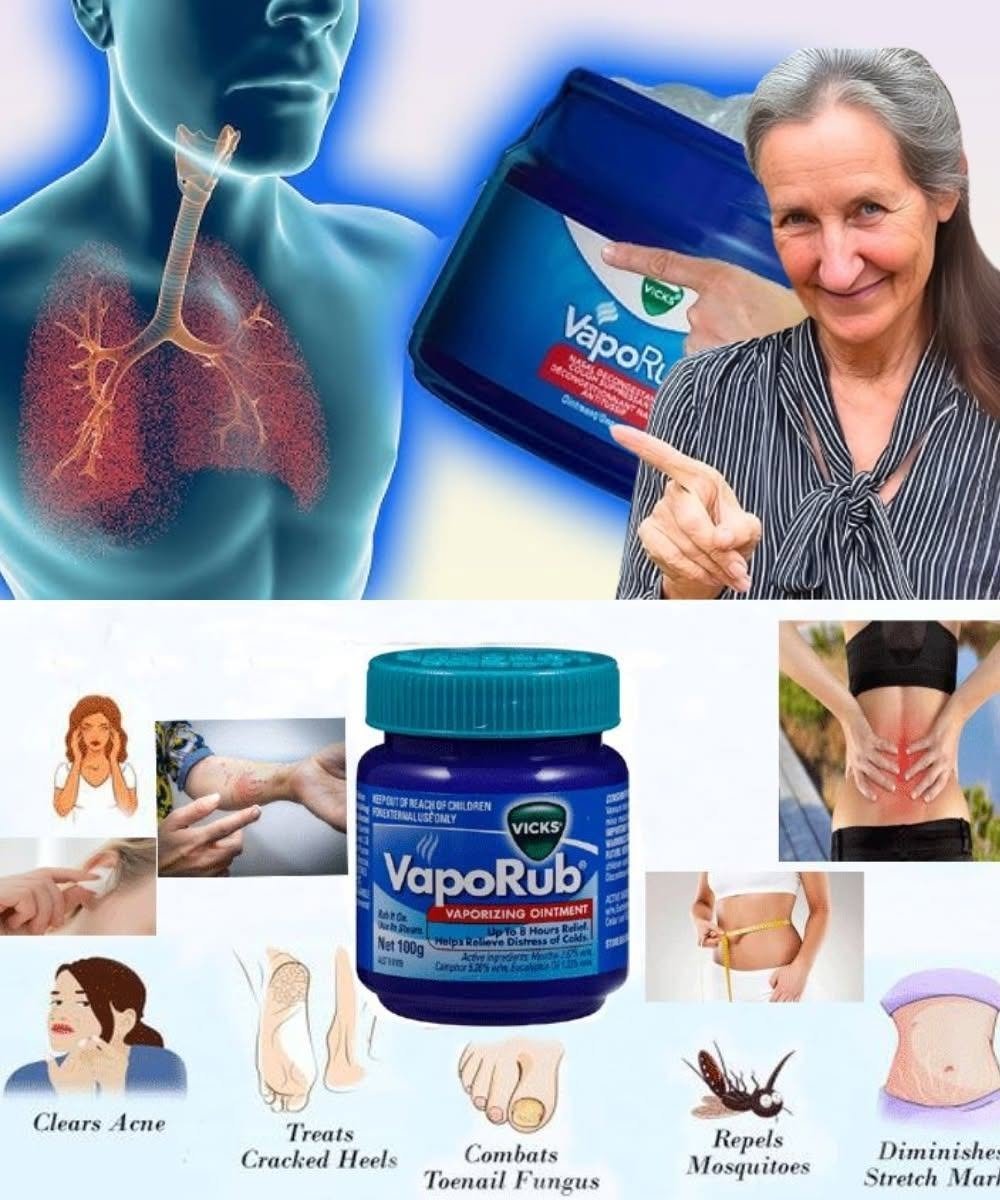
Internet listicles love running headlines like “8 Surprising Uses of Vicks VapoRub,” pitching this classic medicine cabinet ointment as a magical DIY shortcut for everything from clearing up acne and treating fungal infections to repelling household pests and easing headaches.
While VapoRub is a wonderful, comforting staple for what it was specifically designed to do, dermatologists and medical toxicologists urge caution when turning a medicated chest rub into an all-purpose household remedy.
The Real Science: What VapoRub Actually Is
Standard VapoRub is formulated with three primary active medicinal ingredients—camphor, menthol, and eucalyptus oil—suspended in a thick petroleum jelly base.
-
Its Purpose: When applied to the chest or throat, body heat vaporizes these active compounds. Inhaling them triggers cold-sensitive receptors in your nose, creating a cooling sensation that tricks your brain into feeling like your airways are open when you have a cold or cough.
Sorting Fact from Fiction: Popular “Surprising Uses”
While blog posts claim dozens of clever alternative uses, medical reality draws a sharp line between harmless home tricks and skin irritants:
1. Easing Muscle and Joint Aches (The One Plausible Use)
-
The Reality: Because menthol and camphor stimulate surface blood flow and create a strong cooling-to-warming sensation, VapoRub acts as a mild counter-irritant. It essentially distracts your nervous system from minor muscle stiffness—much like a basic over-the-counter sports cream.
2. Clearing Acne or Blemishes (The Risky Myth)
-
The Claim: Dab it on a pimple overnight to dry it out.
-
The Reality: Dermatologists strongly advise against this. Applying a heavy petroleum and camphor ointment to acne or blemishes can trap bacteria, clog pores, and cause severe skin irritation, chemical contact dermatitis, or worsened breakouts.
3. Treating Toenail Fungus (The Ineffective Hack)
-
The Claim: Rubbing it on fungal nails cures the infection.
-
The Reality: While eucalyptus and thymol have mild antifungal properties, VapoRub cannot penetrate the dense keratin plate of a nail to reach or cure a fungal infection. Dermatologists rely on targeted medical treatments for actual resolution.
Critical Safety Rules Doctors Want You to Know
Because VapoRub smells comforting and nostalgic, people often assume it is entirely harmless. However, misusing its active chemical components can lead to real hazards:
-
Never Use on Children Under Age 2: The American Academy of Pediatrics explicitly warns against using VapoRub on infants and toddlers. The strong vapors can stimulate excess mucus production and airway inflammation in tiny, narrow airways, making it harder for them to breathe.
-
Never Put It Directly Under Your Nose: Slathering ointment right beneath your nostrils can cause the petroleum base to be inhaled into the lungs over time, potentially leading to a rare and dangerous condition called exogenous lipid pneumonia. Always apply it strictly to the chest or throat.
-
Avoid Broken or Sensitive Skin: Camphor can cause severe chemical irritation, burning, or systemic toxicity if absorbed through broken skin or sensitive mucosal membranes.
The Takeaway: VapoRub is a comforting, trusted companion for easing nighttime coughs and chest congestion when used correctly. For everything else, it’s best to leave the internet life-hacks behind!
Would you like to explore other common household remedies, or look into a different wellness topic?
