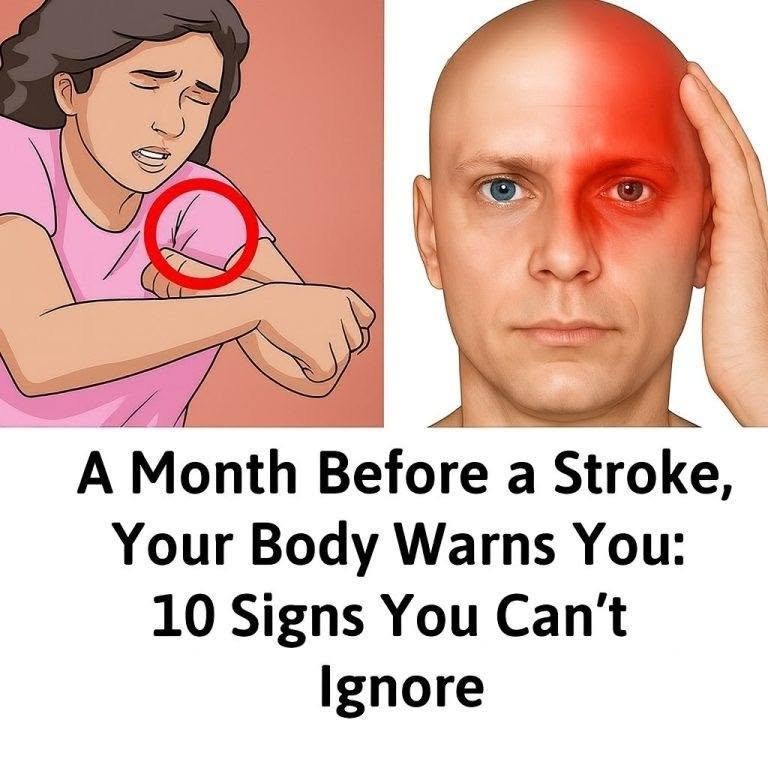
Sensational health listicles love dramatic hooks like “A month before a stroke, your body warns you: 10 signs not to ignore…” These articles are designed to generate high anxiety by blending vague, everyday physical quirks with serious neurological emergencies.
Neurologists and vascular specialists look at stroke warning signs through an urgent clinical framework. While it is true that some major strokes are preceded by minor warning events, a stroke is fundamentally an acute, sudden medical emergency—not a condition that quietly ticks away on a 30-day countdown timer.
Understanding the Reality: Transient Ischemic Attacks (TIAs)
When people experience legitimate neurological warning signs weeks or days before a major stroke, doctors are usually looking at a Transient Ischemic Attack (TIA), often called a “mini-stroke.”
-
What is a TIA? It occurs when a blood clot temporarily blocks an artery in the brain, cutting off blood flow for a short period before dissolving on its own.
-
The Danger: The symptoms of a TIA are identical to a full stroke, but they typically resolve within minutes to hours. Because the symptoms disappear, people often ignore them. However, a TIA is a massive red flag—up to a third of people who experience a TIA will go on to have a major stroke, often within the following days or months.
The Real Signs of Cerebrovascular Events (B.E.F.A.S.T.)
Rather than an arbitrary list of ten vague symptoms (such as general fatigue or mild muscle aches), emergency medicine relies on clear, rapid acronyms to identify acute stroke or pre-stroke warning signs:
-
B – Balance: Sudden loss of balance, unsteadiness, or severe dizziness.
-
E – Eyes: Sudden blurred vision, double vision, or loss of sight in one or both eyes.
-
F – Face Drooping: Sudden weakness or numbness on one side of the face, or an uneven smile.
-
A – Arm Weakness: Sudden drift, numbness, or inability to raise one arm compared to the other.
-
S – Speech Difficulty: Sudden slurred speech, garbled words, or an inability to speak or understand speech.
-
T – Time to Call Emergency Services: Time is critical. Brain cells die by the millions every minute blood flow is interrupted.
Separating Misleading “Signs” from Clinical Reality
Sensational articles often misattribute common, unrelated conditions—like general headaches, eye strain, muscle fatigue, or age-related clumsiness—as “1-month stroke warnings.”
-
The Clinical Distinction: True stroke or TIA symptoms come on suddenly and without warning, focusing on specific neurological deficits like localized paralysis, sudden speech loss, or abrupt vision changes.
-
Prevention: Long-term stroke prevention isn’t about looking for a monthly countdown; it is managed by controlling fundamental vascular risk factors—such as high blood pressure, diabetes, high cholesterol, atrial fibrillation, and smoking—with your primary care physician.
The Medical Takeaway: If you or someone around you experiences sudden facial drooping, arm weakness, or slurred speech, do not wait. Call emergency services immediately. Quick medical intervention during a TIA or stroke can completely alter long-term outcomes.
Are you looking into cardiovascular and stroke prevention strategies, or evaluating specific health risk factors?
