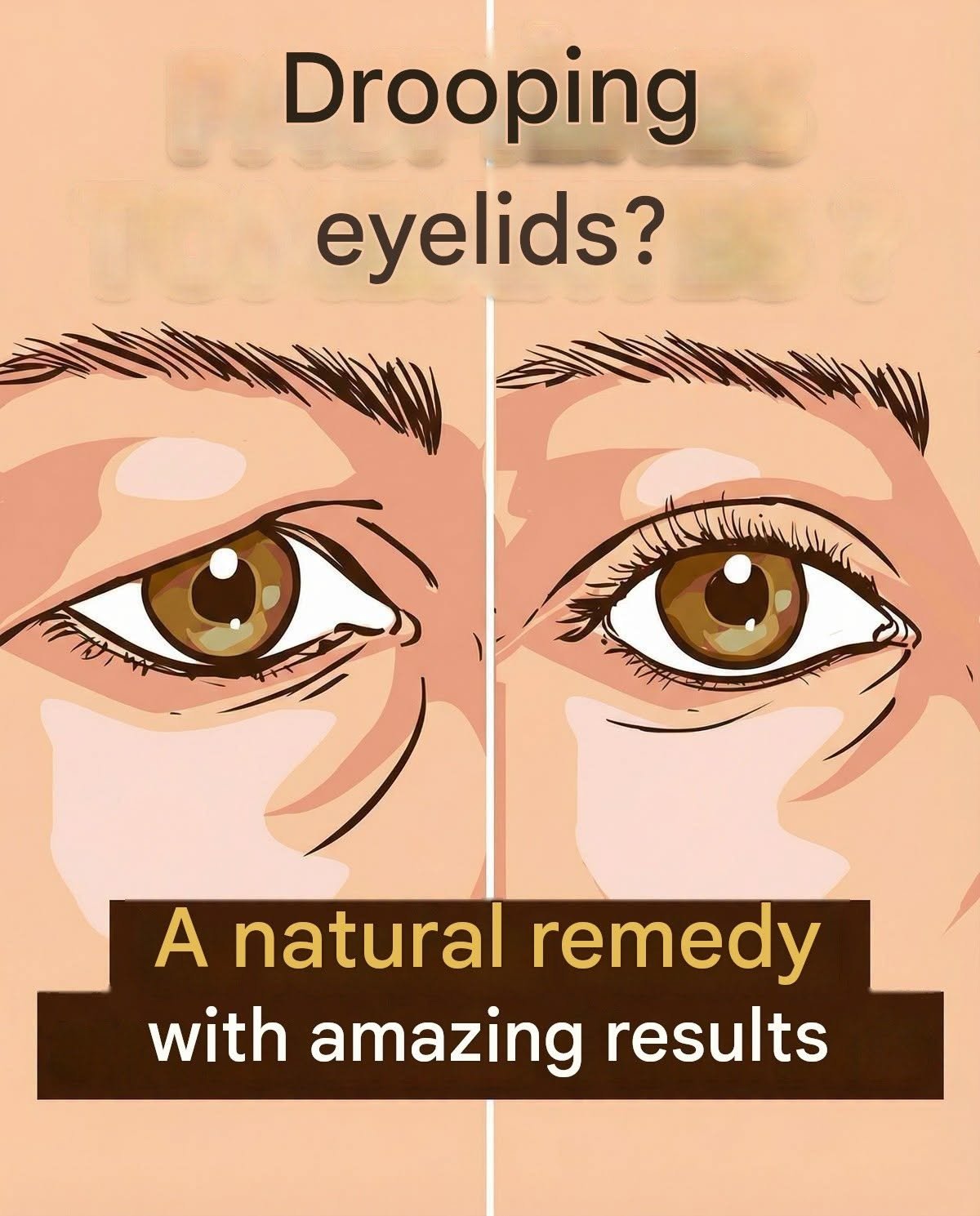
Droopy eyelids—clinically referred to as ptosis when the upper eyelid sags over the eye, or dermatochalasis when it is caused by excess skin—are a very common part of the natural aging process. Over time, the skin loses elasticity, and the levator muscle that lifts the eyelid can stretch or weaken.
While mild sagging is often purely cosmetic, understanding how to care for the delicate eye area naturally—and knowing when a change requires medical attention—is key to maintaining both your appearance and your vision.
Natural Ways to Improve Appearance and Support Eye Health
If your eyelid drooping is mild and age-related, several gentle home care strategies and lifestyle adjustments can help refresh the eye area and support skin elasticity:
-
Targeted Facial and Eye Exercises (“Face Yoga”): Gentle muscle toning can help engage the forehead and orbital muscles, potentially providing temporary support to the upper face.
-
How to do it: Place your index and middle fingers just above your eyebrows, applying gentle downward pressure to hold your forehead in place. Try to raise your eyebrows upward against that resistance as if looking surprised, hold for a few seconds, and release. Repeat 5 times.
-
-
Cold Compresses to Reduce Puffiness: Fluid retention and morning swelling can make sagging skin appear more pronounced. Applying a chilled spoon, a cold green tea bag, or a cool, damp cloth over closed eyes for 5–10 minutes in the morning can constrict blood vessels and temporarily tighten the area.
-
Hydration and Skincare with Peptides: The skin around the eyes is the thinnest on the body. Look for lightweight, ophthalmologist-tested eye creams containing peptides, hyaluronic acid, or ceramides to strengthen the skin barrier and maintain hydration without weighing down the lids.
-
Sun Protection and Sunglasses: UV rays break down collagen and elastin fibers rapidly. Wearing UV-blocking sunglasses and applying a gentle mineral sunscreen around the orbital bone prevents premature thinning and further sagging.

When to See a Doctor (Ophthalmologist or Optometrist)
While age-related drooping is gradual, certain signs mean it is time to consult a healthcare professional. You should schedule an evaluation if you experience any of the following:
-
Obstructed Vision: If the upper eyelid droops low enough to block your superior field of vision—making it difficult to read, drive, or watch television safely.
-
Sudden Onset: Unlike natural aging, which happens slowly over years, a sudden or rapid droop in one eyelid can be a sign of a neurological issue, muscle disorder, or a medical emergency (such as a stroke or aneurysm) and requires immediate medical evaluation.
-
Associated Neurological Symptoms: Seek urgent medical care if eyelid drooping is accompanied by double vision, weakness on one side of the face, severe headache, numbness, or difficulty speaking.
-
Chronic Eye Strain or Headaches: If you find yourself constantly wrinkling your forehead or lifting your eyebrows manually to see clearly, it can lead to tension headaches and eye fatigue.
Medical and Surgical Options
If drooping significantly impacts your vision or if you desire a permanent cosmetic correction, modern medicine offers effective solutions:
-
Blepharoplasty: A minor surgical procedure where excess skin, muscle, and fat are carefully removed from the upper eyelid.
-
Ptosis Repair: A procedure that tightens the levator muscle to lift the eyelid back to its natural height.
-
Prescription Eye Drops: In specific types of mild acquired ptosis, prescription eye drops can stimulate the muscle responsible for lifting the eyelid.
Have you noticed your eyelids drooping gradually over time, or did this change appear more suddenly? Sharing if it affects your vision can also help tailor this information.
