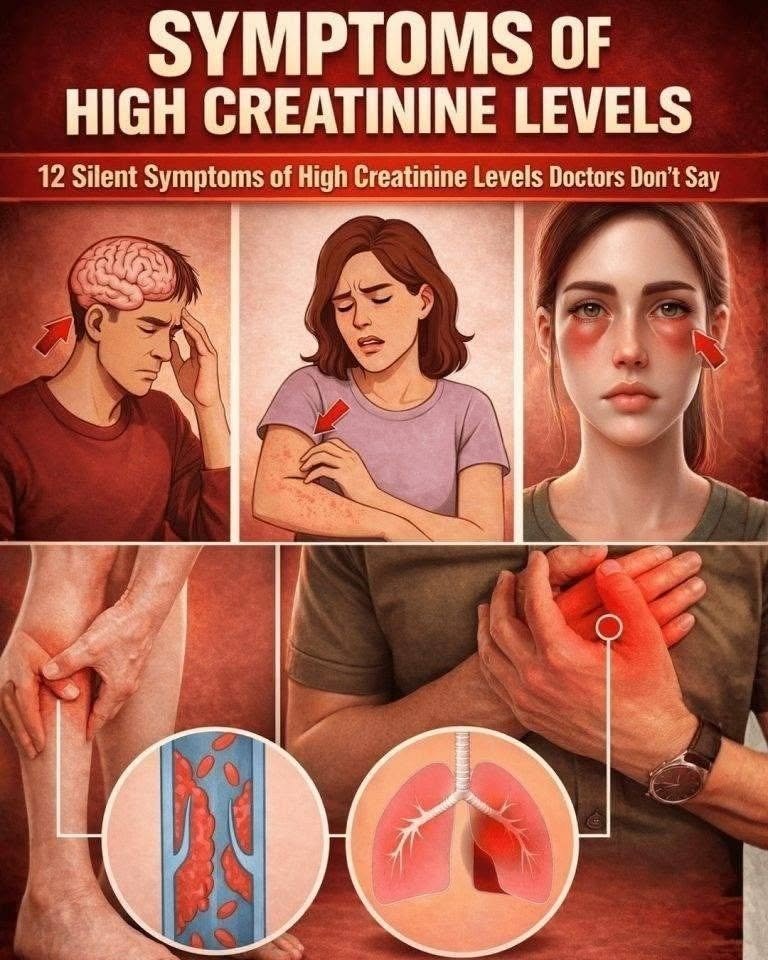
Creatinine is a waste product generated by normal muscle breakdown that your kidneys filter out of your blood. When kidney function declines, creatinine levels in the blood rise. Because the kidneys are remarkably resilient, they can lose a significant amount of function before severe symptoms appear.
Recognizing the subtle, early warning signs can help catch potential kidney issues before they progress.
12 Subtle Signs Linked to High Creatinine and Kidney Strain
-
1. Unexplained and Persistent Fatigue Healthy kidneys produce a hormone called EPO (erythropoietin), which tells your body to make red blood cells. When kidney function drops, EPO production falls, leading to anemia. This results in a persistent lack of energy, weakness, and feeling constantly exhausted despite adequate sleep.
-
2. Puffiness Around the Eyes (Periorbital Edema) When filtering units are strained, kidneys can leak a large amount of protein into the urine instead of keeping it in the body. This protein loss often manifests as noticeable, persistent swelling or puffiness around your eyes, particularly in the morning.
-
3. Swelling in the Feet, Ankles, or Hands Reduced kidney function impairs the body’s ability to excrete extra sodium and fluid. This fluid retention can pool in your lower extremities, causing swelling (edema) in your feet, ankles, lower legs, or hands.
-
4. Changes in Urination Frequency (Nocturia) Finding yourself waking up multiple times during the night to use the restroom, or noticing a sudden shift in how often you urinate (either significantly more or less often), can indicate that the kidneys’ concentrating ability is compromised.
-
5. Foamy or Bubbly Urine Excessive bubbles in the toilet—resembling the foam on scrambled eggs—that require you to flush multiple times often point to proteinuria (protein leaking into the urine), a key marker of kidney filtration stress.
-
6. Discolored or Dark Urine Urine that appears unusually dark, brownish, or tea-colored—or conversely, blood-stained (pink or red)—can suggest that blood cells are leaking through damaged kidney filters.
-
7. Dry, Itchy Skin Healthy kidneys maintain the right balance of minerals and nutrients in your blood. When kidney function falters, an imbalance of phosphorus and calcium can build up, leading to severe, persistent skin dryness and intense itching.
-
8. A Metallic Taste in the Mouth or Ammonia Breath A buildup of waste products in the blood (a condition called uremia) can change how food tastes, cause chronic bad breath, or leave a lingering metallic taste, frequently resulting in a sudden disinterest in eating meat.
-
9. Nausea and Loss of Appetite As toxins accumulate in the body due to inefficient filtration by the kidneys, it can upset the digestive tract, causing general stomach upset, nausea, or a total lack of appetite.
-
10. Muscle Cramps and Twitches Imbalances in electrolytes—particularly calcium, phosphorus, and potassium—stemming from impaired kidney filtration can trigger painful muscle cramps, particularly in the calves and legs at night.
-
11. Brain Fog and Difficulty Concentrating Anemia caused by reduced kidney function means the brain receives less oxygen. Combined with a buildup of circulating toxins, this can lead to mild confusion, trouble focusing, or occasional memory lapses.
-
12. Lower Back or Flank Pain While many chronic kidney issues are painless, conditions like kidney stones, polycystic kidney disease, or severe infections can cause a dull, persistent ache in the mid-to-lower back or sides where the kidneys reside.
When to See a Doctor
Because many of these subtle signs overlap with other common conditions, the only definitive way to check your creatinine levels and kidney health is through a simple blood test (Serum Creatinine and eGFR) and a urine test ordered by a healthcare provider.
Consult a doctor promptly if you notice persistent swelling, sudden changes in urination, or ongoing fatigue, or if you have risk factors like high blood pressure or diabetes.
Have you or someone you know recently had routine blood work checkups that included kidney function panels?
