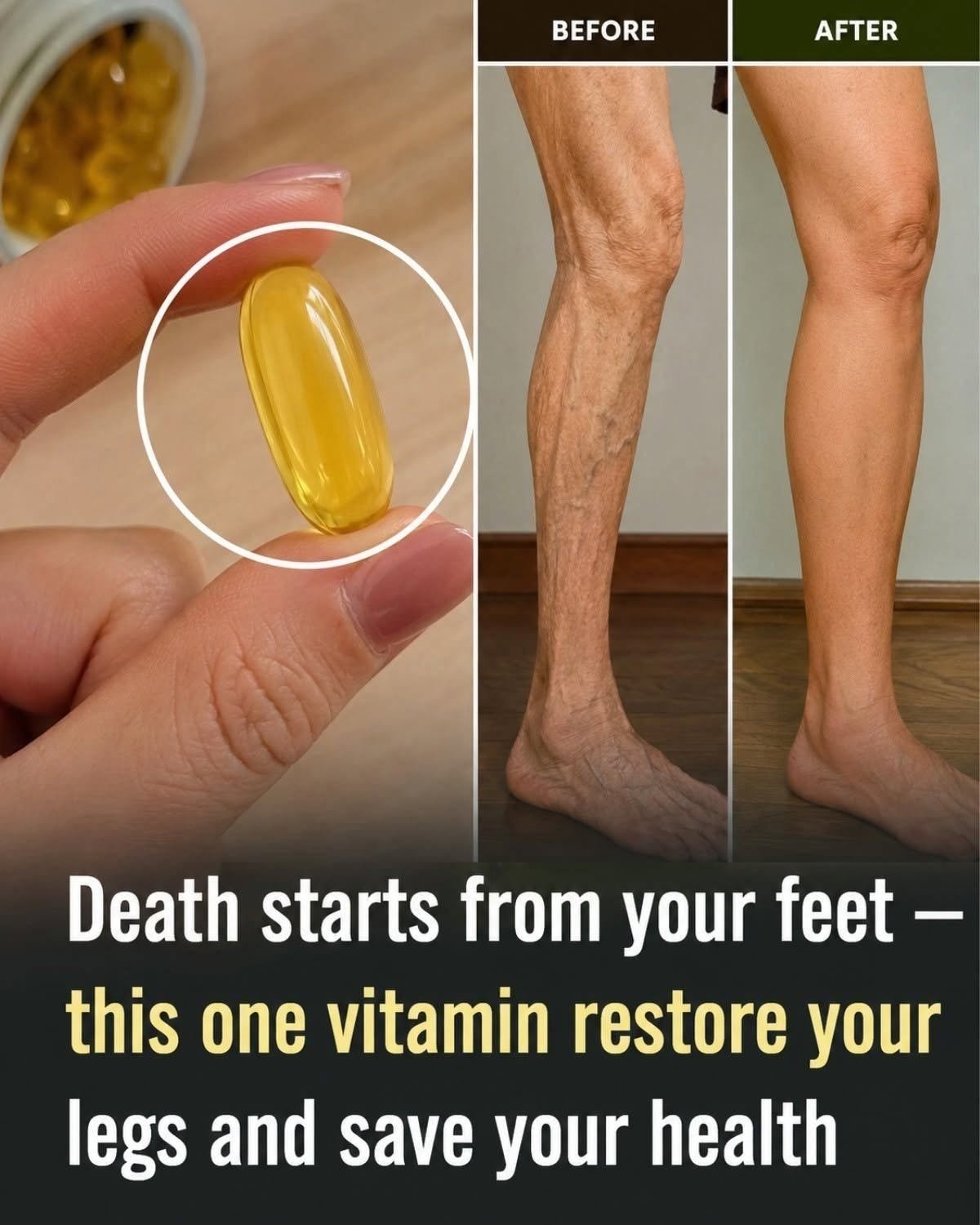
When your legs feel heavy, sluggish, or plagued by that unsettling “dead” or numb sensation in the feet and calves, your body is often signaling a lack of key nutrients responsible for nerve signaling, oxygen delivery, and muscle contraction.
While no single vitamin solves every leg issue, if you have to name the most critical group of nutrients for these specific symptoms, it is the B-Vitamin Complex (specifically B12 and B1) alongside key circulation boosters.
What “Dead Feet” and “Heavy Calves” Are Missing
-
1. Vitamin B12 and B1 (Thiamine): The Nerve Protectors
-
The Link: If your feet feel numb, prickly, “dead,” or like you’re walking on cotton, it often points to peripheral nerve irritation or neuropathy. Vitamin B12 is essential for maintaining the myelin sheath—the protective coating around your nerves. A deficiency can cause sluggish nerve communication, leading to numbness, tingling, and weakness in the lower extremities.
-
-
2. Magnesium and Potassium: The Muscle Relaxers
-
The Link: While technically minerals rather than vitamins, magnesium and potassium are the ultimate remedy for heavy, tight, cramping calves. Without them, muscles cannot properly relax after contracting, leading to deep fatigue, restless legs, and nighttime cramps.
-
-
3. Niacin (Vitamin B3) and Vitamin E: The Circulation Boosters
-
The Link: Heavy, aching calves at the end of the day often result from poor blood flow or sluggish venous return. Niacin helps dilate blood vessels and improve micro-circulation down to your toes, while Vitamin E helps prevent blood from pooling in the lower legs.
-
Understanding the Signs: Nerve vs. Circulation
-
Nerve-Related Signs (“Dead” Feet, Tingling, Burning): Often linked to B-vitamin deficiencies, long hours of sitting, or underlying metabolic shifts (like pre-diabetes).
-
Circulation-Related Signs (Heavy, Achy Calves, Swelling): Often linked to vein strain, lack of movement, dehydration, or electrolyte imbalances.
Simple Ways to Support Your Legs
-
Eat B-Vitamin Rich Foods: Incorporate lean meats, eggs, dairy, nutritional yeast, fortified grains, and leafy greens into your meals.
-
Hydrate with Electrolytes: Drinking enough water combined with adequate potassium (found in bananas, avocados, and spinach) and magnesium (found in nuts, seeds, and dark chocolate) keeps muscle tissue supple.
-
Keep Moving: Gentle calf raises, walking, and elevating your legs for 15 minutes in the evening can drastically reduce that heavy, fluid-logged feeling.
When to See a Doctor
If numbness, heaviness, or pain in your legs is persistent, worsens over time, or is accompanied by sudden swelling in only one leg, discoloration, or open sores, it is important to consult a physician. They can run simple blood work to check your vitamin levels, circulation, and overall metabolic health.
Do you mostly notice that heavy or “dead” feeling in your feet and calves at the end of a long day, or does it happen even when you wake up in the morning?
