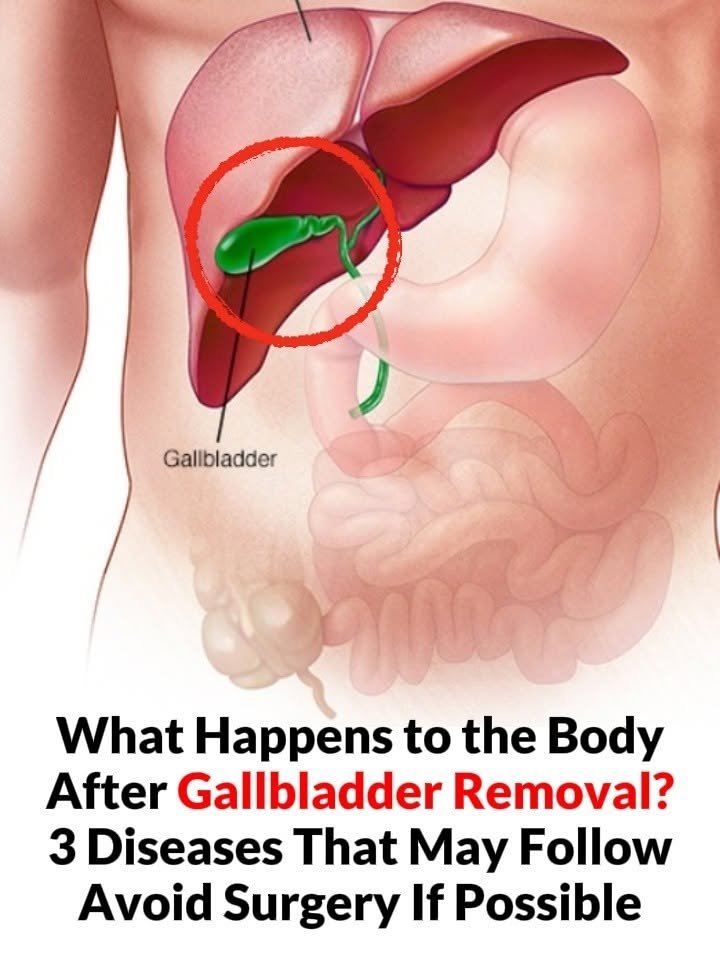
When a gallbladder is surgically removed (a procedure called a cholecystectomy), the body undergoes a fundamental physiological shift. The gallbladder’s primary job is to store, concentrate, and release bile—a fluid produced by the liver that helps emulsify and digest dietary fats.
When it is gone, bile no longer releases in measured bursts when you eat fatty foods; instead, it drips continuously and directly from the liver into the small intestine. While many people adapt well, others experience chronic digestive disruptions and long-term metabolic or structural shifts.
What Happens to the Body Post-Surgery?
-
Continuous Bile Flow: Without a storage reservoir, your digestive tract loses the ability to match bile volume to the fat content of a meal. Eating a heavy, high-fat meal can overwhelm the system, frequently leading to sudden urgency, cramping, or chronic diarrhea (bile acid malabsorption).
-
Altered Gut Microbiome: Continuous bile exposure in the upper intestine can alter bacterial populations, sometimes triggering bloating, gas, or small intestinal bacterial overgrowth (SIBO).
3 Conditions That Can Follow Gallbladder Removal
While surgery is sometimes necessary for acute, life-threatening inflammation or severe gallstone blockages, medical literature associates long-term post-cholecystectomy changes with several recurring complications:
-
1. Post-Cholecystectomy Syndrome (PCS)
-
What it is: A collection of persistent gastrointestinal symptoms that mimic the original gallbladder attack—including right upper quadrant abdominal pain, nausea, indigestion, and bloating—occurring weeks, months, or even years after surgery.
-
Why it happens: It can be caused by retained micro-stones in the bile ducts, spasms of the sphincter of Oddi (the muscular valve controlling bile flow), or chronic irritation from unregulated bile dripping.
-
-
2. Non-Alcoholic Fatty Liver Disease (NAFLD) / Metabolic Shifts
-
What it is: The accumulation of fat in liver cells independent of alcohol intake.
-
Why it happens: Clinical studies have increasingly noted a correlation between gallbladder removal and alterations in lipid (fat) metabolism and glucose regulation. Because bile acids play a major role in regulating metabolic pathways, losing the dynamic storage and release of bile can subtly alter how the body processes fats and cholesterol, raising long-term metabolic risks.
-
-
3. Chronic Bile Acid Diarrhea (BAD) and Malabsorption
-
What it is: Unpredictable, watery bowel movements that occur shortly after eating, driven by excess bile spilling into the colon.
-
Why it happens: The colon is unaccustomed to continuous, heavy bile exposure. Unabsorbed bile irritates the lining of the large intestine, forcing it to secrete excess water and salt, which creates chronic loose stools and can impair the absorption of fat-soluble vitamins (A, D, E, and K).
-
Why Preserving Your Gallbladder Matters (When Possible)
Because the body adapts better to its natural anatomy, gastroenterologists and integrative physicians emphasize preserving the gallbladder whenever it is medically safe to do so. Simple preventive strategies include:
-
Avoiding Crash Diets and Rapid Weight Loss: Fasting or dropping weight too quickly allows bile to stagnate in the gallbladder, drastically increasing the risk of cholesterol crystalizing into stones.
-
Eating Balanced, Fiber-Rich Meals: Regular meals containing healthy fats and soluble fiber stimulate normal, rhythmic emptying of the gallbladder, preventing stagnation.
Have you or someone you know ever navigated digestive adjustments after gallbladder surgery, or are you currently exploring ways to support natural gallbladder health?
