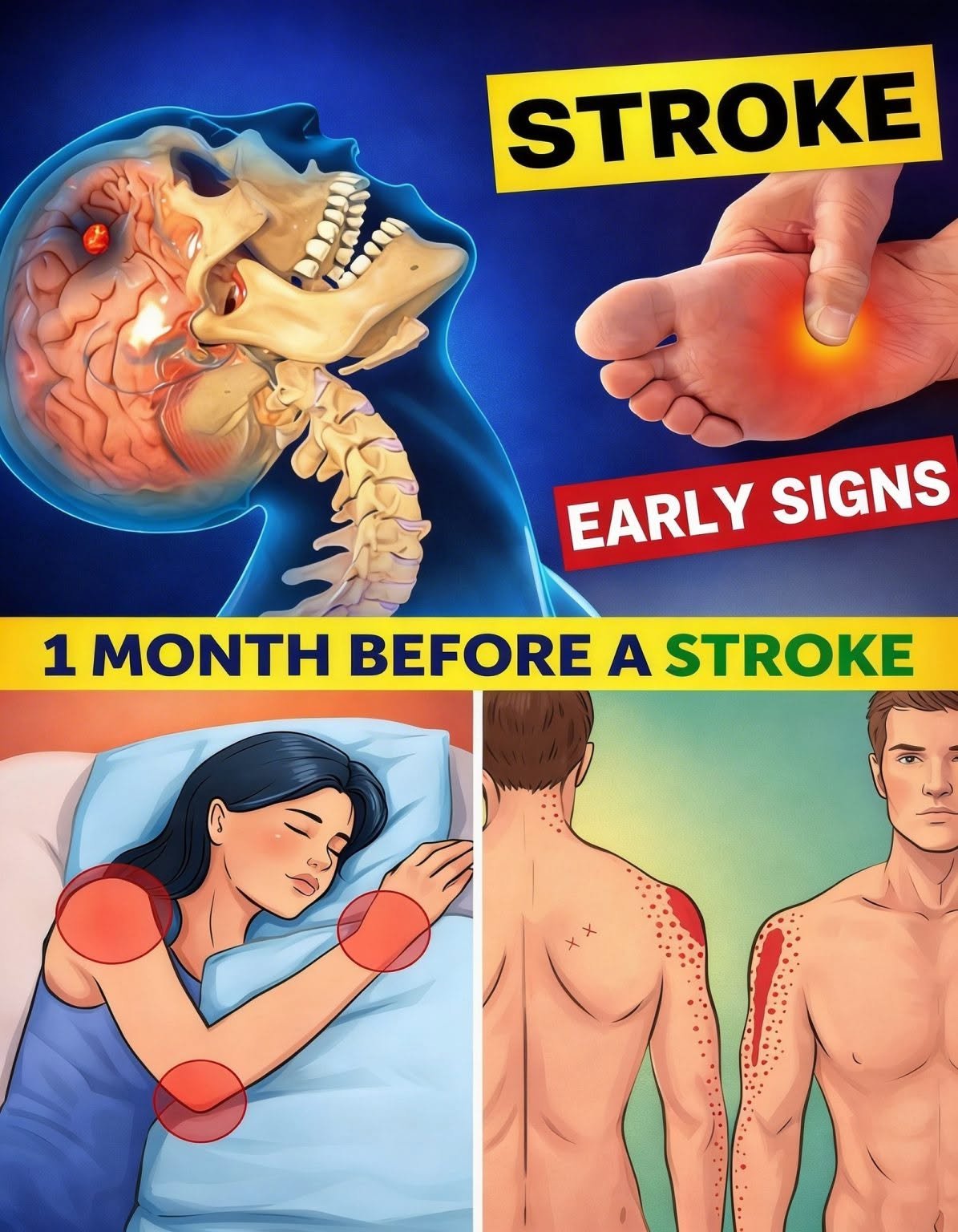
Recognizing the early warning signs of a stroke can be life-saving. While strokes are often thought of as sudden, acute emergencies, research shows that up to 80% of stroke victims experience subtle, warning symptoms days or even weeks prior to a major event.
Understanding these early red flags—along with proactive lifestyle prevention—empowers you to take control of your cardiovascular health.
8 Warning Signs of Stroke That May Appear Up to a Month Before
When a blood vessel in the brain is temporarily blocked or restricted (as in a TIA or “mini-stroke”), the brain sends subtle distress signals. Pay attention to these early indicators:
-
Transient Numbness or Weakness (TIA): Sudden, fleeting weakness or numbness in the face, arm, or leg—often on just one side of the body—that lasts for a few minutes and disappears completely.
-
Unexplained, Sudden Dizziness or Balance Loss: Feeling suddenly off-balance, dizzy, or experiencing vertigo without an obvious inner-ear cause.
-
Sudden, Severe Headaches: A sudden, unusually severe headache often described as a “thunderclap” headache, sometimes accompanied by neck stiffness or confusion.
-
Subtle Vision Changes: Brief blurring, double vision, or temporary loss of sight in one or both eyes that comes and goes.
-
Sudden Confusion or Difficulty Speaking: Momentary slurring of words, difficulty finding the right words, or trouble understanding what others are saying.
-
Unexplained Fatigue and Brain Fog: An abrupt, profound wave of physical exhaustion or mental sluggishness that doesn’t align with your normal sleep patterns.
-
Sudden Clumsiness or Loss of Fine Motor Skills: Dropping objects frequently, sudden handwriting changes, or unexpected difficulty buttoning a shirt.
-
Mild Swallowing Difficulties (Dysphagia): A sudden, brief feeling of food catching in your throat or mild choking when drinking liquids.
(Note: If you or someone nearby experiences these symptoms suddenly, remember the FAST acronym: Face drooping, Arm weakness, Speech difficulty, Time to call 911).
9 Tips to Prevent a Stroke
The vast majority of strokes are preventable through consistent, heart-healthy habits:
-
Keep Blood Pressure in Check: High blood pressure is the single biggest risk factor for stroke. Monitor it regularly and reduce sodium intake.
-
Quit Smoking and Avoid Vaping: Smoking thickens blood, increases plaque buildup in arteries, and drastically spikes stroke risk.
-
Manage Cholesterol Levels: Keep LDL (“bad”) cholesterol low and HDL (“good”) cholesterol high through a balanced, fiber-rich diet and regular exercise.
-
Control Blood Sugar (Diabetes Management): High blood sugar damages blood vessels over time, making clots more likely to form.
-
Engage in Regular Physical Activity: Aim for at least 30 minutes of moderate aerobic exercise (like brisk walking, swimming, or cycling) most days of the week.
-
Adopt a Heart-Healthy Diet: Focus on the Mediterranean diet—packed with leafy greens, berries, fish rich in omega-3s, nuts, olive oil, and raw garlic for circulatory support.
-
Limit Alcohol Consumption: Heavy drinking raises blood pressure and increases the risk of stroke. Stick to moderate limits.
-
Maintain a Healthy Weight: Excess body weight puts strain on your heart and vascular system.
-
Stay Hydrated: Proper hydration keeps your blood viscosity at a healthy level, reducing the risk of abnormal clotting.
